
Cooperative-Based Palm Oil Downstreaming to Strengthen Farmers' Bargaining Power
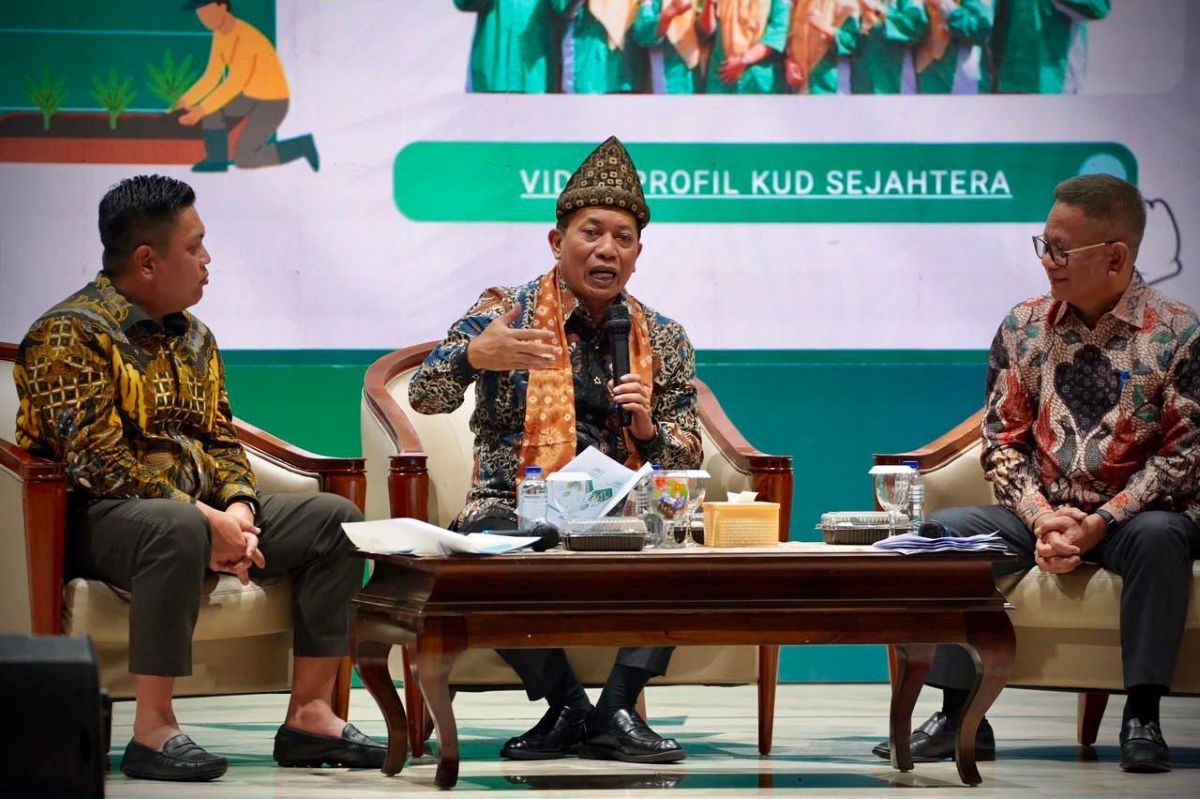
The cooperative-based palm oil downstreaming programme is one of the government’s main strategies to strengthen the bargaining position of farmers while improving public welfare. With a capital base of 2,587 cooperative units in the plantation sector, the government is optimistic that strengthening the palm oil industry supply chain from upstream to downstream can be accelerated immediately.
Minister of Cooperatives Ferry Juliantono stated that the acceleration of this programme has received strategic support from PT Agrinas Palma Nusantara. The company has been mandated by the government to manage oil palm land seized by the Forest Area Enforcement Task Force (Satgas PKH).
“For the land that has been taken over by the Satgas PKH and entrusted to Agrinas Palma for management, President Prabowo Subianto wants the management of that land to involve the community and cooperative members who are oil palm farmers,” Ferry said during the National Seminar on “Optimisation and Downstreaming of Cooperative-Based Palm Oil” at the Musi Banyuasin Regent’s Office on Tuesday.
Ferry encouraged active cooperatives in plantation areas to take a greater role in the supply chain. One of the main targets is to encourage cooperatives to establish their own Crude Palm Oil (CPO) mills so that the demand for cooking oil and other derivative products can be met independently.
He explained two business models that could be pursued: strengthening existing cooperatives or consolidating primary cooperatives into larger business entities. To support this, Ferry emphasised the importance of financing instruments such as the Cooperative Revolving Fund Management Agency (LPDB).
“Koperasi Mandiri Makmur, for example, has received financing from the LPDB to produce CPO, where the construction progress has currently reached 45 percent,” he added.
President Director of PT Agrinas Palma Nusantara (Persero), Mohammad Abdul Ghani, explained that based on Presidential Regulation No. 5/2025, the company manages 4.1 million hectares of oil palm land seized from illegal forest areas. According to the provisions, a minimum of 20 percent of the land must be allocated as plasma for the people.
“We will prioritise cooperatives around the land as vendors for plant maintenance, harvesting, and other activities. Cooperatives are the main partners in supporting palm oil downstreaming as well as food security,” Abdul Ghani asserted.
Deputy for Cooperative Business Development at the Ministry of Cooperatives, Panel Barus, added that cooperatives are the most appropriate institutions to act as both owners and managers of CPO mills. This scheme is expected to shift the role of farmers from merely raw material suppliers to downstream industry players.
Musi Banyuasin Regent Toha Tohet welcomed the initiative and expressed hope that more cooperatives would follow the example of KUD Sejahtera Banyuasin, which has successfully built a CPO processing plant. He hopes that continued support from the Ministry of Cooperatives can convince more farmers to join cooperative organisations.