
Cool Response from Political Parties to KPK Proposal Limiting Party Leaders to Two Terms
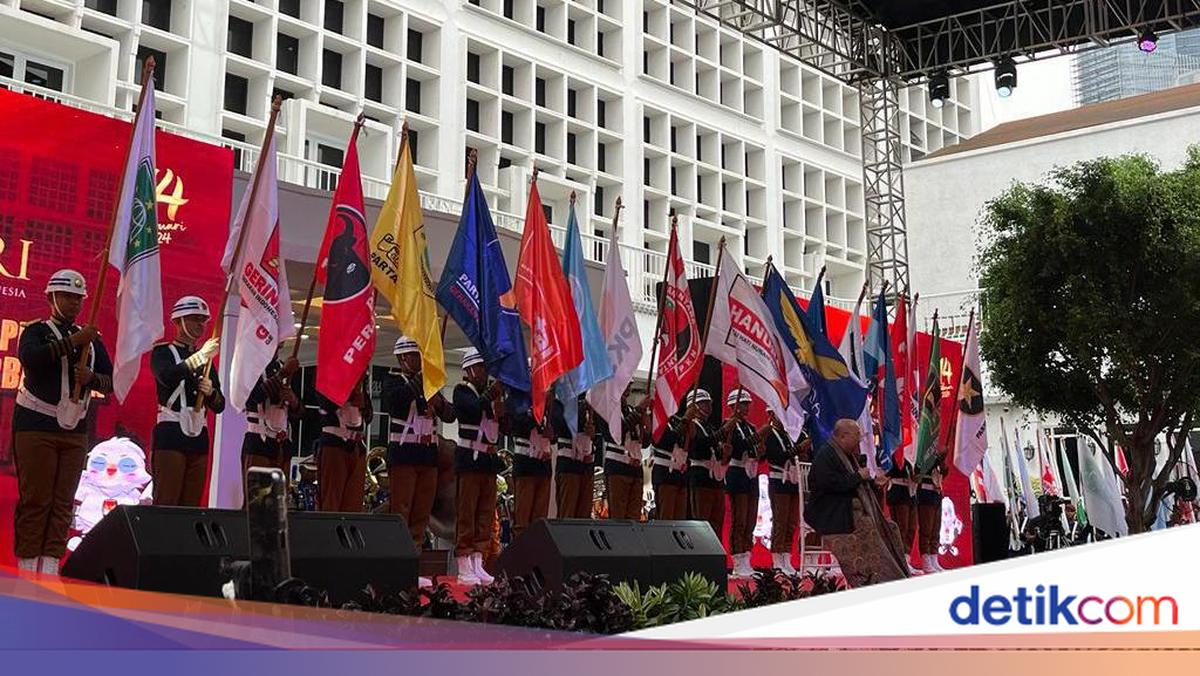
The Corruption Eradication Commission (KPK) has proposed limiting the leadership tenure of political party chairmen to two terms. This proposal aims to encourage cadre development in political parties.
The study was conducted by the KPK in 2025 through its Monitoring Directorate. The KPK identified four points that need improvement in Indonesia’s political party system and provided 16 recommendations.
“To ensure the implementation of cadre development, regulations are needed to limit the leadership of party chairmen to a maximum of two terms,” states one of the recommendations from the KPK study, quoted by detikcom on Thursday (23/4/2026).
In addition, the KPK recommends amendments to Article 29 of Law No. 2 of 2011 on Political Parties, including adding requirements that presidential and vice-presidential candidates, as well as regional heads, must come from party cadres.
The KPK’s proposal has received various responses from political parties. They have each presented their arguments regarding the proposal to limit the terms of party chairmen.
PDIP spokesperson Guntur Romli views the proposal as exceeding the KPK’s authority. He urges the KPK to focus on its tasks of preventing and prosecuting corruption.
“First, it exceeds the KPK’s authority ‘Ultra Vires’, the KPK’s duties. This means the KPK has gone beyond its main tasks and functions (tupoksi). According to the KPK Law, this institution’s focus is on prosecuting and preventing corruption related to state officials and state financial losses,” Guntur told reporters on Friday (24/4/2026).
Guntur considers the KPK’s recommendations too far from the anti-corruption body’s duties and functions. Instead, he asks the KPK to focus on improving the prosecution system.
“Interfering in political party internal affairs, which legally are civil society organisations or not state institutions, could be seen as a step too far. The KPK should focus more on improving the weakening prosecution system or addressing the declining Corruption Perception Index (CPI), rather than entering the realm of internal political organisations,” he said.
“Second, the proposal is unconstitutional; juridically, political parties are legal entities with internal autonomy as voluntary organisations. The proposal contradicts the principle of freedom of association and assembly in the Constitution (Article 28E paragraph 3 of the 1945 Constitution) and the Political Parties Law (Article 2 paragraph 1, Article 5 paragraph 1, Article 15 paragraph 1 of Law No. 2 of 2011 on Political Parties) which grants party members the right to determine their own leadership mechanisms through the party’s bylaws,” stated Guntur.
Demokrat Party Secretary-General Herman Khaeron said the government does not need to regulate the tenure of party chairmen. He described the tenure of party chairmen as an internal matter for the party.
“The tenure of the party chairman is regulated by the party’s internal rules. Therefore, the government does not need to impose limitations on the tenure of the chairman or other titles,” Herman told reporters on Friday (24/4/2026).
Herman explained that the mechanisms and implementation of party organisation are internal party matters. Thus, he said, it is the party cadres who determine them.
Furthermore, this member of Commission VI of the DPR assesses that limiting the tenure of chairmen does not automatically guarantee democracy within the party. According to him, what the government should pay attention to is the mechanism used by the party in appointing the chairman.
“Democracy within the party is not determined by limitations, but by the congress mechanism or other mechanisms for appointing chairmen in each party. As long as the cadres who hold the votes give support and trust to their Chairman, that is the democratic process,” said Herman.
PAN views the discourse as potentially violating freedom of association. PAN Deputy Chairman Viva Yoga Mauladi said the proposal could violate the constitution.
“According to PAN, if there is discourse on limiting the tenure of chairmen, it can be seen as a violation of freedom of association (Article 28 of the 1945 Constitution). Parties can argue that they are private-political organisations entitled to determine their own leadership,” Viva Yoga told reporters.
According to Viva, parties will lose public legitimacy on their own if their internal life breeds oligarchy. “If there is concern that political party life breeds oligarchy, blocks cadre development, and becomes authoritarian with internal conflicts, the public is not politically blind. They will surely not vote for that party in the next election because the party will lose legitimacy from the people,” he said.
Furthermore, Viva emphasised that the state does not regulate in detail the periodisation of party chairmen tenures. He views this right as stemming from citizens’ constitutional rights, namely the right to associate and assemble.
“PAN believes that in Law No. 2 of 2011 on Political Parties, the state does not regulate in detail the periodisation of party chairmen tenures,” he said.
“This stems from citizens’ constitutional rights to associate and assemble, Article 28 of the 1945 Constitution. Political parties are civil or private organisations given public roles, different from state institutions that hold power to manage the state,” he added.
NasDem Secretary-General Hermawi Taslim responded to the KPK’s proposal regarding limiting the leadership tenure of party chairmen to two terms. Hermawi said that political party leadership cannot be simplified merely by term limitations.
“The KPK’s recommendation that the tenure of a party chairman should ideally be two terms is, in my opinion, valuable input for all of us, including the parties,” Hermawi told reporters on Thursday (23/4/2026).
“Although party leadership matters are certainly not as simple as studied by the KPK,” he continued.
According to him, there are many aspects that lead to a figure being elected as chairman. In addition, there are many considerations for retaining a figure as chairman by the party.
“There are multiple aspects that determine someone being elected as chairman. There are many considerations and variants as to why a figure is still retained.”