
Converting Coal to Petrol Requires Massive Investment, Here is Why
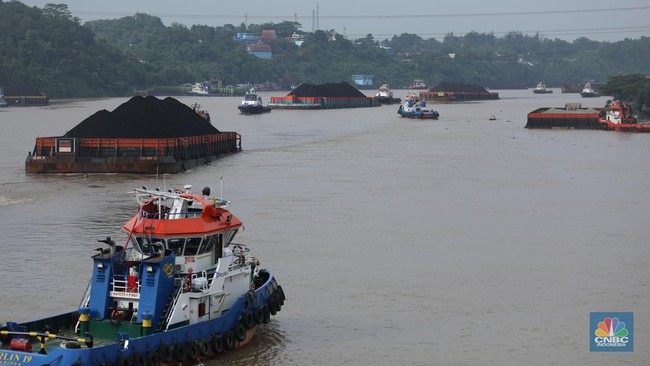
The government’s plan to develop petrol derived from coal is considered to require massive investment. Although the technology to convert coal into petrol is already available, the main challenge for the project lies in its economic aspects.
The General Chairman of the Indonesian Mining Experts Association (Perhapi), Sudirman Widhy, stated that, technologically, processing coal into petrol or gasoline is highly feasible. “In general, converting coal into petrol (gasoline) is very possible. The technology for this already exists,” he told CNBC Indonesia on Wednesday (23/09/2026).
He noted that one country that already possesses this technology is South Africa, through the company Sasol. That company has been operating Coal to Liquid (CTL) facilities to process coal into liquid products.
Sudirman explained that the process of converting coal into petrol begins by turning coal into synthetic gas (syngas). Coal is reacted with oxygen and steam at high temperatures and pressures to produce synthesis gas consisting of carbon monoxide (CO) and hydrogen (H2).
Syngas is then further processed into methanol, which can subsequently be processed into derivatives such as Dimethyl Ether (DME) or gasoline. However, Sudirman emphasised that the greatest issue is not technological readiness, but rather investment and production costs.
“The main problem is not about technology, but more about economics,” he said.
He believes that the high requirement for investment could be a deterrent for private companies considering entering coal-to-petrol processing projects. Sudirman cited the coal-to-DME processing project, which previously involved the American company Air Products, as an example. The company subsequently withdrew from the project plan, partly due to economic considerations.
“It is proven that some time ago, Air Products from the United States withdrew and was reluctant to continue plans for making DME from coal, one of the reasons being economic reasons,” he said.
Previously, President Prabowo stated that the development of fuel from domestic resources is the result of research and innovation by Indonesian academics, particularly from engineering faculties. “Our professors, who are truly brilliant… from our engineering faculties, we have successfully produced diesel from palm oil, and we have been able to make petrol from palm oil, and we will also make petrol from coal,” Prabowo said while attending the 100th Anniversary Thanksgiving of Pondok Modern Darussalam Gontor in East Java, as quoted on Sunday (20/09/2026).
According to Prabowo, the success of the B50 programme serves as evidence that Indonesia is capable of utilising domestic natural resources to meet national energy needs. “Starting 1 July, we have not imported diesel from abroad. Our diesel is now self-sufficient,” he stated.
Prabow emphasised that diesel self-sufficiency is a crucial step amidst global uncertainty, which remains shadowed by geopolitical conflicts and energy supply chain disruptions.