
Controversy Surrounding Indonesia's Plan to Acquire PC-24 Bizjet Aircraft
The ongoing conflict between Iran and the United States (US) and Israel, which has driven global crude oil prices above US$100 per barrel, has done nothing to deter Indonesia from proceeding with its plans to delay or reduce spending in three priority areas: MBG, KDMP, and defence expenditure. The threat of a fiscal deficit exceeding the three per cent limit in the 2026 state budget appears to be met with measures deemed insignificant by several parties to avoid this outcome.
Meanwhile, some groups have called for the government to promptly raise the prices of subsidised fuel to ease pressure on the state budget. While the government seems to be seeking other revenue sources, such as fines imposed on firms found violating laws related to natural resource management, to plug the gap in additional funding for fuel subsidies.
Among the critical views on defence spending in recent years is the increasing use of BA BUN to finance activities not covered by the Ministry of Defence’s budget allocation. In 2024, BA BUN was only used for activities not classified as major weapon system acquisitions, but since 2025, it has been allocated to fund war equipment such as the Sukhoi Su-35 fighter jets and Ilyushin Il-78 tanker aircraft.
This is due to no foreign lenders willing to provide loans to Indonesia for spending in Russia. Yet, BA BUN funds are originally intended for financing non-ministry expenditures, such as subsidies, investments, debt, and contingency funds.
One criticism of current defence procurement planning is the absence of thorough planning as a basis for such activities. The phrase “lack of thorough planning” is actually a softened version of the sharper critique that there is no planning at all in war equipment acquisition activities.
With a top-down policy for weapon system purchases, end-users have limited space to provide input to decision-makers. This ultimately creates gaps, or even chasms, between the war equipment needed by end-users and the defence equipment purchased by the Ministry of Defence based on directives from decision-makers in the matter.
During the implementation of MEF 2020-2024, the majority of procurements by the Ministry of Defence had strong and accountable justifications from an operational needs perspective. Examples include the acquisition of Rafale fighter jets, A400M transport aircraft, Scorpene submarines, and PPA frigates.
However, in the implementation of MEF 2020-2024, there were also purchase plans lacking strong and justifiable reasons from an operational perspective, such as plans to import fighters with only two prototypes from Turkey, which are still far from mature and entering production lines. Similarly, programmes to acquire second-hand J-10B fighters from China or JF-17 from Pakistan, where the capabilities of both jets are doubted by several groups.
As defence force development enters the OEF 2025-2029 era, signs are emerging that acquisition plans unsupported by strong and accountable arguments from an operational needs perspective are becoming apparent.
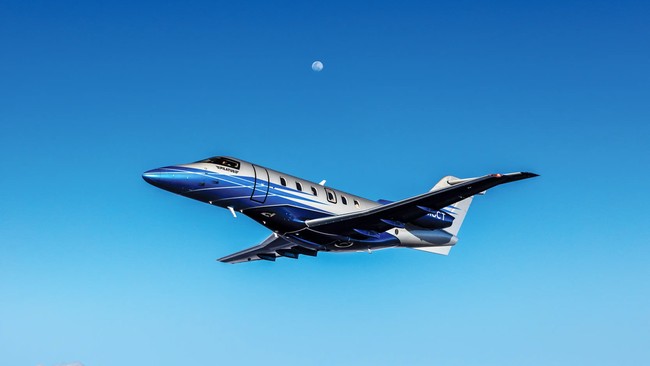
One such example is the plan to acquire 12 PC-24 aircraft, which are twin-engine bizjets typically leased to executives of global companies and wealthy individuals.
Among the reasons for importing these aircraft from Pilatus Aircraft is to train prospective transport pilots for the Indonesian Air Force. Why should the acquisition programme of these Swiss executive jets, which adopt a propulsion system from Williams International, be criticised?
First, the need. Does the Indonesian Air Force require bizjets to train candidates for C-130, A400M, CN235, C295, and NC212 transport pilots? To date, without the presence of jets like the PC-24, the Air Force Flight School has still been able to produce capable transport pilots.
If referring to the old curriculum, prospective transport pilots would fly the KT-1B before proceeding to type rating on transport aircraft like the C-130 and CN235. If the Indonesian Air Force wishes to focus KT-1B usage solely on prospective fighter pilots, there are other turboprop trainer aircraft options for transport pilot candidates to continue flight training after graduating from flying the Grob G 120TP A.
There is strong suspicion that the Indonesian Air Force was not deeply consulted by the Ministry of Defence on the PC-24 acquisition plan. It is possible that once the PC-24 operates within the Indonesian Air Force environment, the fixed-wing aircraft would more likely function as a VIP transport rather than for training prospective transport pilots.
Yet currently, the Indonesian Air Force already operates at least two Falcon 8X and at least six B737-400/500/800 for executive transport needs. That number is actually sufficient to fly civilian and military officials, especially since presidential flights have dedicated aircraft, including Garuda Indonesia’s B777-300ER.
Second, the funding source. It remains a question from where the funding for purchasing 12 PC-24 will come, whether from Foreign Loans (PLN) or Pure Rupiah (RM)? If sourced from PLN, has the Ministry of National Development Planning issued the List of Priority Foreign Loan Plans and the List of Special Activities? And is it based on k
Source: jawawa.id (https://jawawa.id/newsitem/controversy-surrounding-indonesias-plan-to-acquire-pc-24-bizjet-aircraft-1775634716)
Originally published by CNBC Indonesia (https://www.cnbcindonesia.com/opini/20260406154825-14-724252/kontroversi-rencana-pengadaan-pesawat-bizjet-pc-24-oleh-indonesia), translated from Indonesian