
Controversy over World's Oldest Cave Paintings: BRIN Researchers Challenge Lab Re-tests
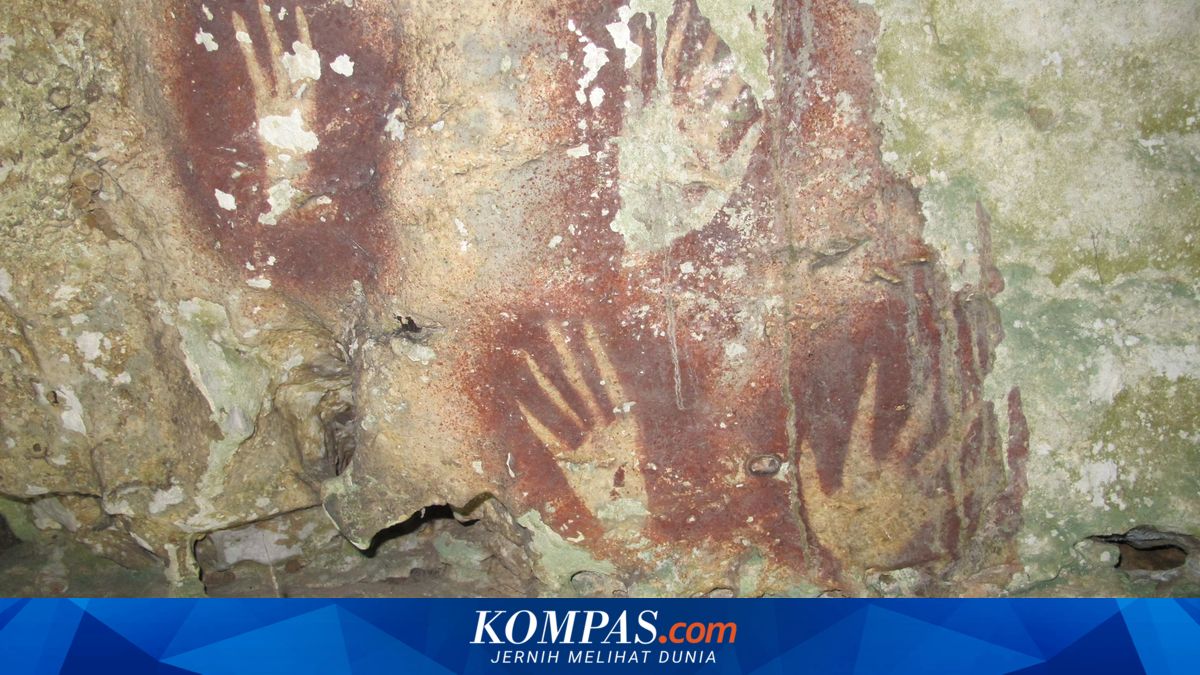
The international archaeological community has recently been rocked by intense debate over the true age of the world’s oldest prehistoric cave paintings. An academic critique challenges claims of tens of thousands of years for ancient artworks found in caves in Spain and Indonesia. In recent years, researchers have reported increasingly older dates for cave paintings. Two of the most frequently cited examples are wall paintings in Spanish caves estimated at around 65,000 years old, and hand stencils from Sulawesi, Indonesia, dated to approximately 67,800 years. Guinness World Records recently crowned the hand stencils in Lian Metanduno Cave, Sulawesi, as the oldest in the world. However, Georges Sauvet, a senior researcher from the Center for Research and Studies of Prehistoric Art in France, has cast doubt on this claim. In a recent scientific paper published in AOJ of Histoarchaeology and Anthropological Exploration, he warned that researchers are too readily accepting extreme age figures in a bid to win the ‘race’ to discover the world’s oldest cave art. The debate centres on the Uranium-Thorium (U-Th) dating method. This technique measures the radioactive decay of uranium trapped in calcite—a thin mineral layer that slowly forms over cave paintings as water flows through limestone. This method is relied upon by scientists because the materials used in ancient paintings, such as ochre or direct rock carvings, lack organic components that can be tested using conventional radiocarbon methods. The problem, according to Sauvet, is that the U-Th method assumes the calcite layer remains chemically stable after formation. In reality, water continues to flow through cave mineral layers for thousands of years. Quoted from Archeology News Online Magazine, this process can wash away or dissolve uranium from the calcite (a phenomenon known as an ‘open system’). When uranium leaks out, the rock sample will appear significantly older than its true age when tested in the lab.
Source: jawawa.id (https://jawawa.id/newsitem/controversy-over-worlds-oldest-cave-paintings-brin-researchers-challenge-lab-re-tests-1780030673)
Originally published by Kompas (https://www.kompas.com/sains/read/2026/05/29/111400623/kontroversi-lukisan-gua-tertua-di-dunia-peneliti-brin-tantang-uji-lab?utm_source=ABC&utm_medium=rss), translated from Indonesian