
Controversy over 'Pig Feast: Colonialism in Our Time' documentary: Haedar Nashir warns against sparking horizontal conflict
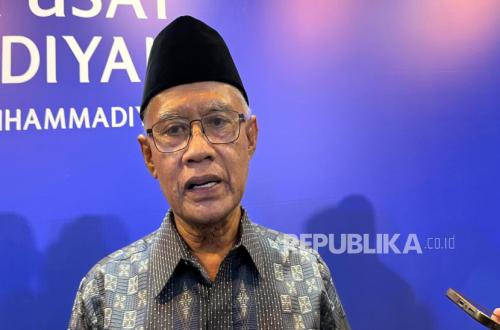
YOGYAKARTA – Muhammadiyah Chairman Haedar Nashir has responded to widespread public discussion surrounding the documentary ‘Pig Feast: Colonialism in Our Time’, which has recently drawn significant attention. He stated that two key issues require collective attention when addressing the film’s themes to prevent horizontal conflicts within society, particularly concerning social conditions and development in Papua.
Haedar said Indonesia must embark on a new era by fostering cooperation across all societal layers, including in Papua. He argued that a conflict-based approach would fail to mobilise community potential for collective progress.
‘If we continue with a conflict-based approach, we cannot mobilise the potential of all societal layers in Papua, Eastern Indonesia, and Western Indonesia. We must progress together across the archipelago to achieve this. It is impossible to keep spreading conflict-oriented approaches,’ Haedar said during an interview following the Aisyiyah Milad event at the Convention Hall of Masjid Walidah Dahlan Unisa in Yogyakarta on Tuesday, 19 May 2026.
Haedar also highlighted the documentary’s intended message to the government and dominant economic powers operating in Papua. He stressed that this message must not devolve into horizontal controversy within society.
Haedar stated that open dialogue is necessary for all parties to fully understand the substance of the film’s criticism. He hoped discussions on the documentary would not exacerbate social conflicts but instead serve as an opportunity to build communication and find collective solutions regarding development and justice in Papua.
‘If the film’s message is directed at the government system or dominant economic powers in the country, it must not fail to reach its intended audience, otherwise horizontal controversy will arise,’ he said.
‘If the message is for economic and political powers in Papua to avoid dominance, that is positive. However, films often become public property. Therefore, there may need to be dialogue about the film from various stakeholders, including its producers,’ he concluded.