
Controlling Energy Imports
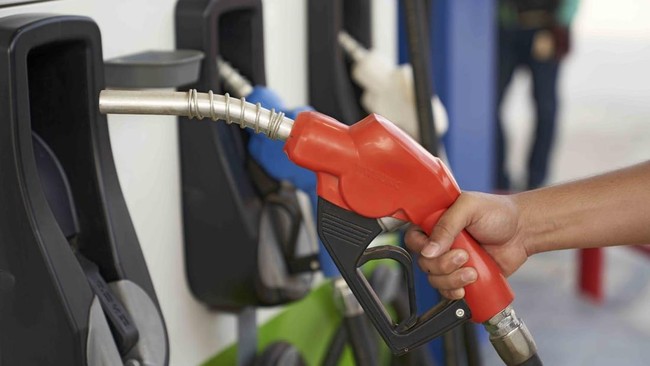
Regulations governing the procurement of crude oil, fuel and liquefied petroleum gas (LPG) under Presidential Regulation No. 107 of 2026 mark a significant shift in how national energy needs are met.
The policy transfers responsibility for executing energy imports from state-owned enterprises to the Lemigas Public Service Agency (BLU), under the Ministry of Energy and Mineral Resources, through Government-to-Government (G2G) and Government-to-Business (G2B) arrangements. PT Pertamina (Persero) would act primarily as the offtaker.
Shifting control of energy imports
From a governance perspective, the policy represents a transfer of control over national energy imports. Import decisions, previously made by a market-oriented corporation drawing on market-based efficiency, are moving into a bureaucracy focused on state diplomacy. This shift has two fundamental implications for the structure of energy supply control.
First, the parameters of control are changing. Import decisions will be influenced more by interstate diplomacy, geopolitical relations and protection against risks arising from international instruments. This approach strengthens the government’s strategic control and its ability to secure potential long-term agreements, while requiring alignment so that it can still adapt to daily price movements in the spot market.
Second, authority is being separated from physical capacity. The new policy distinguishes the party with authority over procurement transactions, BLU Lemigas, from the party that de facto controls operational infrastructure, Pertamina.
Pertamina will continue to manage vital infrastructure that BLU Lemigas does not own, including refineries with capacity of around 1.158 million barrels per day, 126 fuel terminals and a fleet of 110 transport vessels. To make this separation work without causing logistical difficulties, government purchasing plans must be integrated with the technical readiness of receiving facilities on the ground.
Import dependence and commodity characteristics
The current structure of national energy supply is marked by significant reliance on imports. For LPG, imports account for around 80 to 84 per cent of national demand, which stands at approximately 25,000 tonnes per day. Around 70 per cent of these supplies are imported from the United States.
For petrol, imports meet about 60 per cent of national demand, equivalent to 20 million kilolitres a year. Most are imported from Singapore (63 per cent) and Malaysia (33.14 per cent). Meanwhile, national crude oil consumption of around 1.7 million barrels per day exceeds domestic production of approximately 580,000 to 600,000 barrels per day, leaving a supply deficit of 1.118 million barrels per day, with imports valued at around US$9.31 billion.
Given this supply structure, the effectiveness of G2G procurement requires alignment with the characteristics of each commodity. Interstate diplomacy can add significant value in securing access to crude oil. To extend those benefits across all components of energy security, procurement cooperation could gradually be expanded to LPG and refined fuel products through direct supply arrangements with producer countries.
Institutional roles and operational efficiency
The success of the new arrangements for controlling energy imports will depend heavily on efficient coordination between BLU Lemigas as the procurement agency and Pertamina as the operator of downstream infrastructure.
Pertamina owns and operates the main physical assets supporting 70 per cent of national fuel supply. These include six refineries—with capacity of 1.058 million barrels per day, rising to 1.158 million barrels per day after the Balikpapan Refinery Development Master Plan (RDMP)—126 fuel terminals and a retail distribution network accounting for around 85 per cent of the country’s petrol stations.
By contrast, BLU Lemigas manages an annual operational budget of around Rp240.25 billion and is supported by approximately 407 technical staff. Given that national crude oil import transactions are worth hundreds of trillions of rupiah a year, cooperation between the institutions could be improved through three operational measures.
First, a detailed operational cooperation agreement should be drawn up. A written agreement should set out in detail how commodities are transferred from BLU Lemigas to Pertamina. It should cover the point at which ownership passes, the structure of the sale price (transfer price), compensation for the use of refinery and storage facilities, and the allocation of risks related to exchange rates and shipping delays (demurrage).
Second, crude oil specifications should be aligned with refinery characteristics. Each refinery is designed to process particular types of crude. Allowing Pertamina to provide input and technical clearance before procurement agreements are finalised would help maintain yields of higher-value products and ensure refinery reliability.
Third, operational responsibilities should be clearly defined. Clear boundaries between the supplier and the distribution operator are essential to ensure performance certainty. This would ensure that operational reserves, monitored by BPH Migas, and the smooth distribution of fuel and LPG to the public are supported by reliable supply schedules.
Strengthening the legal basis and governance certainty
The governance of national energy procurement needs to align with legislation on state finances and the downstream oil and gas sector. Articles 9(1) and 23 of Law No. 22 of 2001 on Oil and Gas stipulate that downstream trading activities must be carried out by business entities holding the appropriate permits.
BLU Lemigas, meanwhile, operates under state treasury provisions in Law No. 1 of 2004 and institutional rules that designate it as a technical unit of a government agency. State-owned assets may not be pledged as collateral.
Adjustments may therefore be needed. For example, greater financial flexibility for BLU Lemigas in managing large-scale transactions could be provided through specific amendments to treasury regulations. This could include a flexible mechanism for setting service tariffs and the creation of a standardised risk-management framework for hedging.
This governance framework should be reinforced by an equivalent legal foundation, for example by incorporating the framework for strategic energy procurement into a government regulation or a new Oil and Gas Bill.
Robust regulation would give officials at BLU agencies and state-owned enterprises—or possibly a Special Business Entity in future—a legal basis to carry out procurement transparently and accountably, with appropriate legal protection.
Optimising the Energy Buffer Reserve
The idea of combining government procurement instruments with the strengthening of national reserves has considerable strategic value. Presidential Regulation No. 96 of 2024 on the Energy Buffer Reserve (CPE) sets out the direction for establishing a state strategic reserve, separate from commercial operating stocks.
To optimise this function, BLU Lemigas—or a Special Business Entity in future—could focus on managing and replenishing the government’s strategic Energy Buffer Reserve. Commodities imported by the government would serve as state reserves, stored in national storage facilities and released in emergencies upon a decision by the National Energy Council (DEN).
Meanwhile, state-owned enterprises could continue procuring crude oil and fuel for refineries’ day-to-day operations and commercial distribution, using the flexibility of market mechanisms. Separating these functions would clarify the accounting of state assets and strengthen national preparedness for potential energy crises.
Conclusion
The government’s move to regulate control of energy imports must remain within the broader goal of improving national energy and economic resilience. To achieve that strategic objective, the new procurement arrangements need to be supported by improved implementing regulations, clear inter-agency cooperation mechanisms, technical suitability for refineries and transparent financial governance.
With a proportionate division of responsibilities—where the government strengthens oversight and management of strategic reserves while state-owned enterprises optimise physical operations and supply chains—the national energy procurement system is expected to become more robust, efficient and resilient to global market volatility.