
Contrasting Picture for Indonesian Tech Stocks as SpaceX IPO Breaks Records
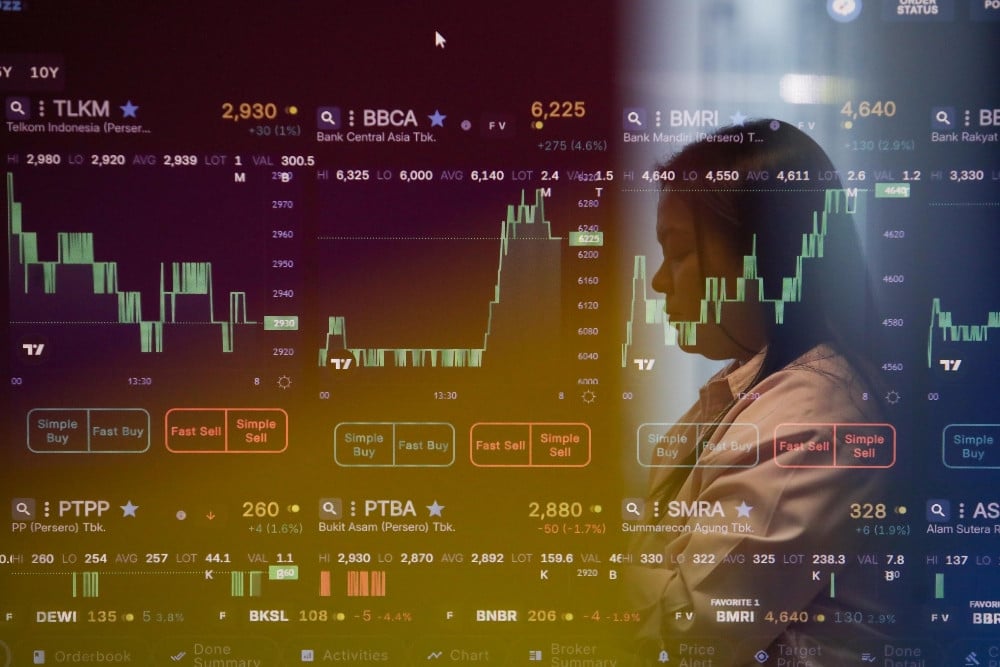
When global investors are still scrambling for shares of technology companies, the Indonesian capital market is showing a different direction. In the United States, the company championed by Elon Musk, SpaceX, set a record through a share offering or initial public offering (IPO) valued at US$75 billion. That fantastic value became one of the largest corporate actions in the history of the global capital market. Besides positioning Elon Musk as the world’s first trillionaire, the phenomenon shows that technology, innovation, and long-term growth prospects remain the main magnets for investors. However, the story unfolding in Indonesia does not align with this trend. As of market close on Friday (12/6/2026), the technology stock index, or IDXTECH, has corrected 30.91% year-to-date. This decline makes it the worst-performing sector on the Indonesia Stock Exchange (IDX) this year. While the global market still gives a premium valuation to technology companies, the Indonesian capital market is instead facing a scarcity of new growth narratives from the sector. After the wave of technology company IPOs in 2021–2022 introduced big names like GOTO and Bukalapak, almost no more large-scale technology companies have listed on the exchange. In fact, the Daya Anagata Nusantara Investment Management Agency (Danantara) assessed that one of the causes of the sharp correction in the Composite Stock Price Index (IHSG) this year is the lack of new stories in the market, rather than negative MSCI sentiment. In the last two years, Indonesia’s IPO pipeline has been filled more by traditional sector companies such as commodities, manufacturing, consumer goods, property, and services. Meanwhile, technology startups tend to postpone IPOs and choose to focus on improving profitability after the era of burning cash ended. This phenomenon is not only happening in Indonesia. Nirji Ventures research titled Southeast Asia Startup Funding Report 2026 shows the startup funding landscape in Southeast Asia has changed drastically since the funding bubble burst in 2021. Investors no longer give high valuations based solely on user growth or business expansion. The focus has shifted to profitability, sustainable business models, and a company’s ability to generate profit. The report noted that total startup funding in Southeast Asia in 2024 fell 82% compared to its peak in 2021, from US$25.7 billion to US$6.79 billion. This decline was influenced by global and structural factors. From a global perspective, rising interest rates pressured technology company valuations and caused institutional investors to reduce fund allocations to venture capital, especially in emerging markets. Structurally, the Southeast Asian startup ecosystem still faces a number of challenges, ranging from governance issues at several technology companies, the high concentration of investment in consumer internet businesses that have not yet demonstrated strong profitability, to limited investment exit routes through IPOs. The investment perspective in Southeast Asia has completely changed since 2021. This change reflects a fundamental reassessment of what creates sustainable value in the region’s startup ecosystem. This change is also visible in investor strategies. If in 2021 an IPO was the main target within five to seven years, now investors are willing to wait more than a decade to obtain returns. At the same time, mergers and acquisitions (M&A) are increasingly considered as an alternative investment exit route. Perhaps the biggest change in how investors value startups today is the rising position of capital efficiency from just added value to a main criterion for Series A funding. Amid this changing landscape, Danantara Chief Investment Officer (CIO) Pandu Sjahrir assessed that the Indonesian capital market has not been able to capitalise on the momentum of global technology sector growth, particularly artificial intelligence (AI). According to him, the structure of the Indonesian capital market is still dominated by traditional sectors and does not yet have listed companies that can represent the rapidly developing AI trend in various countries. In fact, for AI to develop, an energy base should follow it. Pandu considers the impact of the MSCI reclassification on the IHSG to be relatively limited compared to the lack of new growth stories that can attract investor interest. He gave the example of India, which is starting to build a 30-gigawatt (GW) power plant project to support AI needs. In Taiwan, the presence of Taiwan Semiconductor Manufacturing Company Limited (TSMC) is also the main engine for technology-based capital market growth. According to Pandu, a similar narrative has not been seen in Indonesia. The weight of the domestic stock market is still largely supported by large banking issuers, while energy companies have not seized the opportunities emerging from the growth in demand for data centres and AI. He revealed the interest of global technology companies towards these opportunities.