
Contract Workers and PPPK: Will They Become Civil Servants Without an Exam?
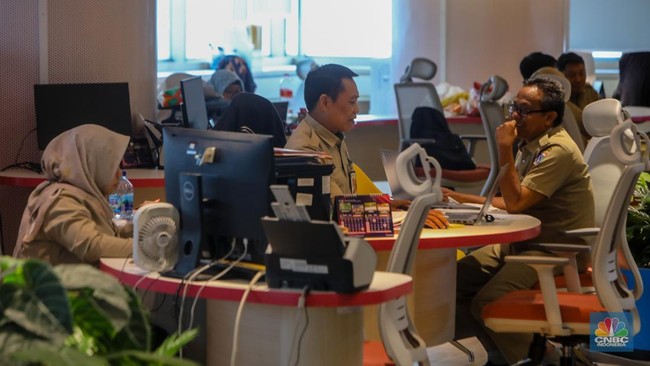
A new chapter in resolving the status of non-permanent workers, particularly within local governments, appears to be entering a significant phase. Demands are resurfacing for Government Employees with Work Agreements (PPPK), both full-time and part-time, to be converted into permanent Civil Servants (PNS) without undergoing re-testing.
The primary justification raised is service. Length of service and dedication to the government are considered sufficient grounds to transition an individual to PNS status without following the selection mechanisms applied to other applicants.
The question remains: can dedication serve as a substitute for selection? This is a crucial inquiry, as Indonesia has already moved through a long phase of civil service management reform. Before the enactment of Law Number 5 of 2014 concerning State Civil Apparatus (ASN), various pathways to becoming a government official were indeed available.
However, the recruitment and testing mechanisms had not yet achieved fully standardised standards. Those entering through official schools underwent specific forms of selection, though each school had variations in exam format and material. Fresh graduate recruitment was also conducted through examinations, but the stages and forms of testing were not always uniform.
Among these various pathways, the ‘honorer’ (non-permanent worker) route once served as an alternative path to PNS status. Becoming an ‘honorer’ was once considered a promising way to eventually achieve permanent status.
Dedication was a key indicator in the appointment process. The longer an individual’s service as an ‘honorer’, the greater the hope of obtaining PNS status. The logic was simple: those who had worked for a long time were deemed to have proven their loyalty and commitment to the government.
However, that era ended when the ASN Law began to shift the paradigm of apparatus management. Employment status was divided into PNS and PPPK, while the ASN procurement process was placed within a more standardised selection framework. This introduced what some perceive as a daunting prospect. Factors such as proximity, length of service, or simply holding ‘honorer’ status no longer automatically guarantee ASN status.
One instrument that became decisive was the Computer Assisted Test (CAT). CAT brought fundamental changes because the selection process became more measurable and standardised. Participants faced a computer-based testing system with specific passing grades, and results could be known with relative transparency. This mechanism simultaneously narrowed the space for non-competency factors to influence selection outcomes.
To proceed in the selection process, participants must do more than just reach a certain score. There are requirements for scores in each sub-test as well as limitations on the number of available positions. Consequently, even those who meet the passing grade may not secure a position if the number of qualified participants exceeds the available vacancies.
It is this type of competition that has revived nostalgia for the past. The ‘honorer’ route is viewed as more achievable than facing a measurable and competitive selection system. Although formal recruitment of ‘honorer’ workers has been restricted, the practice can still be found in the field.
One common reason cited is the existence of past precedents where the government was ultimately deemed unable to terminate ‘honorer’ workers due to the resulting social and political consequences.
This is where the issue becomes more complex. In personnel management, there are two stages with very different characters. The first stage is recruitment. This stage always attracts significant attention, even from those who lack direct authority. Personnel units, government officials, politicians, and various interest groups can all have a major interest in the recruitment process.
Why? Because recruitment creates new beneficiaries. An official with authority in the process can easily build an image as someone who is ‘creating jobs’. From a political perspective, such policies are attractive because the groups benefiting are naturally part of the constituency.
Conversely, there is one stage that is almost always avoided: the termination or rationalisation of employees. Few people want to be the decision-maker responsible for ending someone’s employment status. The social and reputational risks are far too great.
Therefore, when discussing employee rationalisation, officials’ statements often become convoluted, ambiguous, and indecisive. Even passing the responsibility to others is not uncommon.
Recruiting employees produces beneficiaries. Reducing employees produces those who feel aggrieved. This dilemma is clearly visible in the restructuring of non-permanent workers.
Local governments are being asked to resolve the ‘honorer’ issue that has accumulated for years. At the same time, local governments do not always have sufficient policy space or clear guidelines on how such a resolution should be implemented.
As a result, some local governments face non-trivial problems, ranging from an increase in the number of employees and rising personnel expenditures, to the fact that manpower planning based on workload may not be aligned.
Now, the issue has entered a new phase with the emergence of demands that former ‘honorer’ workers or PPPK be converted to PNS without selection. At this point, the principle of the merit system is being tested once again.