
Continuing Its Rally: A Look at SEMA's Share Profile, Business Lines and Latest Performance
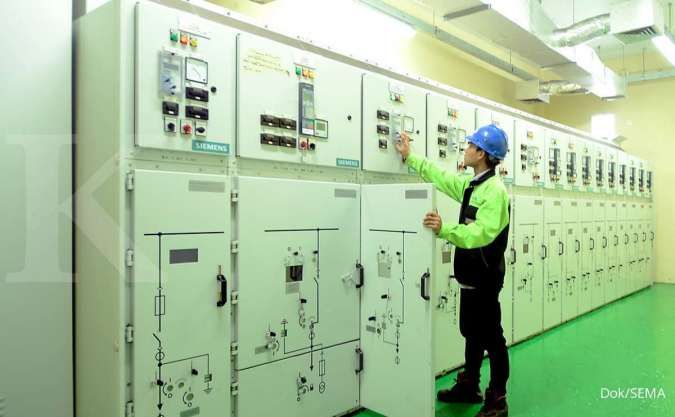
Shares in PT Semacom Integrated Tbk (SEMA) attracted investor attention in trading on the Indonesia Stock Exchange (IDX) on Tuesday, 15 September 2026. SEMA recorded a significant gain, touching the upper auto-rejection level (ARA).
Based on IPOT data (at 09.30 WIB), SEMA stood at Rp252 per share, up Rp55 or around 27.92% in trading on 15 September 2026.
The movement made SEMA once again one of the most closely watched stocks in the market.
The company is also beginning to develop opportunities in the data centre sector, which requires electrical infrastructure with substantial power needs.
For the record, SEMA was included in the IDX’s unusual market activity (UMA) list as of 14 September 2026. Be sure to monitor this issuer’s movements carefully.
So, what is this issuer’s profile? Here is the full information.
PT Semacom Integrated Tbk was founded in 2009 and initially focused on manufacturing electrical panels. The company later expanded its business activities into renewable energy solutions from 2020 onwards.
SEMA listed on the IDX on 10 January 2022 at an initial public offering (IPO) price of Rp180 per share.
The company describes itself as an energy solutions provider in Indonesia, with experience in producing licensed Type Test panels from principal brands.
SEMA’s business can be grouped into several main lines: Power Distribution, Renewable Energy, and Service.
- Power Distribution
Power Distribution is one of SEMA’s core businesses. The company manufactures and supplies a range of panels and electrical power distribution systems.
This business covers panel and switchgear solutions used to support the electricity needs of various industrial sectors.
SEMA also has experience supplying panels for data centre projects. The company says data centres remain one of its business development focuses in 2026.
- Renewable Energy
SEMA began expanding into renewable energy in 2020.
One area it is pursuing is solar power generation (PLTS). The company is also developing clean energy solutions that can be used by industrial customers and other sectors.
The expansion into renewable energy forms part of SEMA’s strategy not to rely solely on its electrical panel manufacturing business.
- Service
In addition to manufacturing equipment, SEMA also provides services related to electrical and energy solutions.
Under this model, the company acts not only as an equipment manufacturer but can also be involved in project work and supporting services.
One interesting development at SEMA is its involvement in data centre projects.
The company previously cited data centres as one of the sectors contributing to its sales. In 2024, SEMA also disclosed a number of data centre, PLTS and power distribution projects.
In its 2026 public presentation, SEMA reaffirmed that data centres remain a primary focus. The company is developing a more flexible data centre business for the internal needs of institutions and companies, including state-owned enterprises (BUMN) and private firms.
This development is noteworthy because data centre demand in Indonesia continues to rise and requires reliable electrical infrastructure.
SEMA’s management received renewed approval through its 2026 extraordinary general meeting of shareholders (RUPSLB). The company said shareholders approved the reappointment of its board for the 2026 financial year.
SEMA’s management structure is as follows:
Board of Directors
Board of Commissioners
The composition of the commissioners is set out in SEMA’s shareholder meeting information.
Summarising IDX data, the latest financial reports show that SEMA’s performance still faces year-on-year pressure, although there was movement in revenue and profit in the second quarter of 2026.
Quarterly financial data shows SEMA’s revenue in Q2 2026 was around Rp54.40 billion, while net profit was around Rp695.32 million. In Q1 2026, revenue was recorded at around Rp32.10 billion with net profit of around Rp1.20 billion.
The following is a picture of quarterly performance:
The data shows revenue increasing quarter-on-quarter, but a rise in cost of revenue caused net profit margins to shrink in Q2 2026.
As a result, the revenue increase has not fully translated into higher net profit growth.