
Contents of the Indonesia-US MDCP Agreement Agreed by Sjafrie and Hegseth
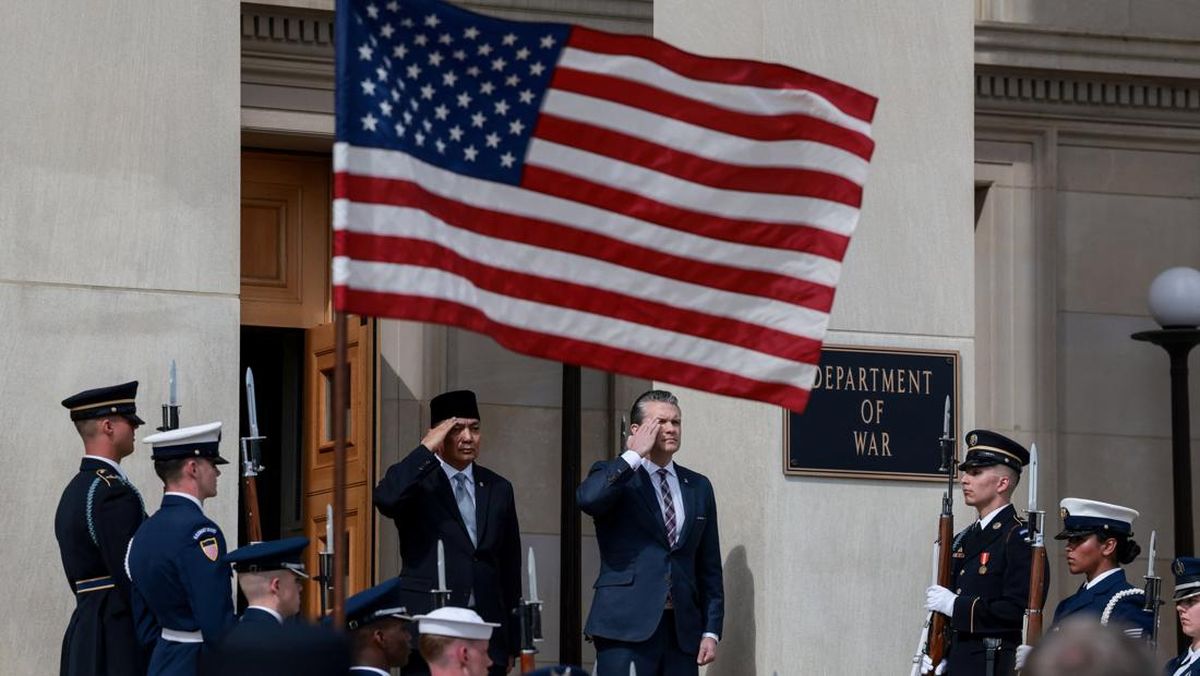
US Secretary of War and Indonesian Republic Defence Minister Sjafrie Sjamsoeddin have announced the formation of the Major Defense Cooperation Partnership (MDCP) between the two countries.
Sjafrie and a delegation from the Ministry of Defence previously met Hegseth at the Pentagon in Washington DC on Monday (13/4).
The MDCP serves as a guiding framework to expand bilateral defence cooperation in a more strategic manner.
The MDCP has three main pillars implemented based on principles of mutual respect and national sovereignty.
First, military modernisation and capacity strengthening; second, professional military training and education; and third, exercises and operational cooperation.
Under this framework, Indonesia and the US are exploring jointly agreed initiatives, including capacity development cooperation, next-generation defence technology, enhanced operational readiness, professional military education, and strengthening interpersonal defence relations between the two countries.
Head of Information at the Ministry of Defence’s General Secretariat, Brigadier General Rico Ricardo Sirait, stated that for Indonesia, this cooperation is viewed as an opportunity to strengthen national defence capacity.
“However, it will still be carried out within the framework of free and active foreign policy, national interests, and full respect for state sovereignty,” Rico said some time ago.
Repatriation of US soldiers’ remains in Indonesia
Rico said that prior to the meeting between the two ministers, a cooperation document was signed, namely the MoU with the Defense POW/MIA Accounting Agency (DPAA) between the Director General of Defence Strategy of the Indonesian Republic’s Ministry of Defence, Major General Agus Widodo, and the Director of DPAA, Kelly K McKeague, as the US counterpart.
The DPAA is fundamentally a form of humanitarian and historical cooperation for research, search, recovery, identification, and repatriation of the remains of US military personnel from World War II located in Indonesia.
He explained that in practice, this cooperation is carried out only with written approval from the Government of the Republic of Indonesia through the Ministry of Defence and must fully comply with Indonesian laws and regulations.
“In addition, DPAA activities are also expected to consider local community interests, environmental protection, historical values, and provide social, academic, and economic benefits to the activity locations,” he said.