
Consumption of Pertalite to be Restricted for Deciles 9-10: Where Does the Data Come From?
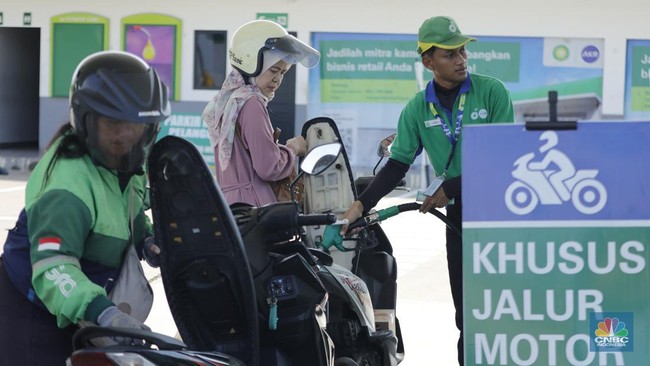
The government plans to utilise decile data to restrict the consumption of subsidised fuel. The initial concept involves limiting the use of Pertalite for citizens falling within the decile 9-10 groups.
However, the Ministry of Finance and the Ministry of Energy and Mineral Resources (ESDM) have not yet set an implementation date, as the decision is still undergoing careful calculation.
Regarding the source of this decile data, Turro Wongkaren, Vice Chairman of the Statistical Society Forum, explained that decile is a statistical term used to group the population based on routine expenditure to determine welfare levels. “Deciles essentially divide the population into 10 groups based on expenditure,” Turro stated when contacted by CNBC Indonesia.
This decile information is contained within the National Socio-Economic Single Data (DTSEN), which is part of a social statistics concept known as a social registry or social database, distinct from social beneficiary data. Turro noted that because the decile functions as a social registry, its use is limited to identifying the social conditions of the population as measured by the Central Bureau of Statistics (BPS).
“A social registry means we are creating a database of the Indonesian population according to their socio-economics,” said Turro.
The source of the DTSEN data, according to Turro, originates from the Regsosek (Socio-Economic Registration) dataset, the DTKS (Social Welfare Data), and the P3KE (Targeting for the Acceleration of Extreme Poverty Eradication). These three datasets are processed using the Proxy Means Test (PMT) statistical method to estimate family welfare levels based on observable characteristics.
He explained that PMT is used because accurate income data is difficult to obtain, as not all citizens have formal jobs or financial accounts. Therefore, statistically, the focus is on calculating routine expenditure to determine welfare levels.
This data is further enriched with various administrative datasets and periodically synchronised with population data managed by the Directorate General of Population and Civil Registration (Dirjen Dukcapil) under the Ministry of Home Affairs. The ranking considers various socio-economic characteristics simultaneously, including housing conditions, drinking water sources, cooking fuel and energy, asset ownership, electricity capacity and consumption, family composition, education, occupation, health, and disability.
“Primarily, many people do not have continuous formal income. You might see many people in Jakarta who have accounts, but not everyone does,” said Turro.
Once the data is grouped into deciles by the BPS, it serves as a metric to determine social beneficiaries—those eligible to receive benefits from various government social protection policies. Turro emphasised that the translation of decile data into guidelines for beneficiaries is entirely the responsibility of the government, not the BPS, through programmes in various Ministries and Agencies (K/L), such as users of subsidised fuel, low-income housing (MBR), and social assistance recipients.
“The BPS is only responsible for measuring the deciles. Whether that is then used for government programmes depends on the respective ministry,” concluded Turro.