
Consumption and Investment Support Indonesia’s Economic Growth in Q3 2026
Indonesia’s economy continued to perform strongly amid rising global risks. In the third quarter of 2026, national economic growth reached 5.47% year on year, supported by household consumption, stronger investment, export performance and the effective use of government spending.
The growth reflects the resilience of domestic demand in sustaining the national economy’s expansion, and highlights the role of fiscal policy in maintaining stability amid global uncertainty.
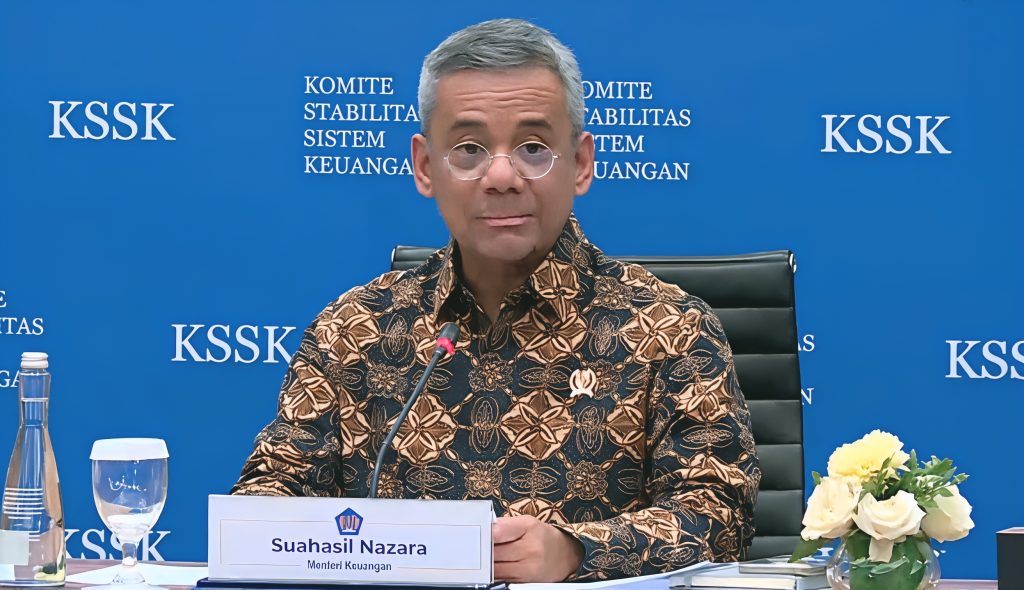
Finance Minister Suahasil Nazara said the State Budget (APBN) played an important role in protecting people’s purchasing power, supporting business activity and mitigating external pressures.
“The State Budget plays an important role in protecting people’s purchasing power, supporting business activity and mitigating external pressures. The government will continue to optimise the State Budget to maintain stability while fostering economic growth, supported by stronger coordination of fiscal, monetary and financial-sector policies,” Suahasil said in an official statement in Jakarta on Friday (6 November 2026).
On the expenditure side, household consumption remained one of the main pillars of growth, expanding by 5.04% year on year. This was supported by stable purchasing power, increased mobility and strong domestic demand.
Spending on restaurants and hotels grew by 6.59% year on year. Transport and communications consumption rose by 5.83%, amid greater public mobility, the holding of various events and tourism activity.
Consumption activity was also reflected in higher retail sales, electronic-money transactions and debit- and credit-card use. Fiscal stimulus, social assistance, social protection and food-price stabilisation also helped safeguard purchasing power.
Government consumption recorded relatively strong growth of 8.95% year on year, driven mainly by a 39.7% increase in spending on goods and a 10.3% rise in personnel expenditure.
The more effective execution of state spending is expected to generate multiplier effects for business production, job creation and household consumption.
On the investment side, gross fixed capital formation grew by a robust 6.06% year on year. This was supported by business confidence in the national economic outlook, stable domestic conditions and government efforts to create a favourable investment climate.
Foreign investment grew by 27.4% year on year in the third quarter of 2026. Building investment rose by 6.39%, supported by faster infrastructure development and various government priority programmes, including Free Nutritious Meals, Sekolah Rakyat (People’s Schools) and housing.
Vehicle investment also performed positively, growing by 12.96%, supported by both domestically produced and imported vehicles.
In foreign trade, real exports of goods and services grew by 4.59% year on year. This was driven mainly by increased exports of crude palm oil (CPO), coal and higher-value downstream products such as nickel, copper and aluminium.
Services exports grew by 1.39%, in line with a 3.89% increase in international tourist arrivals.
Meanwhile, imports of goods and services rose by 7.31%, with real goods imports increasing by 8.58%. The rise reflected sustained demand for raw materials, capital goods and consumer goods to support production, industrial expansion and domestic demand.
Manufacturing and trade drive growth
By industry, manufacturing remained the main engine of economic growth, expanding by 5.87% year on year.
Manufacturing performance was supported by several strategic downstream industries. Food and beverage manufacturing grew by 7.09%, underpinned by exports of palm-based products and domestic CPO demand.
The chemicals, pharmaceuticals and traditional medicines industry recorded growth of 8.10%, amid increased production of biodiesel feedstock for the B50 programme and fertiliser ahead of the planting season. Basic metals grew by 9.94%, driven by higher exports of copper cathodes, nickel matte and aluminium.
Construction also performed positively, growing by 6.42% year on year. This was supported by infrastructure development and the accelerated implementation of government priority programmes, including Merah Putih Village Cooperatives (KDMP), housing and Sekolah Rakyat.
Trade grew strongly by 7.14% year on year, supported by rising domestic demand and household purchasing power. Passenger-car sales increased by 25.95%, while motorcycle sales grew by 8.92% year on year.
Accommodation and food services recorded growth of 11.2%, alongside a 7.05% increase in domestic tourist trips.
Information and communications grew by 7.13%, driven by greater use of telecommunications services, data traffic and e-commerce transactions. This indicates that digital transformation is increasingly becoming a new source of growth for the national economy.
Against these gains, growth in agriculture, forestry and fisheries moderated to 0.46% year on year. The slowdown was affected by a prolonged dry season, or El Niño, which led to contractions of 1.58% in food crops and 0.13% in plantation crops.
Livestock and fisheries nevertheless continued to grow, by 4.95% and 2.23%, respectively.
Mining and quarrying also returned to positive growth, at 0.91%, after contracting for four consecutive quarters. The improvement was driven by 2.96% growth in metal ore mining, as metal-mining operations resumed in Papua and Nusa Tenggara.
Growth across regions and rising employment
Economic growth was positive across all regions of Indonesia. Bali and Nusa Tenggara recorded the highest rate, at 6.08% year on year, supported by increased tourism activity in Bali and mining in Nusa Tenggara.
Java, the largest contributor to the national economy, grew by 5.84%, underpinned by manufacturing and services. Sulawesi expanded by 5.68%, driven by the growth of mineral downstream industries.
Sumatra grew by 4.95%, Kalimantan by 3.96%, and Maluku and Papua by 4.42%. These figures show that economic growth momentum remained intact across Indonesia’s regions.
Strong economic growth was accompanied by improved labour-market conditions. By August 2026, employment had increased by 1.4 million people compared with August 2025.
The labour force participation rate reached 70.33%, reflecting greater involvement of the working-age population in economic activity.
At the same time, unemployment fell by 77,000 to 7.38 million people. The open unemployment rate also improved to 4.75%, down from 4.85% in August 2025.
Agriculture was the largest employer, accounting for 28.20% of workers, followed by trade at 17.86% and manufacturing at 13.75%.
The third-quarter 2026 growth figures show that domestic consumption, investment, manufacturing and government spending remain important foundations of Indonesia’s economy.
“Going forward, stronger coordination of fiscal, monetary and financial-sector policies will be a strategic step towards maintaining stability and sustaining growth momentum amid global economic developments and risks,” Suahasil concluded.
Source: jawawa.id (https://jawawa.id/newsitem/consumption-and-investment-support-indonesias-economic-growth-in-q3-2026-1793937020)
Originally published by infopublik.id (https://infopublik.id/kategori/nasional-ekonomi-bisnis/996218/konsumsi-dan-investasi-jadi-penopang-pertumbuhan-ekonomi-indonesia-di-triwulan-iii-2026), translated from Indonesian