
Consumers hold great power to protect Indonesian seas: MSC
Bogor (ANTARA) - Global non-profit organisation Marine Stewardship Council (MSC) Indonesia is urging the public to realise that consumers have a major role in maintaining the sustainability of marine resources through their daily seafood choices.
MSC Indonesia Commercial Communications Officer Usmawati Anggita said in a written statement received in Bogor, West Java, on Thursday that every consumer decision when buying seafood can have a tangible impact on ocean health and the sustainability of fishery resources.
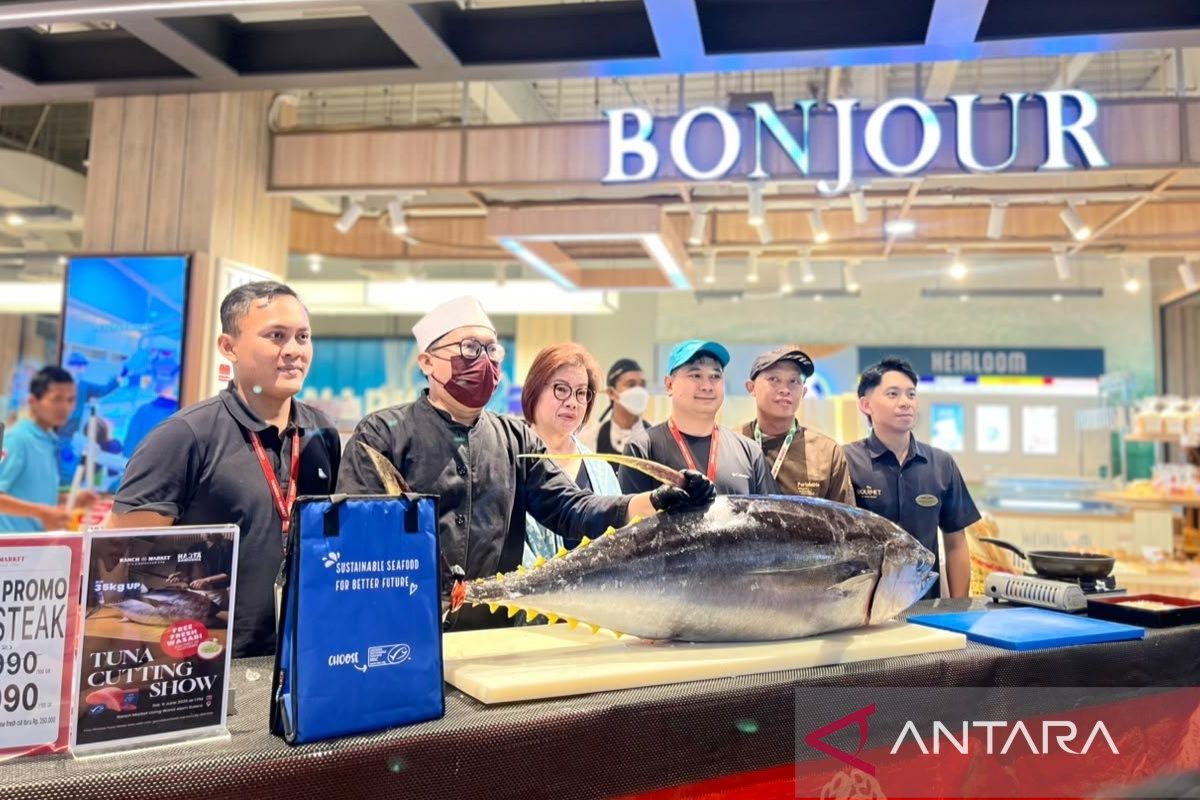
The message was also delivered in the context of the World Oceans Day 2026 commemoration through an educational Tuna Cutting Show held at Ranch Market, Jakarta, to raise public awareness about the importance of choosing seafood from responsibly managed fisheries.
“Every seafood product has a story behind it. When consumers choose MSC-labelled products, they are supporting fisheries that have met stringent sustainability standards to maintain healthy fish stocks, minimise impacts on the marine ecosystem, and ensure responsible fisheries management,” Usmawati said.
According to her, the increasing availability of MSC-labelled seafood products in Indonesia demonstrates stronger collaboration between fishery operators, processors, retailers, and consumers in supporting ocean sustainability.
She explained that consumers are often unaware that the decisions made while shopping can influence fishing practices throughout the supply chain.
“By choosing sustainable seafood, the community can become part of the solution to safeguard marine resources for future generations. World Oceans Day is the right momentum to remind us that protecting the ocean is not only the responsibility of those who work at sea, but also our collective responsibility,” she stated.
During the event, visitors were introduced to MSC-certified tuna products under the PINISEA brand, which has been available in the Ranch Market network since 2024. The products include tuna steak and tuna saikoro sourced from fisheries that meet environmental sustainability and product traceability standards.
AP2HI CEO Janti Djuari said the public needs to be more familiar with Indonesian tuna, from its quality and health benefits to the product handling process from the sea to the dining table.
“Today we want to invite the public to get to know Indonesian Tuna better, starting from its quality, its health benefits, to the long journey from the sea to our dinner tables,” she said.
Janti explained that tuna is a high-quality protein source rich in omega-3. However, product quality is highly dependent on proper handling from the moment the fish is caught until it reaches the consumer.
“Many people mistakenly think they are allergic to tuna, when in fact such reactions are often triggered by a decline in fish quality due to non-standard handling. This is where the importance of knowing the origin (traceability) of the fish we consume comes in,” she said.
She also urged the public to appreciate more the role of local fishers who are an important part of Indonesia’s fishery supply chain.
“Behind every piece of tuna we enjoy, there are thousands of Indonesian fishers who work hard. By choosing high-quality and sustainable Indonesian Tuna, we not only pick healthy food but also support the welfare of fishers,” Janti added.