
Consumers Complain About Dangers of Old Water Jugs, 92 Million Indonesians at Risk from BPA
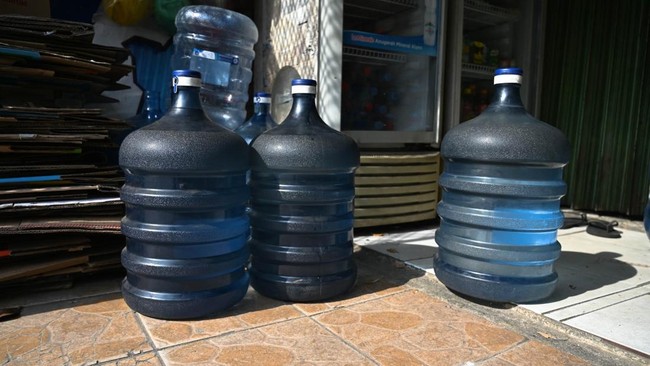
Jakarta, CNBC Indonesia - The Chairman of the Indonesian Consumer Community (KKI), David Tobing, stated that the circulation of old reusable water jugs, or “ganula,” in the market remains widespread. Evidence shows that 92% of consumers report still receiving “ganula” that could leach the dangerous chemical Bisphenol A (BPA) into drinking water.
This situation threatens the health of more than 92 million Indonesians. Based on various studies, BPA can trigger obesity, diabetes, and reproductive disorders.
“Based on BPS data, 34% of households in Indonesia consume drinking water from jugs. That means more than 26 million households. Therefore, from these complaints, it can be estimated that 92 million people are at risk to their health from BPA leaching,” David said some time ago, on Tuesday (12/5/2026).
The KKI obtained these findings from monitoring that has been ongoing for three years. In 2024, the KKI conducted a national survey of 450 respondents, followed by direct investigations at dozens of agents and grocery stores in Jabodetabek in 2025. As a follow-up, the KKI opened a Consumer Complaint Channel from March to April 2026.
“From 250 complaints received from seven major cities, the majority of reporters validated that they still consume water from jugs that are over one year old or ganula,” David explained.
In addition, the KKI also received photo evidence from consumers showing jugs produced in 2011. In other words, these jugs are 11 years old but still freely circulate and are used for drinking water.
“Interestingly, although concerning, there are jugs that are 11 years old. In some areas around Jakarta, many of these jugs are 10 years old or five years and up. These jugs are circulating everywhere,” David clarified.
At the same time, consumers also reported the appalling condition of the jugs received. In this context, 30% of consumers reported jugs that were already dirty, worn, or dull, 18% cracked, and 2% dented.
“So, what is the key finding? The older the jug’s age, the more varied the complaints,” he emphasised.
He continued that the risk of BPA exposure is further worsened by poor handling of jugs during the distribution process. For example, on the Jagorawi Toll Road, empty jugs transported from the Bogor area are all carried in open truck beds. Filled jugs are also transported in open beds.
However, David noted that polymer experts from the University of Indonesia have confirmed that exposure to sunlight, rough washing, and excessively long usage are the main triggers for BPA leaching. The experts then recommended a safe usage limit for polycarbonate jugs of a maximum of one year or 40 refills.
Therefore, David stated the importance of regulations limiting the usage lifespan. Other countries in the region, such as the European Union, have taken firm steps by totally banning the use of BPA in food-contact materials, effective from July 2026. This ban follows findings by the European Food Safety Authority (EFSA) regarding the dangers of chronic BPA exposure.
However, in Indonesia, the Food and Drug Supervisory Agency (BPOM) still permits the use of BPA and only mandates BPA warning labelling with a grace period until 2028.
“In Europe, BPA jugs are already banned from July this year. Unfortunately, in Indonesia, the labelling requirement is only mandatory in 2028. In addition, there is a regulatory vacuum on usage lifespan,” he revealed.
Source: jawawa.id (https://jawawa.id/newsitem/consumers-complain-about-dangers-of-old-water-jugs-92-million-indonesians-at-risk-from-bpa-1778656141)
Originally published by CNBC Indonesia (https://www.cnbcindonesia.com/news/20260513112245-4-734658/konsumen-keluhkan-bahaya-galon-tua-92-juta-penduduk-terancam-bpa), translated from Indonesian