
Consumer Group Urges BPOM to Review New Nutritional Labelling Regulation
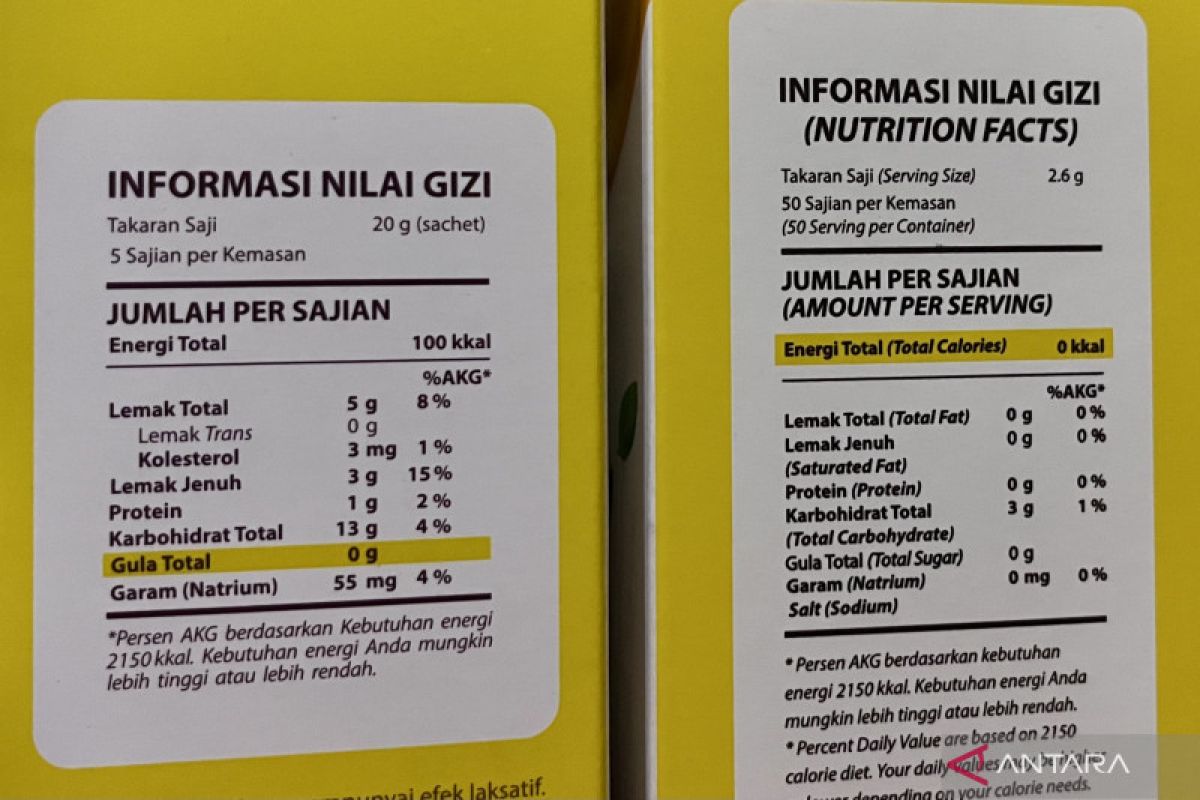
Jakarta (ANTARA) - The Indonesian City Residents Forum (FAKTA) has urged the Food and Drug Monitoring Agency (BPOM) to review its Regulation No. 10 of 2026 concerning Nutritional Value Information on Processed Food Labels, claiming it contradicts the Health Law and risks confusing consumers.
“The BPOM regulation should be a technical instrument that strengthens the implementation of the Health Law. Instead, this rule obscures the primary goal of controlling non-communicable diseases and potentially confuses the public as consumers,” said FAKTA Indonesia Chairman Ari Subagio Wibowo in Jakarta on Wednesday.
He argued the regulation represents a step backwards in consumer protection and public health policy. A fundamental issue, he noted, is the application of two different labelling systems for the same product category. The regulation mandates a Nutri-Level label for packaged sugar-sweetened beverages (MBDK), while other processed food products use a voluntary ‘Healthier Choice’ (PLS) label.
“This double standard opens the door for the industry to manipulate product images to appear healthier and safer for consumption,” Ari stated.
Furthermore, FAKTA assesses that the regulation contradicts the mandate of the Health Law, which emphasises controlling the consumption of sugar, salt, and fat (GGL) as part of a strategy to tackle non-communicable diseases (PTM). According to Ari, nutritional labelling should be an easy-to-understand tool for the public to recognise the content of processed foods, but the new regulation is more compromising towards industry interests than protecting public health.
He also highlighted that the labelling system in the regulation does not follow best practices adopted by many other countries, which are increasingly using simple, easy-to-understand warning labels to reduce obesity and diabetes rates. “While many countries are racing to suppress non-communicable diseases through clear warning labels, BPOM has instead chosen a more complicated and less effective system for informing consumers,” Ari said.
He alleged that the drafting process accommodated industry interests more than public health aspects. FAKTA views the regulation as neglecting consumer rights and misaligning with the human development vision outlined in the President’s Asta Cita, particularly the fourth point concerning improving human resources quality towards a Golden Generation 2045.
Therefore, FAKTA is urging BPOM to immediately cancel and review the regulation and to implement a uniform labelling system using simpler warning labels that are easily understood by the public. “We will continue to oversee this process as part of our commitment to protecting consumer rights, promoting a healthier food environment, and supporting the creation of superior Indonesian human resources towards the 2045 Golden Generation,” Ari asserted.