
Construction of Houses for Poor Residents in Central Java Province Reaches 281,312 Units
In 2025, the realisation of house construction reached 274,514 units sourced from various funding schemes. The house construction utilised the national budget (APBN), the Central Java provincial budget (APBD), district/city budgets, corporate CSR, Baznas, and other sources.
Entering the first quarter of 2026, construction increased by an additional 6,798 units, bringing the total achievement to 281,312 units.
The Head of the Housing for the People and Settlement Areas Office (Disperakim) of Central Java, Boedyo Dharmawan, stated that this achievement is an important part in reducing the housing backlog in Central Java.
“At the end of 2025, the housing backlog was recorded at around 1.33 million units. Thanks to collaborative efforts, throughout 2025 it was successfully reduced by around 274,000 units, so at the beginning of 2026 it dropped to around 1.05 million units,” said Boedyo Dharmawan in a written statement on Wednesday (6/5/2026).
He explained that the government targets resolving this backlog reduction within the next four years through synergy between the central government, province, districts/cities, as well as support from stakeholders such as CSR, Baznas, business actors, and the community.
Addressing the backlog itself covers two aspects: home ownership for people who do not yet have housing and improving the habitability of homes through renovations of Unfit Houses (RTLH).
“This programme not only builds new houses but also repairs unfit houses to meet safe and healthy living standards,” he clarified.
The determination of aid recipients is based on integrated data such as the Integrated Social Welfare Data (DTKS), which is then verified through field checks, including land status and the physical condition of the building.
This programme also forms part of the Central Java Provincial Government’s support for the national target of building 3 million houses.
Meanwhile, Central Java Governor Ahmad Luthfi stated that the RTLH programme is a real manifestation of the government’s presence to ensure people live in decent, safe, and healthy homes.
“We will continue to strengthen collaboration so that more residents are helped and the housing backlog in Central Java can be reduced gradually,” he expressed.
According to him, providing houses for poor residents is not just physical construction but an effort to bring about social justice.
“We want every family in Central Java to have a decent place to live as a foundation for a more prosperous and productive life,” said Ahmad Luthfi.
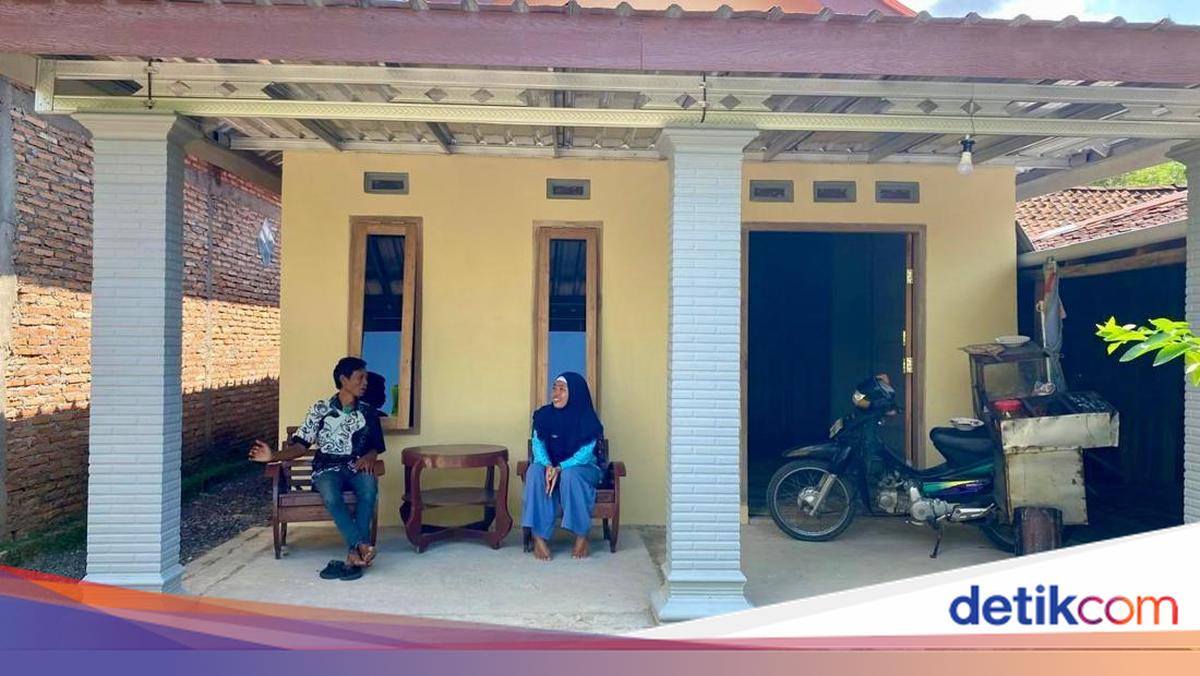
The benefits of this programme are directly felt by the community. One of them is Subali, a resident of Sirnoboyo Village, Giriwoyo Subdistrict, Wonogiri Regency, who can now occupy a decent house after previously living as a lodger.
“I am very happy to receive housing assistance. I never thought I could have my own house,” he said.
As a travelling grilled meatball seller, Subali’s income is uncertain. However, now he, along with his wife and child, can enjoy a more comfortable and decent home.
“Now it’s more comfortable to have our own house. The child is also more enthusiastic about studying,” he said.
Sumar, a resident of Sirnoboyo Village, Giriwoyo Subdistrict, Wonogiri, also feels the benefits of the RTLH renovation programme. His house, which previously had wooden walls, has now been repaired into brick walls coated with cement.
“I am very pleased to receive RTLH assistance. I feel the government truly cares for its citizens,” he said.
As a farmer and casual labourer, Sumar admitted difficulty in repairing his house due to economic limitations. His uncertain income often delayed renovation plans.
“Sometimes as a farm labourer, sometimes joining bricklayers. I wanted to repair the house but didn’t have the funds. Alhamdulillah, now it can be renovated,” he said.
He added that the assistance makes him more at ease and motivated in working. Now, he and his wife can occupy a more decent and sturdy house.
“It feels relieving; now the house is stronger and the roof is already good,” he concluded.