
Constitutional Law Expert: MPR Speaker's Appointment as Iran Envoy is President's Prerogative
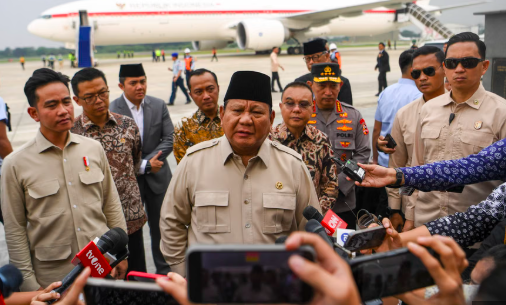
Constitutional law expert from the Indonesian Muslim University, Fahri Bachmid, has offered his views on the appointment of MPR Speaker Ahmad Muzani as President Prabowo Subianto’s special envoy to attend the funeral ceremony of Iran’s Supreme Leader, Ayatollah Ali Khamenei. The appointment of Muzani as President Prabowo’s special envoy sparked public criticism, particularly regarding his position as Speaker of the MPR. According to Fahri, the President’s action in assigning Ahmad Muzani alongside Foreign Minister Sugiono is a consequence of the President’s constitutional position as the highest diplomatic head. Under the 1961 Vienna Convention on Diplomatic Relations, the Head of State is recognised as the primary representative of a country, holding full authority over foreign relations. “Technically, Ahmad Muzani’s position in this mission is not as a representative of the MPR institution, which is functionally equal to the presidency in the state structure. The President is exercising his prerogative as Head of State, who has the constitutional authority to appoint anyone deemed fit to represent the Indonesian state and nation in a diplomatic activity or mission abroad,” Fahri said in a written statement on Wednesday. Fahri elaborated that in his ceremonial role as a symbol of political sovereignty, unity, and official state representation, a President does not engage directly in daily technical policymaking. However, he leads the nation’s representation on the international stage, which provides full legitimacy to appoint certain figures as Special Envoys of the President, beyond the ranks of cabinet ministers or the regular diplomatic corps. Therefore, the mandate to travel to Mashhad, Iran, was carried out purely in a personal capacity as a Special Envoy, not as the Speaker of the MPR, and was coordinated directly with the Ministry of Foreign Affairs as the directing agency for international diplomacy. Fahri observed that although constitutionally the presidential institution is equal to the heads of other high state institutions such as the MPR, this assignment remains legally valid. It rests on the President’s discretion as the holder of governmental power and the head of state diplomacy to determine political direction on the international stage, as stipulated in Article 6 paragraph (1) of Law Number 37 of 1999 concerning Foreign Relations. From a national positive law perspective, this position is specifically supported by technical regulations regarding the appointment of special executive officials. “The position and authority of the President’s Special Envoy are specifically regulated in Presidential Regulation Number 106 of 2025 concerning Special Advisers to the President, Special Envoys of the President, Special Staff to the President, Special Assistants to the President, and Special Staff to the Vice President, as contained in Chapter II, Articles 16, 17, and 18. These provisions stipulate that to facilitate the President’s duties, a Special Envoy is appointed to carry out specific tasks outside the organisational scope and portfolio of ministries or other government agencies,” he explained. Fahri added that the regulation allows the President to select figures from professional backgrounds, community leaders, or politicians, as long as the individual is deemed to possess the required competence. However, the regulation contains a strict limitation of authority, stating that a special envoy does not have the executive authority to make legally binding decisions or policies like a minister, and is prohibited from taking over the core duties of a ministry. “Thus, the President has the constitutional authority to appoint a Special Envoy based on the provisions of Presidential Regulation Number 106 of 2025, which grants the President full authority to appoint officials to carry out specific tasks outside the portfolio of ministries or other agencies,” Fahri concluded.