
Constitutional Law Expert: Election Law Revision Must Not Be an Elite Plaything, Tighten Presidential Oversight
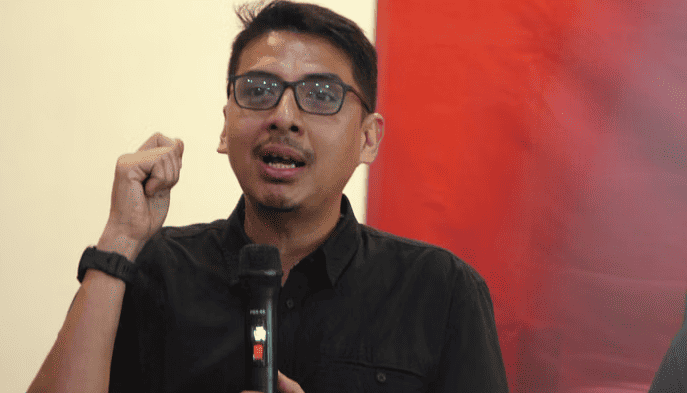
Gadjah Mada University (UGM) Faculty of Law Professor Zainal Arifin Mochtar has warned that the discussion on revising the Election Law must not be drafted solely based on compromises among party elites and the interests of those in power. Zainal stated that the deliberation of the Election Bill must be directed at improving the quality of democracy, strengthening oversight of the president or incumbent, following up on Constitutional Court decisions, and constitutionally reorganising the nomination and parliamentary thresholds. “We must not repeat the same pattern: the revision of the Election Law merely becomes an arena for elite political games, not an effort to deliver a better electoral system,” Zainal said during a discussion forum on the Prospects for Electoral Democracy 2029 in Tangerang on Tuesday.
Zainal explained that one of the main causes of stagnation in electoral system reform is the death of the opposition, both within parliament and in the checks and balances relationship with the government. In constitutional theory, parliament is formed to be a counterbalance to executive power, not merely to follow the president’s will. “The weak function of the opposition causes parliament to lose its critical power, so that whatever the president desires is easily converted into the political will of parliament. This situation is dangerous in a presidential system because it opens a very large space for authoritarian tendencies,” he said.
Therefore, Zainal emphasised that the revision of the Election Law must include strengthening oversight rules for the president, especially ahead of elections. He assessed that Indonesia still lacks instruments to limit the use of power by incumbents, whether in the use of state facilities, administrative influence, or the mobilisation of symbolic and political power. “In many presidential countries, ahead of elections, the president is actually restricted so as not to be too dominant and not to freely use all instruments of power for electoral interests. In Indonesia, such safety valves are almost non-existent,” Zainal said.
He also stressed that the experience of the 2024 Election showed that weak oversight rules for the president can open up significant opportunities for power violations. According to him, if the rules of the game are not changed while the will of power remains the same, then the hope of delivering a better election will only be an illusion. “If the rules of the game do not change, while the will of power remains the same, we are actually clutching at straws. We hope for change, but we hope that change will be born from old rules that are precisely the source of the problem,” he said.
Besides the issue of incumbent oversight, Zainal also highlighted the importance of seriously following up on Constitutional Court decisions in the revision of the Election Law. He assessed that various Constitutional Court rulings have so far provided direction for improving the electoral system, but are often viewed by politicians merely as part of political games. According to Zainal, the Constitutional Court’s decision regarding the nomination of president and vice president essentially encourages the optimisation of political party cadre development. Parties, he said, should function as instruments for recruiting cadres to contest through a diversity of political choices, not to limit citizens’ political choices.
Zainal also specifically highlighted the presidential threshold provision, which he believes is more of a political construct than a legal necessity. He asserted that Article 6A of the 1945 Constitution actually regulates the threshold for electing a president, not the nomination threshold as practised so far. “The presidential threshold we have known so far is more of a political game than a constitutional requirement. The 1945 Constitution regulates the election threshold, not the nomination threshold,” he said. Similar criticism was directed at the parliamentary threshold. According to Zainal, the parliamentary threshold figure often lacks a clear rational basis and is more determined by political compromise. In a proportional electoral system, the design of the rules should be directed at converting as many votes as possible into seats, rather than increasing wasted votes.
On this basis, Zainal urged that the discussion on the Election Law revision not stop at elite debates in parliament, but also be seriously guarded by civil society, academics, students, and all groups concerned with the quality of democracy. Without public pressure and parliament’s courage to carry out its oversight function, he assessed that the revision of the Election Law would only be a repetition of the old cycle. “As long as all parties choose to play it safe, remain silent, and dissolve in the comfort of power, do not expect fundamental changes in our electoral system,” Zainal said.
Source: jawawa.id (https://jawawa.id/newsitem/constitutional-law-expert-election-law-revision-must-not-be-an-elite-plaything-tighten-presidential-oversight-1783421445)
Originally published by Media Indonesia (https://mediaindonesia.com/politik-dan-hukum/908371/pakar-htn-revisi-uu-pemilu-jangan-jadi-mainan-elite-perketat-pengawasan-presiden), translated from Indonesian