
Constitutional Law Expert: Delay in Revising Election Law Opens Door to Manipulation
Feri Amsari, a Constitutional Law lecturer at Andalas University, Padang, believes that the delay in discussing the revision of Law Number 7 of 2017 concerning General Elections (Election Law) has the potential to create loopholes for manipulating rules ahead of the 2029 Election.
He suggests that the slow progress of the revision discussions is suspicious and may be part of a political engineering effort designed to benefit specific parties. “We should question the slow discussion of this law. It is possible that this delay is part of an effort to cheat the election process itself,” Feri stated in Jakarta on Tuesday.
Feri warned that the timeframe leading to the 2029 election stages is narrowing. If the revision continues to be delayed, election organisers and participants may be forced to use existing regulations that have faced significant criticism. “As a result, problematic rules will have to be implemented, ultimately leading to fraud in the election process itself,” he added.
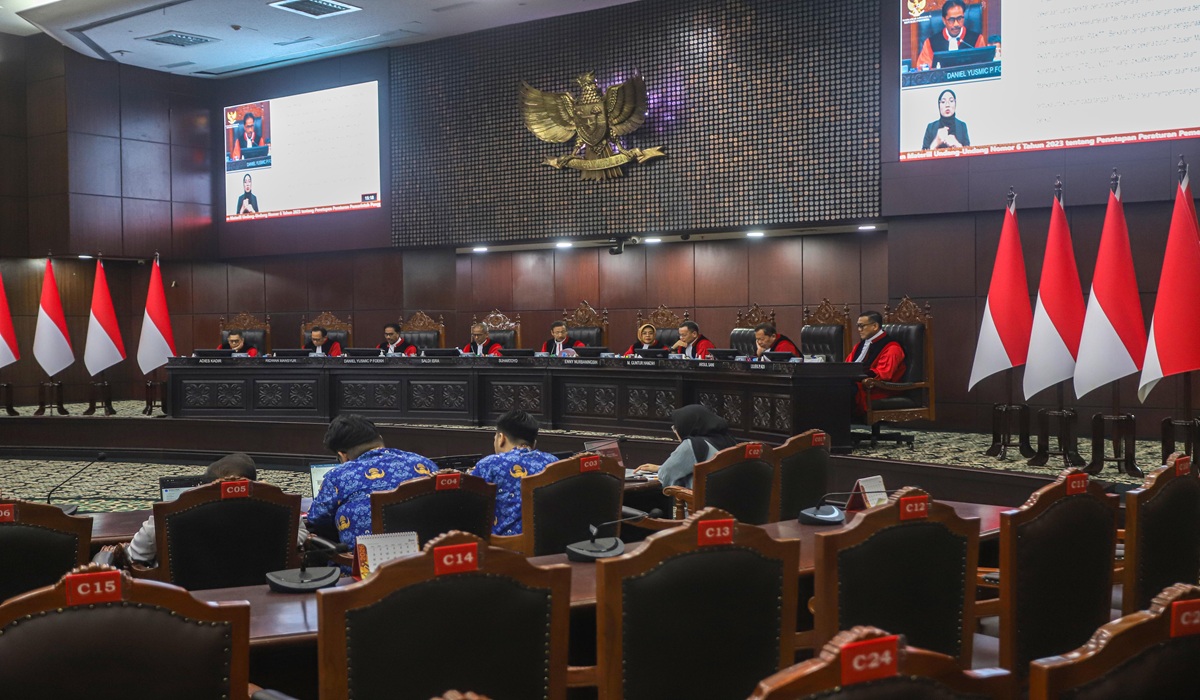
He also highlighted the low level of compliance by the House of Representatives (DPR) and the government regarding Constitutional Court (MK) rulings, especially when such rulings involve the public interest. “They reject and ignore MK decisions, yet speak loudly about the obligation to obey MK rulings when those decisions align with their interests,” Feri asserted.
According to him, one of the decisions that must be upheld is MK Decision Number 62/PUU-XXII/2024, which removed the presidential threshold provision. This ruling grants every political party participating in the election the right to nominate presidential and vice-presidential pairs, either independently or through coalitions.
However, Feri noted emerging discourse suggesting that presidential candidates must be supported by at least three political parties. He views this provision as essentially a new form of the presidential threshold that the MK has already invalidated. “If that requirement is reintroduced, the substance remains the same as the presidential threshold that has been declared unconstitutional,” he said.
Feri emphasised that if such a provision is included in the Election Law revision, it could potentially contradict the constitution and face renewed challenges in the Constitutional Court. “It is natural that these discussions are being postponed. If they were discussed and established now, civil society groups would file petitions with the Constitutional Court. The DPR and the government appear uncomfortable with civil society being able to correct the Election Law,” he remarked.
One issue requiring attention during this harmonisation is the potential application of a restorative justice approach to election crimes. Many cases currently stall within the Gakkumdu (Law Enforcement) framework due to differing views between Bawaslu (Election Supervisory Body), the police, and the prosecution regarding whether criminal elements have been met.
The Chairman of Commission II of the DPR, M. Rifqiznay Karsayuda, is encouraging the harmonisation of election crime handling provisions in the Election Law with the new Criminal Code (KUHP) and Criminal Procedure Code (KUHAP). He mentioned that the draft revision of the Election Law has been submitted to the leadership, but the formation of a Working Committee (Panja) is still awaiting further direction.
Source: jawawa.id (https://jawawa.id/newsitem/constitutional-law-expert-delay-in-revising-election-law-opens-door-to-manipulation-1782906669)
Originally published by Media Indonesia (https://mediaindonesia.com/politik-dan-hukum/906375/pakar-htn-penundaan-revisi-uu-pemilu-jadi-celah-curangi-aturan), translated from Indonesian