
Constitutional Economist Says Transferring Whoosh Debt to Finance Ministry Is a Mistake
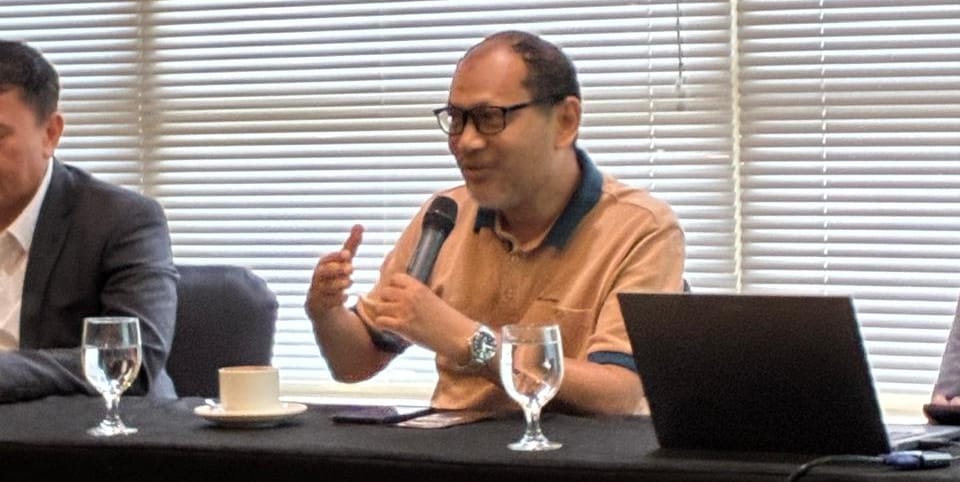
Constitutional economist Defiyan Cori has described the proposal to transfer the debt responsibility for the Whoosh high-speed rail project to the Ministry of Finance as a misguided and inappropriate step. In his view, resolving this problem must not be done by washing one’s hands of it or sacrificing state finances through the State Revenue and Expenditure Budget (APBN).
“Transferring the responsibility for the Whoosh debt to the Ministry of Finance is clearly an inappropriate choice! However, allowing the losses that continue to afflict the state-owned enterprise PT KAI will clearly result in the malfunctioning of rail transport services, particularly the high-speed rail,” Defiyan said in his statement on Tuesday (11/8/2026).
Nevertheless, Defiyan cautioned that resolving this problem should not simply absolve the parties who played a role from the initial construction through to the management of Whoosh. He considers such a move unedifying for the public because the root cause of the business losses has not been transparently disclosed.
“BPI Danantara should take over that responsibility, not the APBN!” he asserted.
This financial crisis stems from PT KAI’s 2024 financial report, which recorded losses of up to Rp4.195 trillion. The burden grew further when PT Pilar Sinergi BUMN Indonesia (PSBI), an associate entity of KAI, recorded unaudited losses of Rp1.625 trillion for the first half of 2025.
The impact of these massive losses has triggered fierce polemics among stakeholders, including politicians in Senayan. This is because the losses of the Whoosh project must be borne jointly by four state-owned enterprises (BUMN) that form the consortium, namely:
PT Kereta Api Indonesia (Persero) / PT KAI, PT Wijaya Karya (Persero) Tbk / WIKA, PT Jasa Marga (Persero) Tbk / JSMR, and PT Perkebunan Nusantara VIII (Persero) / PTPN VIII.
Defiyan reminded that during the administration of President Joko Widodo, the Jakarta-Bandung High-Speed Rail (KCJB) project was initially confirmed to use a purely business-to-business (b-to-b) scheme without a single rupiah from the APBN and without government guarantees.
“It was already clear that this commitment was enshrined in Presidential Regulation Number 107 of 2015 and Presidential Regulation Number 93 of 2015. At that time, the proposal from the People’s Republic of China (PRC) was chosen over Japan’s because it offered a lower investment value, namely US$5.5 billion (around Rp77 trillion), compared to Japan’s proposal of US$6.2 billion (Rp86.8 trillion),” he explained.
However, along the way, this 142.3-kilometre project experienced massive cost overruns, swelling to US$8 billion, equivalent to Rp114.2 trillion.
“This increase in project value of US$2.5 billion (around Rp43.75 trillion) is considered the main source of the financial catastrophe and must be investigated by law enforcement,” he stressed.
Defiyan urged law enforcement to thoroughly investigate the shift in the scheme, which was initially purely non-APBN but later involved state finances. The initial commitment, which was strictly maintained during the tenure of State-Owned Enterprises Minister Rini Soemarno, gradually shifted in the era of State-Owned Enterprises Minister Erick Thohir, with support from Coordinating Minister for Maritime Affairs and Investment Luhut Binsar Pandjaitan.
Ultimately, the use of the APBN was legalised through Minister of Finance Regulation (PMK) Number 89 of 2023 under Finance Minister Sri Mulyani, with the knowledge of President Joko Widodo.
“This means there are three parties who knew about and are responsible for the increase in project value and the violation of the commitment,” Defiyan stated.
He added that these irregularities should not simply be blamed on the management performance of PT KAI alone, let alone be charged to the APBN. The project, which should have been completed in 2019 and operated without state guarantees, was in fact only finished at the end of 2023 amid a series of commitment violations.
“Ideally, these commitment violations should first be investigated by law enforcement. Compromising on errors in policy-making constitutes a serious constitutional violation. If allowed to continue, it will become a bad precedent and a moral hazard for future governance,” he concluded.
Source: jawawa.id (https://jawawa.id/newsitem/constitutional-economist-says-transferring-whoosh-debt-to-finance-ministry-is-a-mistake-1786459835)
Originally published by Media Indonesia (https://mediaindonesia.com/ekonomi/920662/ekonom-konstitusi-sebut-pengalihan-utang-whoosh-ke-kemenkeu-keliru), translated from Indonesian