
Constitutional Court Targets July 2026 Ruling on Judicial Review of Free Nutritious Meal Programme Budget
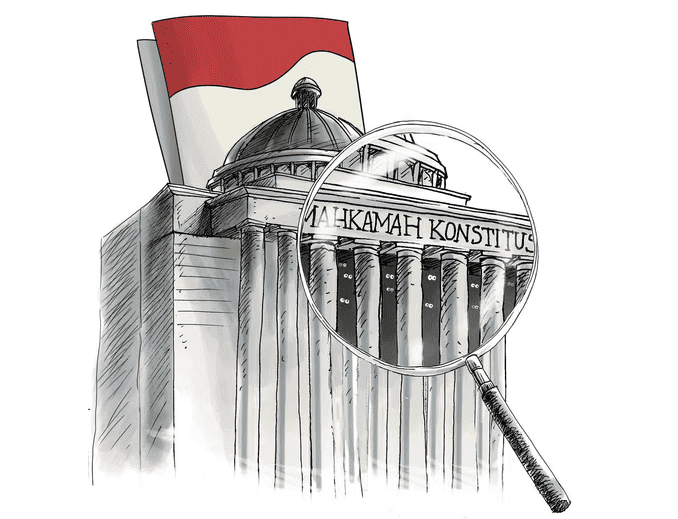
The Constitutional Court (MK) is targeting a ruling in July 2026 on three judicial review petitions concerning the budgeting of the Free Nutritious Meal (MBG) programme within the education fund allocation. Chief Justice Suhartoyo stated that the examination process will be completed by the end of June at the latest, allowing the verdict to be read out the following month.
The three cases under review are judicial reviews of Law Number 17 of 2025 concerning the 2026 State Budget (APBN). The petitioners are challenging the inclusion of the MBG programme’s budget within the education budget component. The cases are registered under numbers 40/PUU-XXIV/2026, 52/PUU-XXIV/2026, and 55/PUU-XXIV/2026.
During a hearing on Monday (15/6), Chief Justice Suhartoyo emphasised that the court would accelerate the resolution of these cases to ensure the substance of the petitioners’ requests remains relevant to the current situation. “The MK will resolve this petition by the end of this month at the latest, so that a decision can be made next month, ensuring the issues raised in the petitioners’ provisional requests are not lost,” Suhartoyo said.
Since preliminary hearings began in February 2026, the court has held a series of sessions to hear testimonies from various parties. The first hearing took place on 11 March, with the agenda of hearing statements from the House of Representatives (DPR) and the government. A similar agenda was conducted during the second hearing on 14 April. During the third hearing on 28 April, the court heard from related parties, namely the Education Research Center (ERC) Foundation and Prof. Hesti Armiwulan. In a subsequent session, the panel heard expert testimony from the petitioners, including Abdullah Ubaid Matraji.
Due to the increasingly limited examination time, Suhartoyo requested that the DPR and the government limit the number of experts they present at the next hearing, scheduled for 23 June 2026. He stressed that the number of experts from the government must match those proposed by the DPR. This request came after the government’s legal counsel from the Ministry of Law, Zulmansyah, announced plans to present two experts for each case, a proposal the panel rejected as it would prolong the trial process. “Four experts, Your Honour?” Zulmansyah asked. “Three, the same as the DPR,” Suhartoyo replied. The court also announced that the next hearing is scheduled for Tuesday (23/6) at 08:30 WIB, with the agenda of hearing expert testimony from the DPR and the government.
In the most recent prior hearing, the petitioners presented several witnesses who highlighted the impact of the MBG Programme on the education sector. One witness was Iman Zanatul Haeri, Head of Teacher Advocacy at the Education and Teachers Association (P2G), who testified for case Number 55/PUU-XXIV/2026. Iman stated he had received numerous reports from teachers regarding welfare issues allegedly linked to changes in education budget priorities. According to him, several honorary teachers lost their jobs, while part-time Government Employees with Work Agreements (PPPK) actually received lower incomes than before. “Part-time PPPK teachers, after receiving their decree, earn less than honorary teachers; some honorary teachers were dismissed or retained by choosing between salaries from School Operational Assistance (BOS) funds or professional allowances/certification; and private madrasah teachers who were promised appointment as PPPK with professional allowances have had this postponed,” Iman said.
He also presented the results of a P2G survey involving 239 teachers, including honorary and part-time PPPK teachers. The survey identified several issues, ranging from increased workloads and reduced teaching time due to non-teaching duties, to delays in salary and allowance payments, and diminished opportunities for PPPK appointments. Based on these findings, Iman urged the government to conduct a comprehensive evaluation to ensure the implementation of the MBG programme does not reduce the budget related to teacher welfare or other educational needs.
Meanwhile, the petitioner for case Number 52/PUU-XXIV/2026 presented Muhammad Zidan Ramdani, General Chair of the Student Executive Council of the Faculty of Da’wah and Communication Sciences at UIN Syarif Hidayatullah Jakarta. Before the constitutional justices, Zidan expressed students’ concerns about the potential reduction in budget support for higher education. He noted that students still face various issues requiring state financial support, from access to scholarships and improved learning facilities to strengthening lecturer quality and research funding. “All of this requires a large and sustainable budget commitment. In such conditions, a reduction or shift in the education budget has the potential to deepen various problems that have not yet been fully resolved. The ultimate impact will be felt directly by students as recipients of educational services,” Zidan stated.
Through this series of hearings, the Constitutional Court is now entering the final stage of examination before issuing a ruling that will determine whether the allocation of the MBG Programme within the education budget is constitutional. The verdict is targeted for July 2026.