
Constitutional Court Ruling: PDIP Legislator Urges Komdigi and Operators to Draft Internet Quota Rules
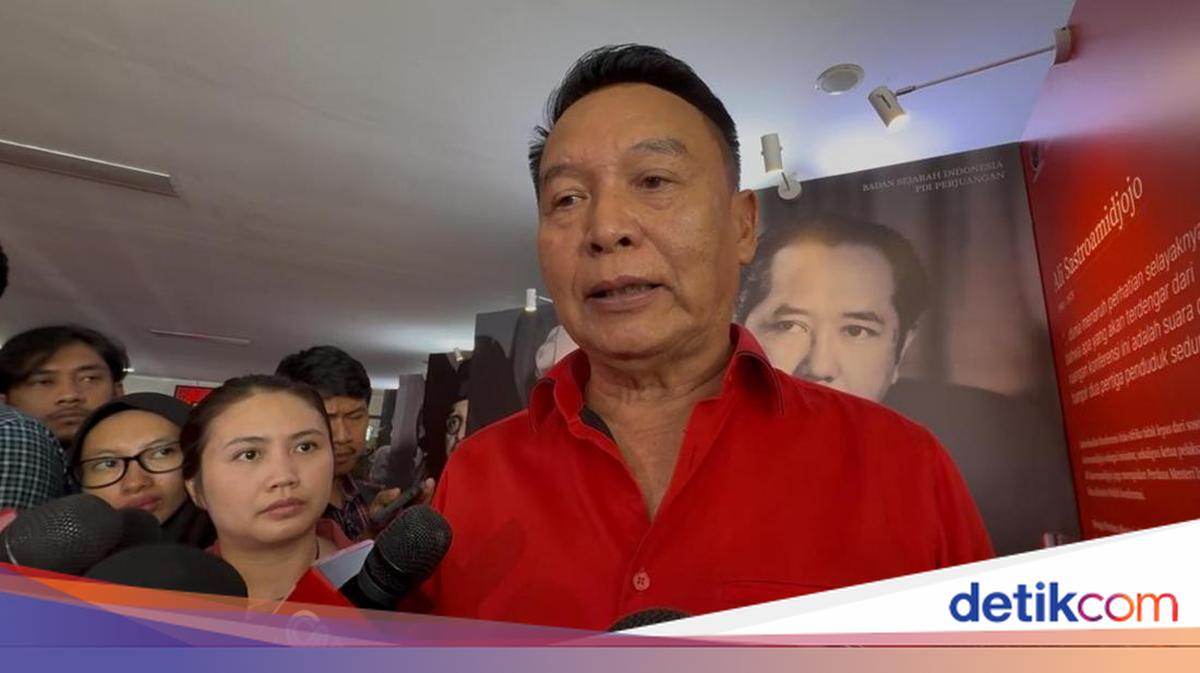
TB Hasanuddin, a member of Commission I of the House of Representatives (DPR) from the PDIP faction, has welcomed the Constitutional Court’s ruling that partially granted a petition and ordered that purchased internet quota may be used until it runs out. Hasanuddin has asked the Ministry of Communication and Digital Affairs (Komdigi) and the operators to prepare regulations stemming from the Court’s ruling.
“This Constitutional Court ruling is a step forward in providing better protection for the public as consumers of telecommunications services. Internet quota that has been purchased is the customer’s right, so there should rightly be a fairer mechanism regarding the use of remaining quota,” Hasanuddin told journalists on Friday (24/7/2026).
Hasanuddin assessed that many members of the public have long felt disadvantaged because remaining quota expires simply because the service’s active period has ended. He believes telecom operators should be able to take alternative steps so that the quota can still be used.
“Internet quota is bought with people’s money. Therefore, customers are entitled to service options, whether in the form of an extension of the validity period or another mechanism that allows the remaining quota to still be utilised in accordance with prevailing regulations,” he said.
Hasanuddin said Commission I of the DPR would schedule a working meeting with the government, particularly Komdigi, as well as telecommunications providers in Indonesia. This is important to ensure readiness for implementing the Court’s ruling.
“Commission I of the DPR needs to promptly schedule a meeting with the government, especially Komdigi and all stakeholders in the telecommunications sector, to ensure readiness for implementing the Constitutional Court’s ruling. This step is important so that the public gains certainty regarding the ruling’s execution and consumer rights are truly realised on the ground,” said the PDIP legislator.
“I hope the government together with mobile operators will promptly draft technical regulations that provide legal certainty while also safeguarding the sustainability of the telecommunications industry. Consumer protection must go hand in hand with certainty for businesses,” he continued.
Hasanuddin hopes the ruling will serve as momentum to improve the governance of national telecommunications services and increase public trust in digital service providers.
“Public trust will grow if consumer rights are genuinely respected. I hope all operators comply with this ruling and deliver better-quality services oriented towards the public interest,” he added.
As compiled by detikcom, on Thursday (23/7) the Constitutional Court handled several petitions concerning expiring internet quota. The Court has already declined at least four petitions on this matter.
A different ruling was subsequently issued in petition number 273/PUU-XXIII/2025, filed by online motorcycle taxi driver Didi Supandi, online culinary trader Wahyu Triana Sari, and lecturer-advocate Rega Felix. The Court partially granted the petitioners’ claims.
“Adjudicating, granting the petitioners’ request in part,” said Chief Justice Suhartoyo in the ruling’s verdict, as viewed on the Constitutional Court’s YouTube channel on Thursday (23/7).
“Declaring Article 28 paragraph (1) within Article 71 point (2) of Law Number 6 of 2023 on Job Creation contrary to the 1945 Constitution and conditionally not legally binding, insofar as it is not interpreted as ‘the tariff amounts set by telecommunications network providers and/or telecommunications service providers are determined by the network and/or service providers based on a formula set by the central government, with the obligation to provide telecommunications service options that guarantee that the remaining quota belonging to telecommunications service users remains active and usable’,” he added.
In its considerations, the Court stated that internet quota already purchased must be usable by consumers until it is exhausted. The Court affirmed that no additional fees may be imposed.
“In real terms, quota that has not been fully used or enjoyed must remain protected as the property right of telecommunications service users, to be used until that quota is exhausted, without being burdened with additional fees or tariffs on the pretext of extending the active period or for any other reason,” said Constitutional Court Justice Adies Kadir at the reading of Decision Number 273/PUU-XXIII/2025 at the Court’s building.
The Court said tariff formulas and telecommunications service schemes must not be approached solely from the commercial perspective of telecommunications providers. It stressed that existing regulations must guarantee reasonable protection for telecommunications service users.
Such protection, the Court said, does not always have to take the form of a single uniform service model. The Court stated that protection can be provided through the availability of various flexible package options.
The Court offered options so that internet quota does not simply expire, namely through:
accumulation or rollover of quota;
extension of the active period;
transfer of benefits;
compensation;
refunds; or
other forms of protection.