
Constitutional Court Ruling: Legislator Urges Free Nutritious Meals Programme to Stop Using Education Budget by 2027
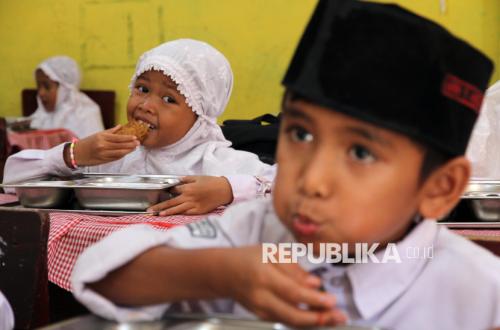
Wakil Ketua Komisi X DPR RI, MY Esti Wijayati, has urged that the Constitutional Court’s decision regarding the budget for the Free Nutritious Meals programme, which stipulates it must not use the education budget, be implemented starting in 2027. Although the court provided a transition period until the 2028 State Budget at the latest, she believes the ruling should be executed as soon as possible to improve the quality of education in the country. “Every effort should be made to implement this starting from the 2027 fiscal year because there is great hope for the education sector to improve and enhance quality through human resource development,” Esti said in Jakarta on Monday. She argued that the education budget needs to be directed towards improving the quality of educators, teaching staff, students, and university students. Additionally, the budget should be used to upgrade educational facilities and infrastructure to make them more adequate, as well as to ensure the welfare of teachers, lecturers, and education personnel in an equitable and quality manner for all. She assessed that a maximised education budget can also address challenges in the era of globalisation. According to her, Indonesia is currently facing significant changes such as digital transformation, the development of artificial intelligence, the green economy, shifts in employment structures, and increasing global competition. In this situation, she said that education for children is no longer sufficient if it merely produces graduates who have completed formal schooling. Instead, it must shape Indonesian people who possess critical thinking skills, digital literacy, creativity, collaborative abilities, strong character, and a readiness for lifelong learning. She assessed that education reform must shift from an administrative orientation towards building human resource quality as the main strategy for national development. This, she said, requires a major commitment from the state to ensure that education programmes are always prioritised. “Of course, building superior human resource quality must start with children’s education, because education is the basic capital for national development,” she said.