
Constitutional Court Ruling Changes National Disaster Designation; Mandatory Indicators Revealed
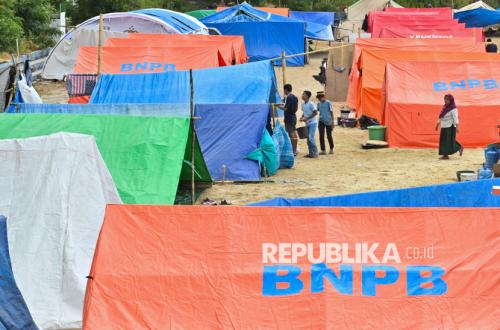
The Constitutional Court (MK) has altered the mechanism for determining national disaster status, stipulating that at least three out of five indicators must be met, with the number of casualties serving as the primary indicator. This change is seen as a necessary catalyst for improving disaster management governance, ranging from mitigation and early warning systems to emergency response and recovery.
Ruling Number 261/PUU-XXIII/2025, read on 28 August 2026, interprets Article 7, paragraph (2) of Law Number 24 of 2007 concerning Disaster Management. The five indicators used include the number of casualties, property loss, damage to infrastructure and facilities, the extent of the affected area, and socio-economic impact.
Member of Commission VIII of the House of Representatives (DPR), I Ketut Kariyasa Adnyability, stated that the ruling pertains to more than just the designation of national or regional disaster status. He believes this change should serve as a momentum to overhaul the entire disaster management system.
“We must use this as a momentum to improve disaster management governance comprehensively, starting from mitigation, preparedness, early warning systems, emergency response, to rehabilitation and reconstruction,” he said in a statement on Wednesday (16/9/2026).
Kariyasa noted that the five indicators established by the Constitutional Court need to be immediately translated into objective technical parameters. Clear parameters are necessary to prevent differing interpretations when the government determines the status and level of a disaster.
“We must ensure that there are no longer differing interpretations in the field regarding when an indicator is considered met,” he added.
In addition to the status designation, Kariyasa urged the strengthening of the Early Warning System (EWS), particularly in high-risk areas. He noted that such systems must be integrated with information systems, communication channels, evacuation procedures, and the readiness of both the government and the public.
“Early warnings must reach the community in easily understandable language and with sufficient time for people to save themselves,” said Kariyasa.
He also encouraged increased budgeting for mitigation and preparedness so that disaster management is not solely focused on post-disaster handling. He argued that spending on risk reduction should be viewed as an investment to minimise disaster impacts.
“Our paradigm must shift from being responsive to being more preventive. Spending on mitigation, preparedness, strengthening EWS, public education, risk mapping, and building disaster-resilient infrastructure must be viewed as an investment to save lives,” he said.
Previously, the Acting Head of the Data, Information, and Disaster Communication Centre of the National Disaster Management Agency (BNPB), Berton SP Panjaitan, stated that his agency respects Constitutional Court Ruling Number 261/PUU-XXIII/2025. He noted that the ruling provides clarity regarding the designation of national or regional disaster status.
“Through this ruling, the Court stated that all five indicators do not have to be met. Specifically for national disaster status, at least three of those five must be met, and the number of casualties must be the primary indicator,” he said in a statement.
Berton stated that declaring disaster status is a critical decision that must be based on accurate data and real conditions on the ground. BNPB will continue to strengthen rapid assessments, data collection, impact analysis, and the assessment of regional capabilities to assist the government in decision-making.
Furthermore, BNPB emphasised that a national disaster status is not the only basis for the central government to assist regions. The central government can still deploy personnel, equipment, logistics, funding, and technical support according to needs and authority.
“This means that a disaster not designated as national does not mean it will not be handled by the central government. The priority is that affected communities immediately receive protection, rescue, basic needs, services, and recovery,” Berton added.
The Constitutional Court ruling places the clarity of indicators as a vital aspect of disaster status designation. Simultaneously, the effectiveness of disaster management remains dependent on the readiness of the government and the community to reduce risks, respond to incidents, and accelerate recovery after disasters.