
Constitutional Court Rules on Free Nutritious Meal Budget, Ministry Responds
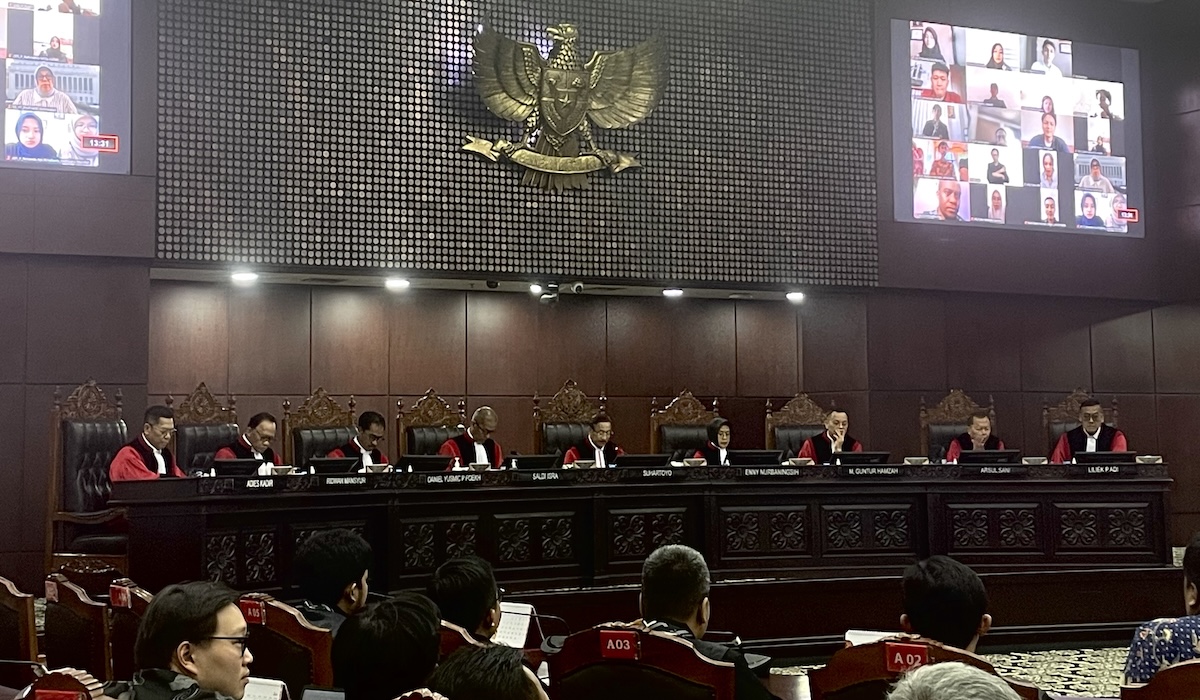
Deputy Minister of Primary and Secondary Education (Wamendikdasmen), Fajar Riza Ul Haq, has affirmed that the government respects the Constitutional Court’s (MK) ruling on the judicial review of the Free Nutritious Meal (MBG) programme’s budget portion in the 2026 state budget. Although the Court granted part of the petition against Law No. 17/2025, the government believes the MBG programme remains an integral part of improving the quality of national learning.
Fajar explained that the MBG programme has a strong correlation with increased student motivation at school. Based on last year’s data, the regular provision of nutritious meals has been proven to have a positive impact on children’s focus and enthusiasm for learning at school.
“The government’s standpoint all along has been that the MBG programme correlates strongly with improved motivation and learning quality. Health issues and nutritional fulfilment are an integral part of creating an integrated learning ecosystem in line with President Prabowo’s vision,” said Fajar in Jakarta on Thursday (30 July).
He also assured that the MBG budget allocation does not disrupt other priority programmes of the Ministry. Fajar noted that the school revitalisation agenda has in fact seen a significant increase, from 16,000 schools last year to 71,000 schools this year, with a target of reaching 150,000 schools next year.
Beyond physical revitalisation, strategic programmes such as teacher certification, the distribution of educational equipment, and the School Operational Assistance Fund (BOS) are confirmed to continue running normally. Fajar added that part of the Additional Expenditure Budget (ABT) from the Ministry of Finance has also been disbursed, particularly for additional allocations for the revitalisation of educational units.
Separately, Chair of DPR RI Commission X, Hetifah Sjaifudian, called on the government to promptly adjust its budget policy following the Constitutional Court’s ruling. This step is needed so that education funding allocations remain in line with the constitutional mandate without diminishing the quality of primary and secondary education services.
“The government is expected to adjust its policies and budgeting so that the education allocation remains consistent with the constitutional mandate. This MK ruling is expected to provide legal certainty whilst maintaining a balance between the right to education and the government’s social programmes,” stressed Hetifah.
The Indonesian Education Policy Network (JPPI) expressed disappointment that the Constitutional Court still allows room for separating the Free Nutritious Meal (MBG) budget from education funds until the 2028 state budget at the latest.
The Constitutional Court ruled that Free Nutritious Meal (MBG) funding may no longer be charged to the mandatory education budget allocation of 20 per cent of the state and regional budgets.
The Court ruled that the MBG budget must be separated from the education budget in the state budget from 2027 and at the latest by the 2028 state budget.
With only 1 per cent coverage so far, the Ministry of Religious Affairs has asked for the acceleration of the Free Nutritious Meal (MBG) programme for 6.2 million santri across 42,000 Islamic boarding schools.
Minister of Religious Affairs Nasaruddin Umar proposed three strategic steps to expand the Free Nutritious Meal (MBG) programme for santri, including the economic empowerment of pesantren.