
Constitutional Court Rules KPK Leaders Not Required to Permanently Resign from Previous Positions, Inactive Status Suffices
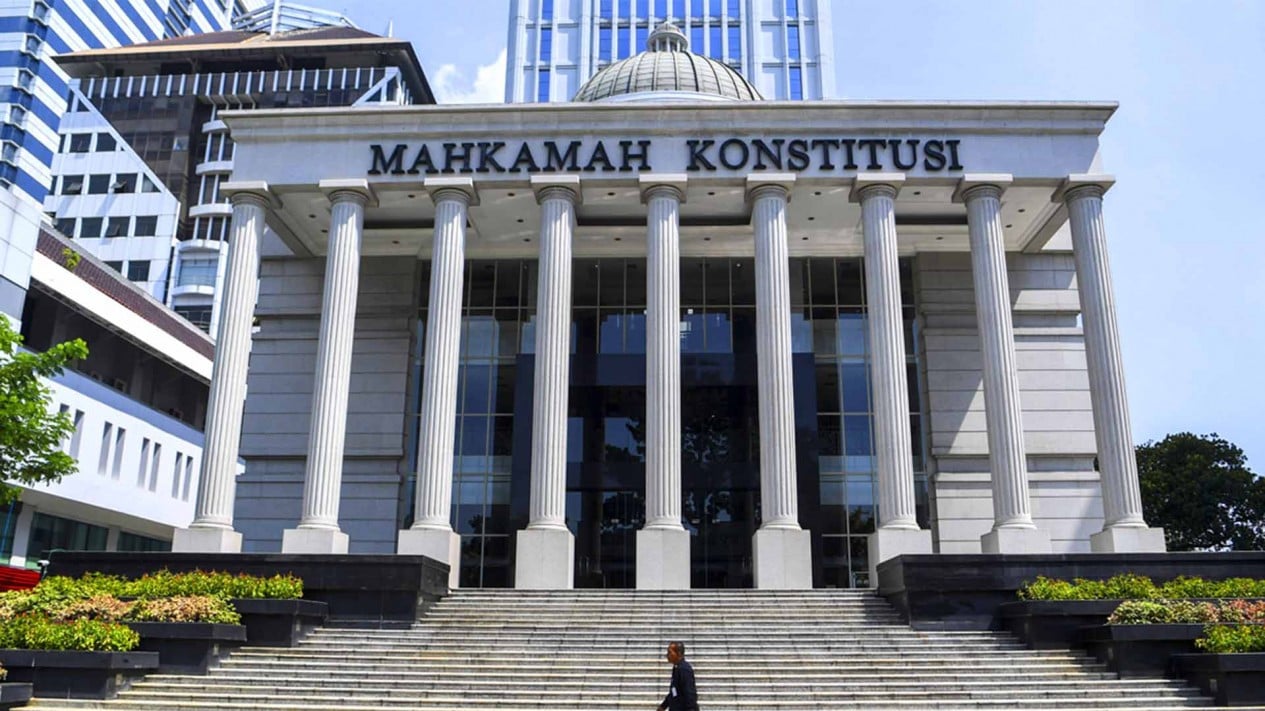
Jakarta, VIVA – The Constitutional Court (MK) has partially granted a petition regarding Articles 29(i) and 29(j) of Law No. 19 of 2019 on the Corruption Eradication Commission (KPK Law). The petition, registered under case number 70/PUU-XXIV/2026, sought a declaration that these articles are unconstitutional. The MK has ruled that KPK leaders are not required to permanently release their previous positions or professions, but only need to hold inactive status during their tenure. In its decision, the MK has amended the phrase ‘release’ in Article 29(i) to ‘inactive from’. “Having adjudicated, the petition of the petitioners is partially granted. The word ‘release’ in Article 29(i) of Law No. 19 of 2019 on the Second Amendment to Law No. 30 of 2002 on the Corruption Eradication Commission is declared contrary to the 1945 Constitution of the Republic of Indonesia and has no binding legal force conditionally insofar as it is not interpreted as ‘inactive from’,” said MK Chief Justice Suhartoyo while reading the verdict in the courtroom on Wednesday, 29 April 2026. Furthermore, the Court has also changed the phrase ‘not carry out’ in Article 29(j) to ‘inactive from’. “The phrase ‘not carry out’ in Article 29(j) of Law No. 19 of 2019 on the Second Amendment to Law No. 30 of 2002 on the Corruption Eradication Commission is declared contrary to the 1945 Constitution of the Republic of Indonesia and has no binding legal force conditionally insofar as it is not interpreted as ‘inactive from’,” said Suhartoyo. In its legal considerations, MK Justice Guntur Hamzah stated that KPK leadership positions result from competency-based and professional selection, making it inappropriate to require permanent severance from the original profession. “The position of KPK leadership is more appropriately understood as a temporary public assignment. It remains open to the possibility of returning to the original position after the tenure ends,” said Guntur. On the other hand, KPK leaders must hold inactive status from their previous positions. This aims to maintain independence and avoid conflicts of interest. “They must focus on anti-corruption tasks. They should not have active ties to the original position or profession,” said Justice Guntur. Justice Guntur also addressed the main issue in this case, namely whether the obligation to release positions and not carry out professions constitutes a proportional restriction on citizens’ constitutional rights.