
Constitutional Court Rules Free Nutritious Meal Budget Must Be Separated from Education Spending
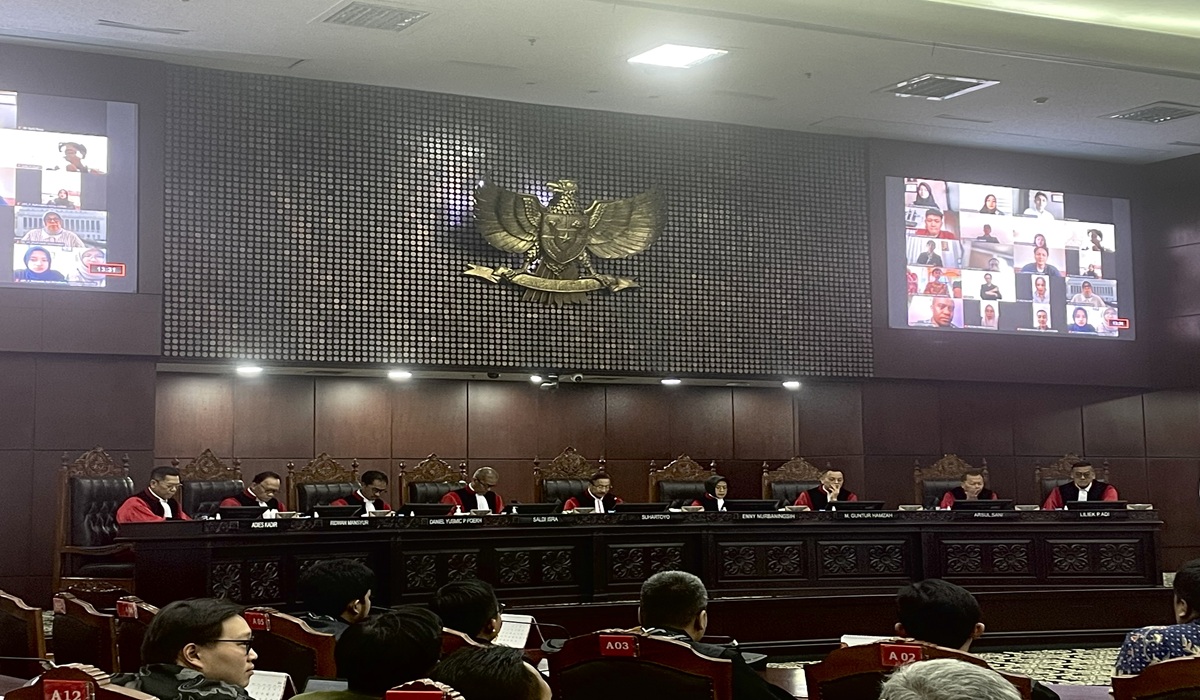
The Constitutional Court (MK) has ruled that funding for the Free Nutritious Meal (MBG) programme must not be charged to the mandatory 20 percent education budget allocation from the state budget (APBN) and regional budgets (APBD). The decision was read out during a session in Jakarta on Thursday.
The court partially granted a judicial review petition concerning the explanation of Article 22, paragraph (3) of Law Number 17 of 2025 on the 2026 State Budget. The ruling states that the inclusion of the MBG programme as part of educational operational costs is only valid for the 2026 budget year. The government and the House of Representatives are required to separate the MBG budget from the education budget by the 2028 State Budget at the latest.
Constitutional Justice Enny Nurbaningsih explained that the allocation of education funds, mandated at a minimum of 20 percent by the 1945 Constitution, must be prioritised for core educational components that directly determine the quality of education. These include students, educators, infrastructure, curriculum, and evaluation. The court found that the MBG programme does not fall under these core components.
Justice Daniel Yusmic P. Foekh added that the vast scope of the MBG programme, which targets tens of millions of beneficiaries across Indonesia, requires a substantial budget. The court deemed that such financing should be determined separately and specifically outside the education budget, which is already prioritised for educational operations.
The court also criticised the legislative technique used in the 2026 State Budget Law, stating that embedding the MBG programme within the elucidation of an article created a new norm that exceeded the function of an explanation. The court noted that an elucidation should only clarify norms within the body of the law, not add or expand upon them.
Despite the ruling, the Constitutional Court affirmed that the MBG programme remains a constitutional government priority and can continue to be implemented. The decision does not cancel the programme or remove its legal basis, but rather mandates a restructuring of its funding source.