
Constitutional Court Reviews Judicial Law on Ramadan and Shawwal Determination
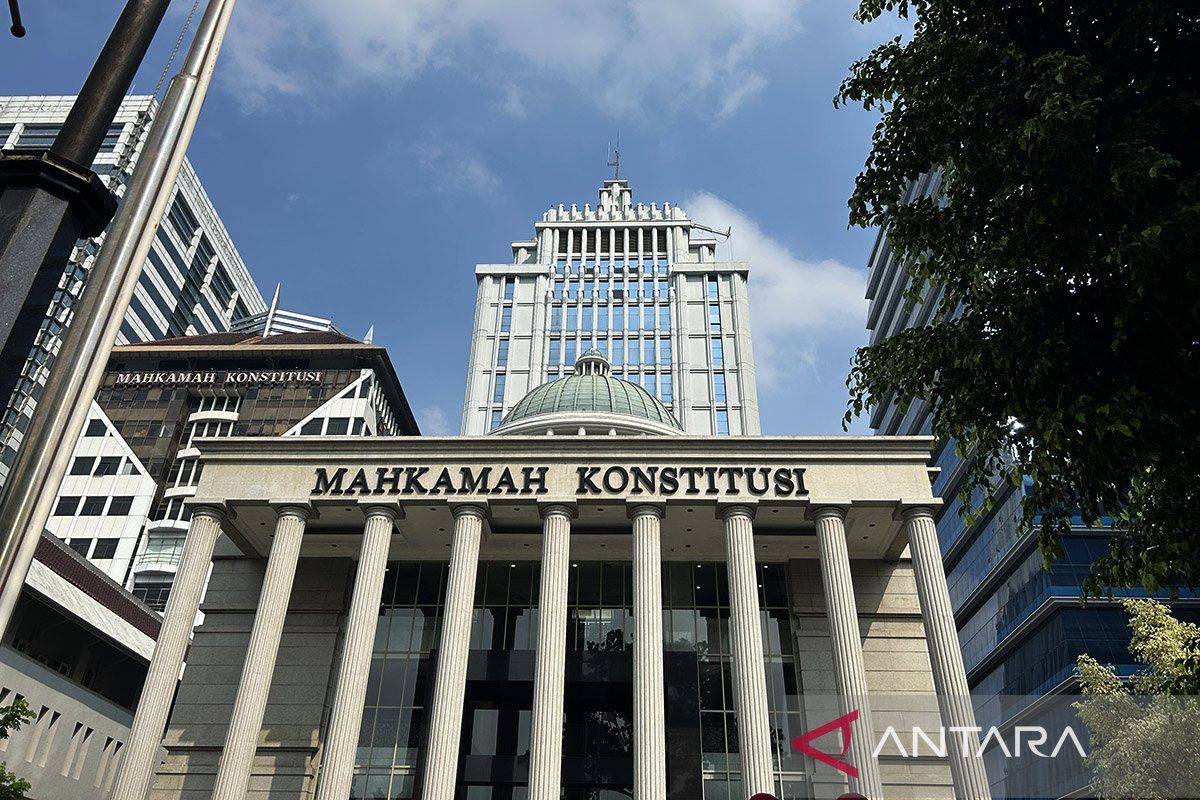
The Constitutional Court (MK) held a preliminary hearing on Tuesday for the judicial review of the Religious Courts Law concerning the confirmation of the start and end of Ramadan. The material review of Law Number 3 of 2006, amending Law Number 7 of 1989 on the Religious Courts, took place in the plenary courtroom of the Constitutional Court Building I in Jakarta. The petition was filed by Andri Sumarna, Muhammad Fajri Nur Rizky, and Rozak Daud. The three Muhammadiyah members are challenging Article 52A and its elucidation, which they consider unconstitutional. Article 52A states that the religious court provides confirmation of rukyat hilal testimony for determining the start of a Hijri month. Its elucidation explains that the religious court is requested by the Minister of Religious Affairs to issue a decree confirming the testimony of those who have sighted the new moon at the beginning of Ramadan and Shawwal, enabling the minister to issue a national determination for 1 Ramadan and 1 Syawal. According to the petitioners, the enactment of Article 52A and its elucidation has caused constitutional harm, as they adhere to the hisab method. They argue the elucidation grants the Minister of Religious Affairs the authority to nationally determine the start of the Hijri month, particularly 1 Ramadan and 1 Syawal, solely through the mechanism of confirming rukyat testimony. This construction, they contend, gives the rukyat method official state recognition and national standing, whilst the hisab method they follow receives no equivalent acknowledgement, resulting in discriminatory treatment and legal uncertainty. The petitioners highlighted three key issues: a limitation only to the months of Ramadan and Syawal despite the Hijri year having twelve months; the addition of a new norm via the phrase regarding the Minister of Religious Affairs issuing a national determination; and the addition of a provision allowing religious courts to provide advice on the qibla direction and prayer times. Juanda, one of the petitioners’ legal counsel, stated that the substantive difference between the body of Article 52A and its elucidation creates a legal inconsistency. He emphasised that an article’s elucidation should only serve as an official interpretation of the norm, not as a basis for creating new norms, as doing so causes legal ambiguity and uncertainty. Constitutional Justice M Guntur Hamzah advised the petitioners to sharpen their legal standing and strengthen their posita. Constitutional Justice Daniel Yusmic P. Foekh asked them to examine the correlation between the article under review and their petitum. Chief Justice Suhartoyo suggested the petitioners prove that all Muhammadiyah members definitively follow the hisab method and that the legal requirement for a religious court to issue a decree for rukyat witnesses impedes their ability to perform worship.