
Constitutional Court Rejects Lawsuit by Four Palangka Raya Residents Affected by Forest and Land Fires
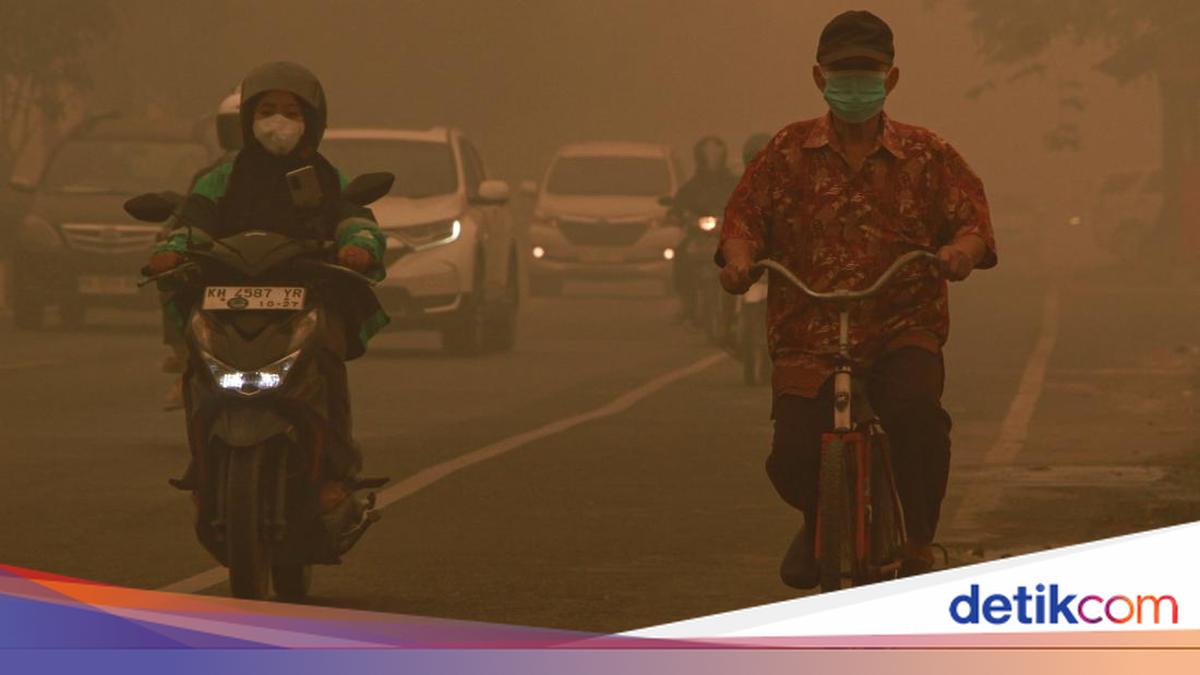
The Constitutional Court has rejected a lawsuit brought by four Palangka Raya residents affected by forest and land fires. The Court declined to change the meaning of “adequate” in the Disaster Management Law, which the petitioners had challenged.
According to the Court’s website, the petition, registered as case No. 369/PUU-XXIV/2026, was filed by four Palangka Raya residents: Damai Alam Usop, Krismes Santo Sihaloho, Davit Purwodesrantau and Paulus Alfons Yance Dhanarto.
They challenged Article 6(e) and Article 8(d) of Law No. 24 of 2007 on Disaster Management, which state:
Article 6
The Government’s responsibilities in disaster management include:
- allocating an adequate disaster-management budget in the state budget.
Article 8
Regional governments’ responsibilities in disaster management include:
- allocating adequate disaster-management funds in regional budgets.
In their petition, the applicants said they had suffered a constitutional loss: the deprivation of their right to a good and healthy environment. They said air quality in Palangka Raya reached unhealthy levels because of smoke from forest and land fires in 2026.
They asked the Court to rule that the phrase “adequate” in Article 6(e) of Law No. 24 of 2007 was contrary to the 1945 Constitution and conditionally had no binding legal force unless interpreted to mean that an adequate allocation must cover the pre-disaster, emergency-response and post-disaster stages in the state budget, transparently and accountably.
They also asked the Court to rule that the phrase “adequate” in Article 8(d) was contrary to the Constitution and conditionally had no binding legal force unless interpreted to require funding for the pre-disaster, emergency-response and post-disaster stages in regional budgets, transparently and accountably, and in proportion to the region’s disaster risk.
The Court’s ruling
The Constitutional Court rejected the applicants’ claims. In its reasoning, it said that disaster management under Article 33 of Law No. 24 of 2007 consists of three stages: pre-disaster, emergency response and post-disaster.
The Court said the phrase “adequate” in the budget provisions does not stand alone and should be understood systematically in the context of disaster management as a whole.
“In this case, the word ‘adequate’ in the provision in question is an open standard that can be assessed more proportionately because it is linked to the objectives and system of other provisions, and is flexible enough to address all the unforeseen circumstances of disasters,” the Court said.
The Court added that giving the phrase “adequate” the additional meaning sought by the applicants could create new controversy. It said the proposed conditional interpretation would instead narrow the phrase’s meaning.
“The conditional interpretation sought by the applicants—that ‘adequate’ means regional budgets must be drawn up ‘in proportion to the region’s disaster risk’—would create a new parameter that could lead to legal uncertainty and narrow the meaning of the word ‘adequate’ in the provision in question,” the Court said.
On that basis, the Court found the petition legally unfounded and rejected it in its entirety.
Source: jawawa.id (https://jawawa.id/newsitem/constitutional-court-rejects-lawsuit-by-four-palangka-raya-residents-affected-by-forest-and-land-fires-1793335914)
Originally published by detikcom (https://news.detik.com/berita/d-8730680/mk-tolak-gugatan-4-warga-palangka-raya-korban-karhutla), translated from Indonesian