
Constitutional Court Rejects Challenge to IKN Law, Affirms Jakarta Remains the National Capital
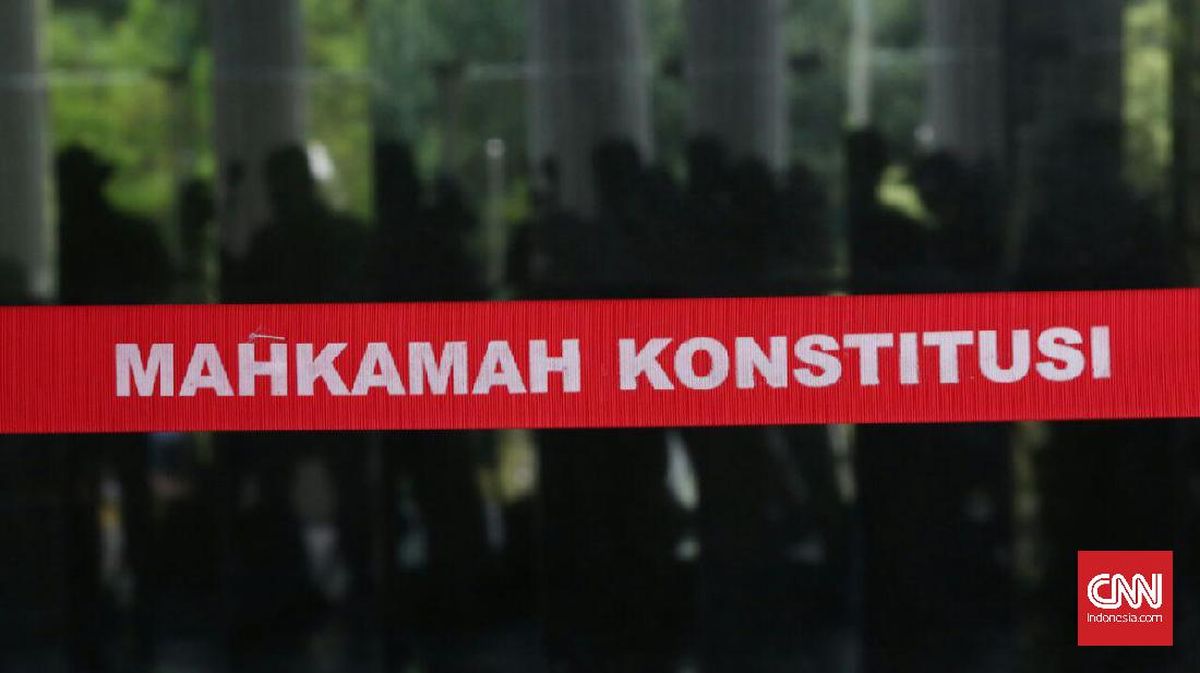
The Constitutional Court (MK) has rejected the application for a material review of Law No. 3 of 2022 on the State Capital (IKN). The MK affirmed that the Special Capital Region of Jakarta Province remains Indonesia’s capital at present.
This was stated by the MK during the pronouncement of decision No. 71/PUU-XXIV/2026, held on Tuesday (12/5) and chaired by MK Chief Justice Suhartoyo.
In the lawsuit, the applicant argued that the norm in Article 2 paragraph (1) of Law 2/2024 is not in sync with the norm in Article 39 paragraph (1) of Law 3/2022, resulting in a constitutional vacuum regarding the status of the national capital, which impacts the validity of government actions, including the issuance of state administration decisions, state administration activities, and government administration implementation.
“The court rejects the applicant’s petition in its entirety,” said Suhartoyo, quoted from detikcom.
According to the Court, in interpreting the norm of Article 2 paragraph (1) of Law 2/2024 in question, it must be read and understood in connection with the norm in Article 73 of Law 2/2024.
The meaning of ‘effective’ in Article 73 of Law 2/2024, said the MK, refers to the binding force and substance/material of the national capital relocation norm when the Presidential Decision on the relocation of the Capital City of the Unitary Republic of Indonesia from the Special Capital Region of Jakarta to the Nusantara Capital is established by the President.
Constitutional Justice Adies Kadir stated that relocating the national capital from Jakarta to IKN requires a Presidential Decision (Keppres). The MK assessed that once that Keppres is signed, the decision regarding the State Capital can begin to take effect and have binding force.
“This means, in the context of the petition in question, the effective date of the national capital relocation to the Nusantara Capital depends on the establishment and enforcement of the aforementioned presidential decision,” he said.
The MK emphasised that Jakarta currently remains the Republic of Indonesia’s State Capital. Therefore, the MK deemed the applicant’s petition unfounded.
“Thus, based on the aforementioned legal considerations, in connection with the applicant’s petitum, according to the Court, without the interpretation of Article 39 paragraph (1) of Law 2/2024 as requested by the Applicant, the position, function, and role of the State Capital remain in the Special Capital Region of Jakarta until the presidential decision on the relocation of the Capital City of the Unitary Republic of Indonesia from the Special Capital Region of Jakarta to the Nusantara Capital is established. Consequently, the Applicant’s argument, which essentially states that the norm in Article 39 paragraph (1) of Law 3/2022 contradicts Article 1 paragraph (3) and Article 28D paragraph (1) of the 1945 Constitution of the Republic of Indonesia, is legally unfounded,” Adies continued.
Previously, the applicant in this petition was Zulkifli. He argued that the existence of those articles places the Presidential Decision as a constitutive requirement for the change in national capital status.
Furthermore, in 2024, Law No. 2 of 2024 on the Jakarta Special Region (UU DKJ) was promulgated, which normatively revokes Jakarta’s status as the State Capital. Meanwhile, to date, the Presidential Decision as required by Articles 39 and 41 of the IKN Law has not been established.
The effectiveness of the IKN Law and the UU DKJ, which hold equal status, has created a clear horizontal disharmony.
This is because, at the same time, Jakarta is no longer normatively declared as the capital, while the Nusantara Capital has not yet been constitutionally validated as the national capital. As a result, this creates a structural and fundamental constitutional vacuum in the national capital’s status.
According to the Applicant, the existence of this national capital status vacuum is not only caused by policy implementation issues or presidential negligence but directly results from the design of the norm in question, which lacks safeguard clauses, transitional norms, or guarantees of continuity for the national capital status during the transition period.
From the perspective of the rule of law principle, the national capital is a fundamental element in the structure of state administration, so its existence cannot be left in an unclear, multi-interpretable, or legally uncertain condition.