
Constitutional Court Rejects Challenge to Education Requirements for Presidential and Vice-Presidential Candidates
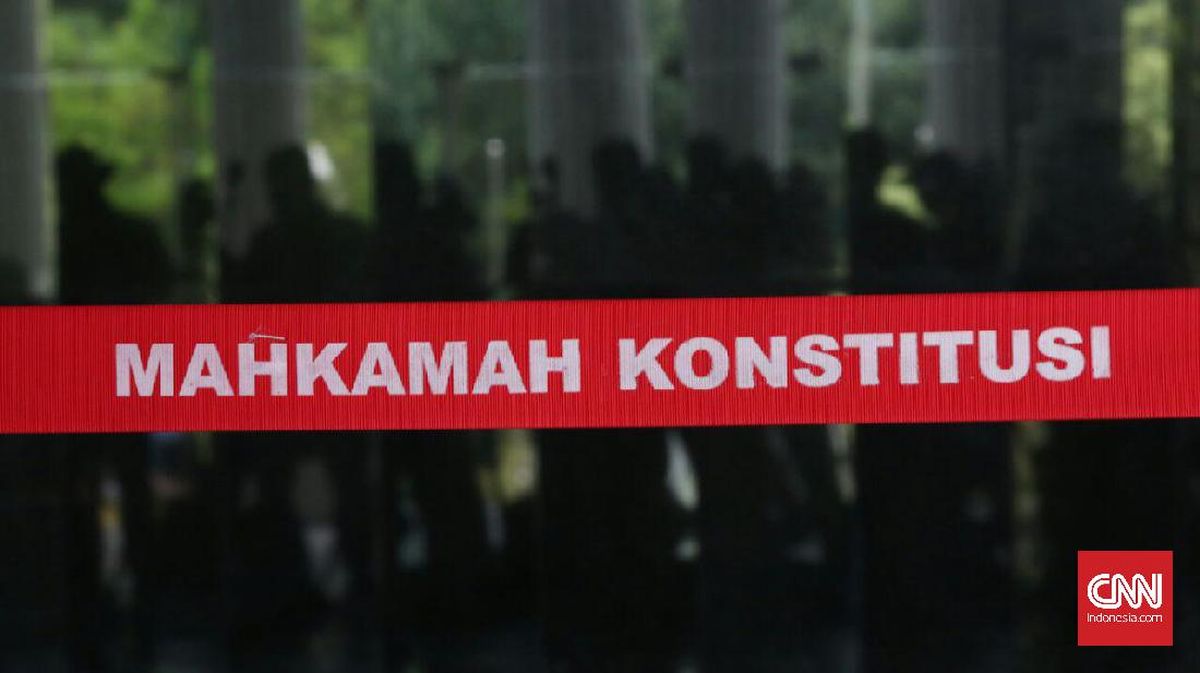
The Constitutional Court (MK) said it could not accept a petition for judicial review of Law No. 7 of 2017 on General Elections, filed by 12 people from a range of professional backgrounds.
The decision concerned petition No. 370/PUU-XXIV/2026, which challenged provisions on the education requirements for presidential and vice-presidential candidates, including the phrase “or another equivalent school”.
In its legal reasoning, Deputy Chief Justice Saldi Isra said the petitioners had not adequately explained the link between the alleged infringement of their constitutional rights and the provisions being challenged.
The Court also said it had found no evidence that the petitioners had been treated differently in connection with the certificates they held.
“Nor [was there evidence relating to] the certificates of completion of secondary education in question, which could potentially mean that the petitioners lacked fair legal certainty as a result of the provisions and explanatory text under review,” he said at a hearing on Thursday (29 October).
On that basis, the Court ruled that the petitioners lacked legal standing to file the petition.
The petitioners challenged Article 169(r), including its explanatory text, and Article 227(l), including its explanatory text, of the General Elections Law. Article 169(r) sets the minimum education requirement for presidential and vice-presidential candidates as completion of senior secondary school or an equivalent qualification.
The provision states: “The requirements to become a presidential and vice-presidential candidate are a minimum education level of having completed senior secondary school, madrasah aliyah, vocational secondary school, vocational madrasah aliyah, or another equivalent school.”
The explanation to Article 169(r) states: “The term ‘another equivalent school’ includes, among others, special senior secondary schools (SMALB), Pondok Pesantren Salafiah, Christian Theological Secondary Schools and Seminaries. Equivalence with senior secondary education is determined by the Government and/or regional governments in accordance with the provisions of laws and regulations.”
In their petition, the applicants argued that the phrase “or another equivalent school” could create legal ambiguity and public controversy.
They objected to the provision because, in their view, it gave presidential and vice-presidential candidates special treatment by allowing them to register using a certificate.
The petitioners said the provision harmed their constitutional rights and could undermine legal certainty in the conduct of elections.
However, the Court said they had not proved that they had been treated differently in relation to the diplomas or certificates of completion of secondary education they held. It therefore did not proceed to examine the merits of the petition, as the petitioners had failed to meet the requirements for legal standing.
Source: jawawa.id (https://jawawa.id/newsitem/constitutional-court-rejects-challenge-to-education-requirements-for-presidential-and-vice-presidential-1793285454)
Originally published by CNN Indonesia (https://www.cnnindonesia.com/nasional/20261029202206-12-1421188/mk-tidak-terima-gugatan-soal-syarat-pendidikan-capres-cawapres), translated from Indonesian