
Constitutional Court Partially Grants Lawsuit Against 2026 State Budget Law Regarding Free Nutritious Meal Programme
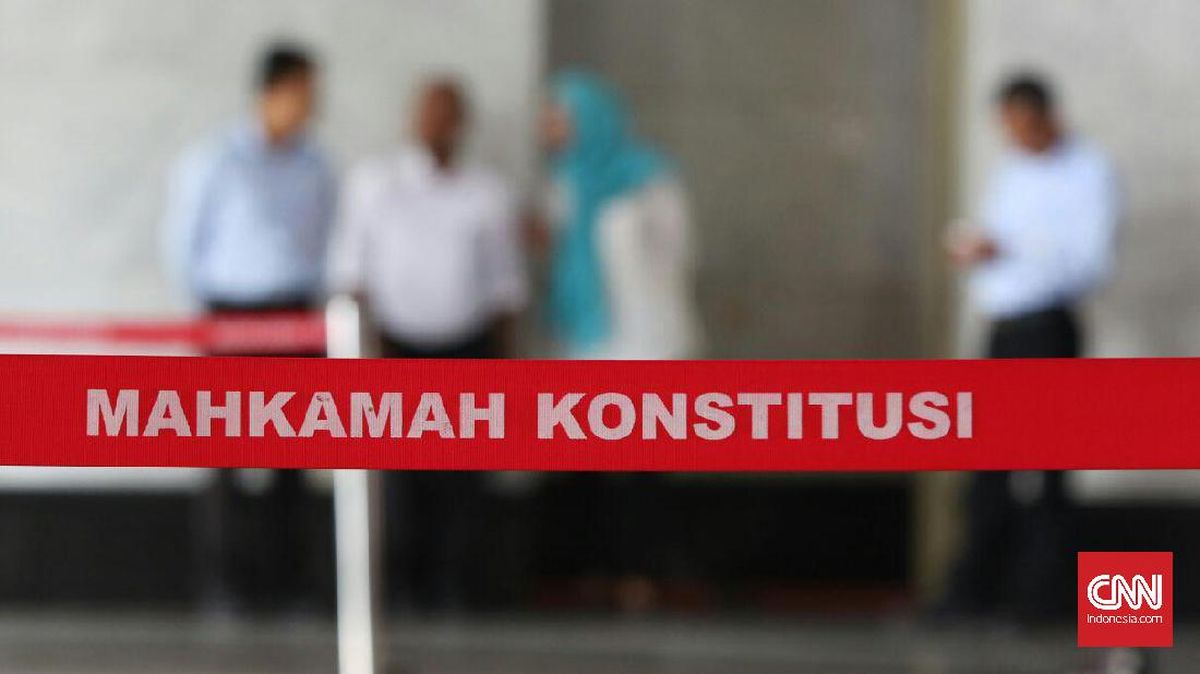
The Constitutional Court (MK) has partially granted a judicial review against several articles in Law Number 17 of 2025 concerning the 2026 State Budget (APBN) on Wednesday (16/9).
The ruling, contained in case number 100/PUU-XXIV/2026, was brought forward by several parties, including former KPK Commissioner Busyro Muqoddas, MBG Watch, and a civil society coalition. The petitioners linked their lawsuit to issues arising from the Free Nutritious Meal (MBG) programme budget.
“Grants the petitioners’ request in part,” stated Constitutional Court Chief Justice Suhartoyo while reading the verdict.
In its ruling, the Court requested that budget changes within the 2026 APBN cannot be made solely through Presidential Regulation (Perpres) but must instead receive approval from the House of Representatives (DPR).
According to Suhartoyo, Article 8, paragraph (5) of the 2026 APBN Law, which regulates budget changes regarding expenditure and functions, must go through DPR approval. The article originally stated: “The details of Central Government Expenditure according to Organisation, Function, and Programme as referred to in paragraph (2) are listed in Annex I, which is an inseparable part of this Law according to the financial note, and if there are changes, they shall be regulated by Presidential Regulation.”
The Court has now interpreted this as follows: “Declares Article 8, paragraph (5) of Law Number 17 of 2025 concerning the 2026 APBN not contrary to the 1945 Constitution of the Republic of Indonesia and remains legally binding conditionally, provided that the phrase ‘and if there are changes’ is interpreted as ‘and if there are changes that impact the amount of central government expenditure by function, such changes must be subject to the approval of the DPR’.”
In addition to strengthening the authority of the DPR, there are two other crucial points in the Court’s decision. First, the ruling regarding Article 14, paragraph 1, point b of the 2026 APBN Law stipulates that village incentive funds cannot be unilaterally reallocated to other government priority programmes, including the MBG.
Second, the ruling regarding Article 29, paragraph (1) mandates that any government policies related to the APBN that threaten the national economy or the stability of the financial system must obtain approval from the DPR.
However, there was a dissenting opinion from Judge Daniel Yusmic, who believed the petitioners’ request should be rejected entirely. According to Daniel, the characteristics of the APBN Law differ from non-APBN laws.
The petitioners in the lawsuit previously highlighted the implementation of the Free Nutritious Meal (MBG) programme, presenting evidence of 138 public complaints regarding the programme. These complaints included allegations of budget discrepancies and grievances regarding food that was unfit for consumption.
The petitioners challenged seven articles of the 2026 APBN Law, namely Article 8(5), Article 9(4), Article 11(2), Article 13(4), Article 14(1) point b, Article 20(1), and Article 29(1).
They demanded a conditional interpretation that mandates meaningful participation, as well as a prohibition against the government unilaterally cutting education, health, and social protection budgets for the sake of economic stability without parliamentary approval.
One of the arguments presented by the petitioners, specifically by Busyro Muqaddas, revealed that he had received public complaints regarding the implementation of the MBG, concerning both the quality of execution, budget allocation, and its impact on the financing of the education sector.
“These complaints demonstrate real losses experienced by the community and serve as the basis for the legal interest of Petitioner IV in filing the present application,” the Constitutional Court’s decision record states.
It was also noted that Petitioner IV holds a legal interest in ensuring that the use of the APBN remains aligned with constitutional principles, particularly the principles of transparency, accountability, and education budget priorities.
Source: jawawa.id (https://jawawa.id/newsitem/constitutional-court-partially-grants-lawsuit-against-2026-state-budget-law-regarding-free-nutritious-meal-1789652686)
Originally published by CNN Indonesia (https://www.cnnindonesia.com/nasional/20260916223730-32-1404803/mk-kabulkan-sebagian-gugatan-uu-apbn-2026-terkait-mbg), translated from Indonesian