
Constitutional Court Orders Military Court Law to Be Amended Within Two Years
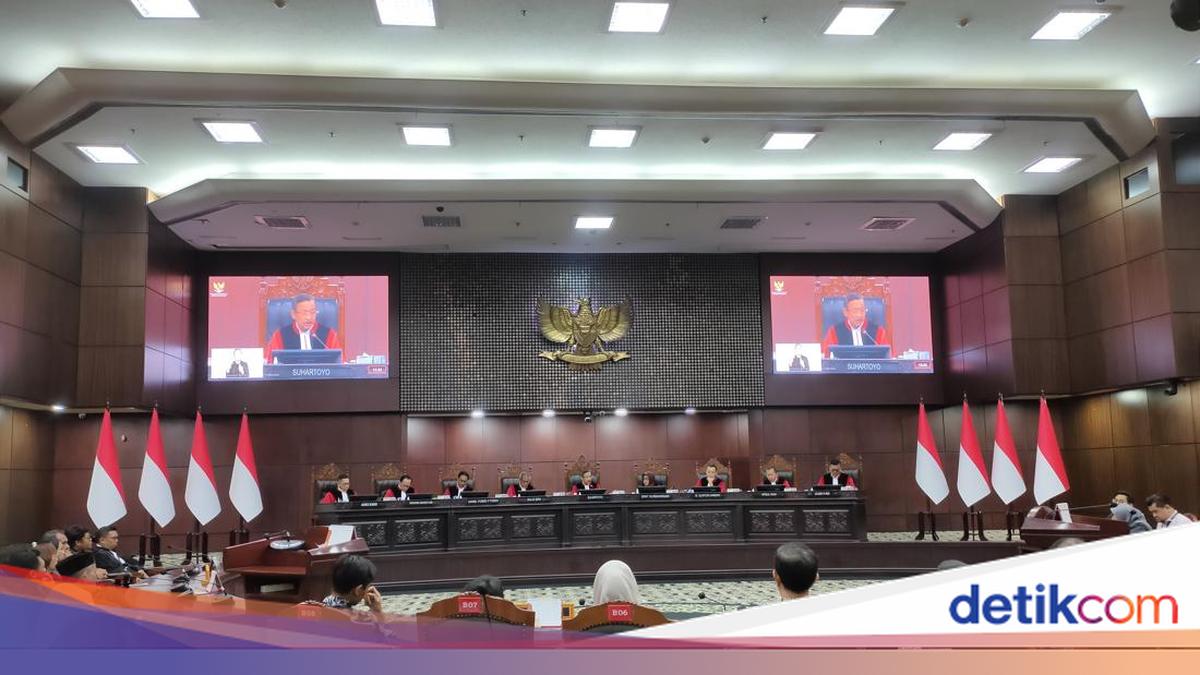
The Constitutional Court (MK) has granted a judicial review petition concerning the Military Court Law. It has ordered lawmakers to amend the law within no more than two years.
The ruling in case No. 260/PUU-XXIII/2025 was delivered at a hearing at the Constitutional Court building on Jalan Medan Merdeka Barat, Central Jakarta, on Thursday (15 October 2026). The petition was filed by Lenny Damanik and Eva Meliani Br Pasaribu. Damanik is the mother of a 15-year-old junior high school student, identified by the initials MHS, who died after being assaulted by First Sergeant Riza Pahlivi. Eva Meliani is the daughter of journalist Rico Sempurna Pasaribu, who was killed in a fire in Karo.
The full ruling reads:
The petitioners’ application is granted in its entirety;
Law No. 31 of 1997 on Military Courts is declared contrary to the 1945 Constitution of the Republic of Indonesia and conditionally has no binding legal force unless it is amended within no more than two years of this ruling being pronounced;
If lawmakers do not amend it within no more than two years of this ruling being pronounced, Law No. 31 of 1997 on Military Courts will be contrary to the 1945 Constitution of the Republic of Indonesia and will have no binding legal force;
The ruling is to be published in the State Gazette of the Republic of Indonesia as appropriate.
Court’s reasoning
In its reasoning, the Court said military courts’ jurisdiction over military offences stems from the specific nature of the cases, not from the offender’s status as a member of the Indonesian National Armed Forces (TNI). It said ordinary crimes committed by TNI personnel should be tried in civilian courts.
“Accordingly, the justification for military courts’ jurisdiction over military offences lies in the specific nature of the cases, not merely in the offender’s status as a soldier. In this context, the jurisdiction of the civilian courts concerns ordinary crimes, as provided for in the Criminal Code, committed by TNI personnel, which should fall under the jurisdiction of the civilian courts,” Justice Arsul Sani said.
Constitutional Court Justice Enny Nurbaningsih said there was no legal basis for retaining military court proceedings for ordinary crimes committed by TNI personnel during peacetime, or when civilian courts could operate normally. However, she said the Court allowed for ordinary crimes committed by military personnel during wartime in combat areas to be tried in military courts. Enny said any such limitation must be clearly set out in law.
“If it is necessary to extend military court jurisdiction to deal with ordinary crimes committed by TNI personnel during wartime in combat areas, the rules must be specifically and narrowly drafted, and may be provided as an exception,” Enny said.
The Court also referred to the principle of impunity, under which perpetrators of violations cannot, or cannot effectively, be held accountable. It said that the further an offence is from the distinctive nature of military service, the weaker the grounds for keeping it within military court jurisdiction.
“Restricting military court jurisdiction is not intended to diminish the position of military courts as part of the judicial branch, but to ensure that their specialised jurisdiction is used only for cases that genuinely have a military character. Conversely, trying ordinary crimes committed by TNI personnel in civilian courts is consistent with the need to ensure accountability and independence, and to prevent the risk of impunity,” Enny said.
Source: jawawa.id (https://jawawa.id/newsitem/constitutional-court-orders-military-court-law-to-be-amended-within-two-years-1792061493)
Originally published by detikcom (https://news.detik.com/berita/d-8708714/mk-perintahkan-revisi-uu-peradilan-militer-tuntas-dalam-2-tahun), translated from Indonesian