
Constitutional Court Orders Government to Provide Clear Reasons When Blocking Digital Content
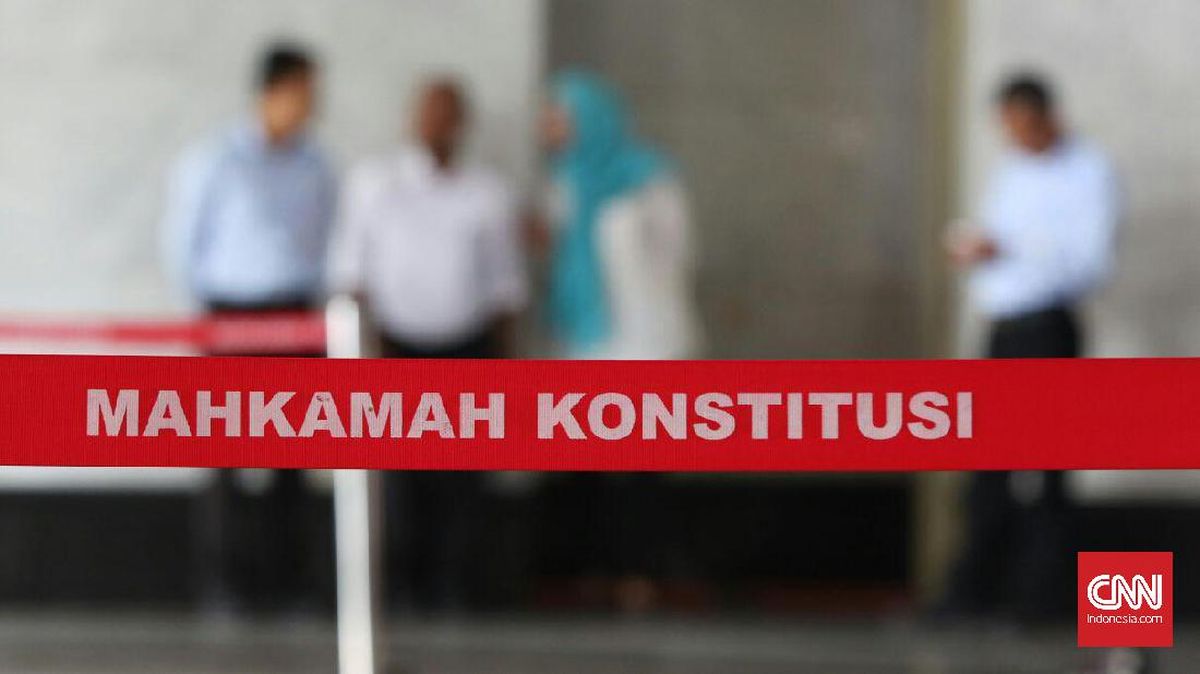
The Constitutional Court (MK) has emphasised that the government must provide clear reasons and digital or written notification before performing access disconnection or the blocking of digital content. According to the Court, this is necessary to ensure that no abuse of power occurs.
The order is contained in decision number 3LL/PUU-XXIV/2026 regarding the judicial review of Article 40 paragraph (2b) of Law Number 1 of 2024 concerning Electronic Information and Transactions (ITE), which was filed by six students and one researcher.
“Granting the petitioners’ request in part,” stated the Chief Justice of the Constitutional Court, Suhartoyo, while reading the verdict at the Court building on Tuesday (29/9).
In its considerations, the Court understands that restricting digital content that violates legal provisions is necessary to maintain Indonesia’s digital space. The government’s role in such restrictions is deemed essential to prevent content that has a negative impact on the public.
“Therefore, on one hand, to protect the public interest from being easily impacted by content containing illegal material, and on the other hand, to ensure that the constitutional rights of digital space users also have legal protection,” said Constitutional Judge Asrul Sani.
Although the government possesses the authority to disconnect content, according to the Court, the government must also deliver digital notifications in the form of an announcement to the parties or owners of the digital content subject to blocking.
“In this context, even though it possesses authority, the procedure that should be undertaken by the government in performing the disconnection of electronic information and/or electronic documents must also be precisely regulated so that the possibility of abuse of authority in the implementation of access disconnection to electronic information and/or electronic documents does not occur, or at the very least, can be significantly reduced,” said Arsul.
He stated that the government must be responsible in processing the disconnection of internet content by providing clear reasons to the affected parties. According to him, this obligation must be demonstrated by issuing a digital notification or a written notice accompanied by clear reasons.
“This can be placed as part of the functioning of the checks and balances mechanism to prevent the abuse of power that is highly possible,” he said.
The Court added that these rules aim to balance two things: the public’s right to access information free from illegal content, and the public’s right to disseminate information without hindrance.
The Court also stated that affected parties may pursue legal remedies if the blocking of their digital content does not violate statutory provisions.
“This includes instances where there is a disconnection of access by the government and/or electronic system providers; parties who feel they have not committed any legal violations or breaches of statutory regulations may seek legal remedies as determined by the prevailing laws and regulations,” he said.
In this regard, the Court declared that Article 40 paragraph 2b of the ITE Law is unconstitutional insofar as it is not interpreted as follows: “In carrying out prevention as referred to in paragraph 2A, the government is authorised to perform access disconnection and/or instruct electronic system providers to perform access disconnection of electronic information and/or electronic documents containing illegal content after issuing or releasing a digital notification or written announcement along with its reasons.”