
Constitutional Court Justice on Flight Delay Compensation: 'Unfair if Only Light Snacks'
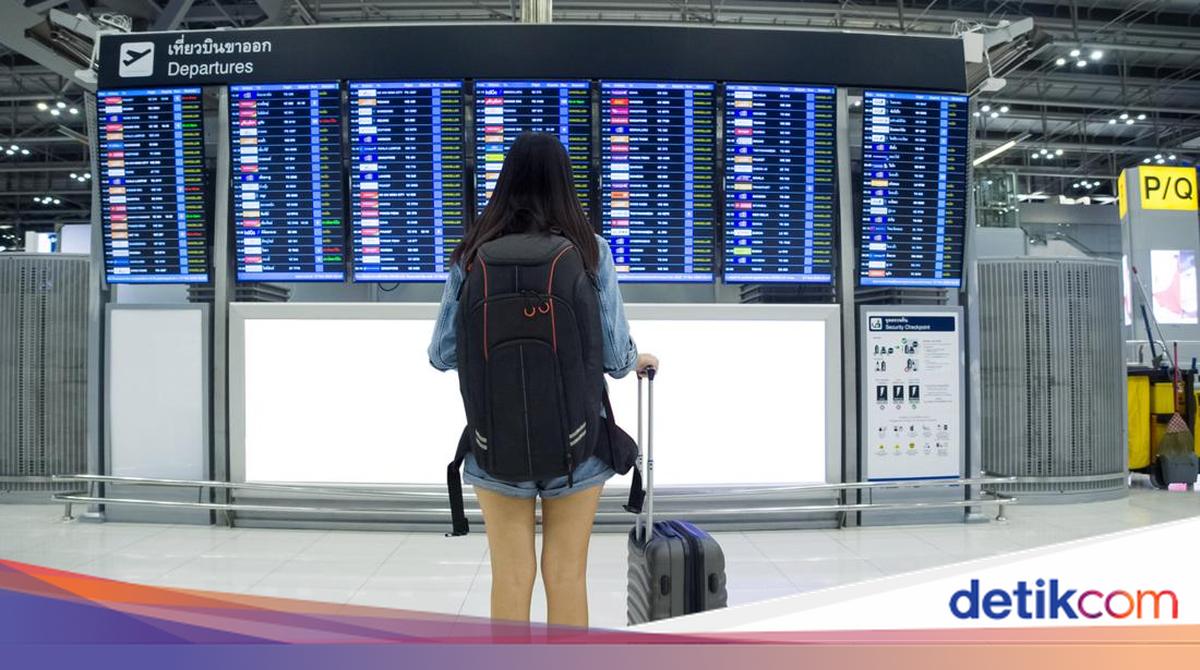
Deputy Chief Justice of the Constitutional Court (MK) Saldi Isra has questioned the type of compensation received by passengers when flights experience schedule delays, deeming the existing provisions unfair to passengers.
During a hearing to hear testimony from the House of Representatives (DPR) and the President in case number 190/PUU-XXIV/2026, which reviews Law Number 1 of 2009 on Aviation, the government presented the Expert Staff for Logistics and Multimodal Transportation, Yufridon Gandoz Situmeang. Yufridon explained that compensation for flight delays is currently regulated in the Aviation Law and followed up through Minister of Transportation Regulation Number PM 89 of 2015.
He outlined the classification of delays stipulated in PM 89/2015: Category one covers delays of 30 to 60 minutes; category two covers 61 to 120 minutes; category three covers 121 to 180 minutes; category four covers 181 to 240 minutes; category five covers delays exceeding 240 minutes; and category six covers flight cancellations. He also detailed the compensation types: category one delays warrant soft drinks; category two warrants drinks and light snacks (snack box); category three warrants drinks and a heavy meal; category four warrants drinks, light snacks, and a heavy meal; category five warrants compensation of Rp 300,000; and for category six, the airline must transfer passengers to the next flight or provide a full ticket refund. For categories two through five, passengers may also be transferred to the next flight or receive a full refund.
Justice Saldi Isra responded by highlighting the unfairness of the compensation. He initially questioned the rules when an airline announces a delay hours before a passenger arrives at the airport, asking what compensation applies in such scenarios. He argued that business considerations must not override passengers’ constitutional rights, noting that travellers often schedule trips far in advance and that delays can disrupt critical plans.
“There are many cases showing that the business considerations of airlines ignore the constitutional rights of customers. Sometimes it is not about the replacement, sir, being provided with this food and so on, but they expected to arrive at their destination at a certain time because they have business there, interests that are tied to it,” he stated.
He considered compensation in the form of light snacks or even being accommodated in a luxury hotel as unfair. He shared a personal experience where a flight delay led to a meeting being cancelled. “It feels unfair if it is only replaced with soft drinks, light snacks, and so on. Even in certain circumstances, sir, being put up in a luxury hotel is not enough to compensate for the loss. Perhaps many of us have experiences, people who take a specific flight time, for example from Jakarta to Padang—because I am from Padang—that evening there must be a meeting, but because the plane was late, the meeting could not be held. How can that calculate the loss experienced by the passenger due to such a schedule?” he asked.
He requested that travel delays by plane and by bus not be equated, stressing that the constitutional rights of customers must be protected. “It seems like the Government’s explanation earlier was about technical matters in the field. Not necessarily, sir. This is about the constitutional rights of customers, users of aviation services. Some people can understand, ‘Yes, okay, it’s late, after all, taking a bus can also be late’. But you cannot use the logic of taking an intercity/interprovincial bus for people taking a flight. That is what has not been elaborated by the Government,” he said.