
Constitutional Court Hears ADI Testimony on Lecturer Welfare
This is an issue of social justice and lecturer dignity as a crucial part of Indonesia’s higher education development towards 2045.
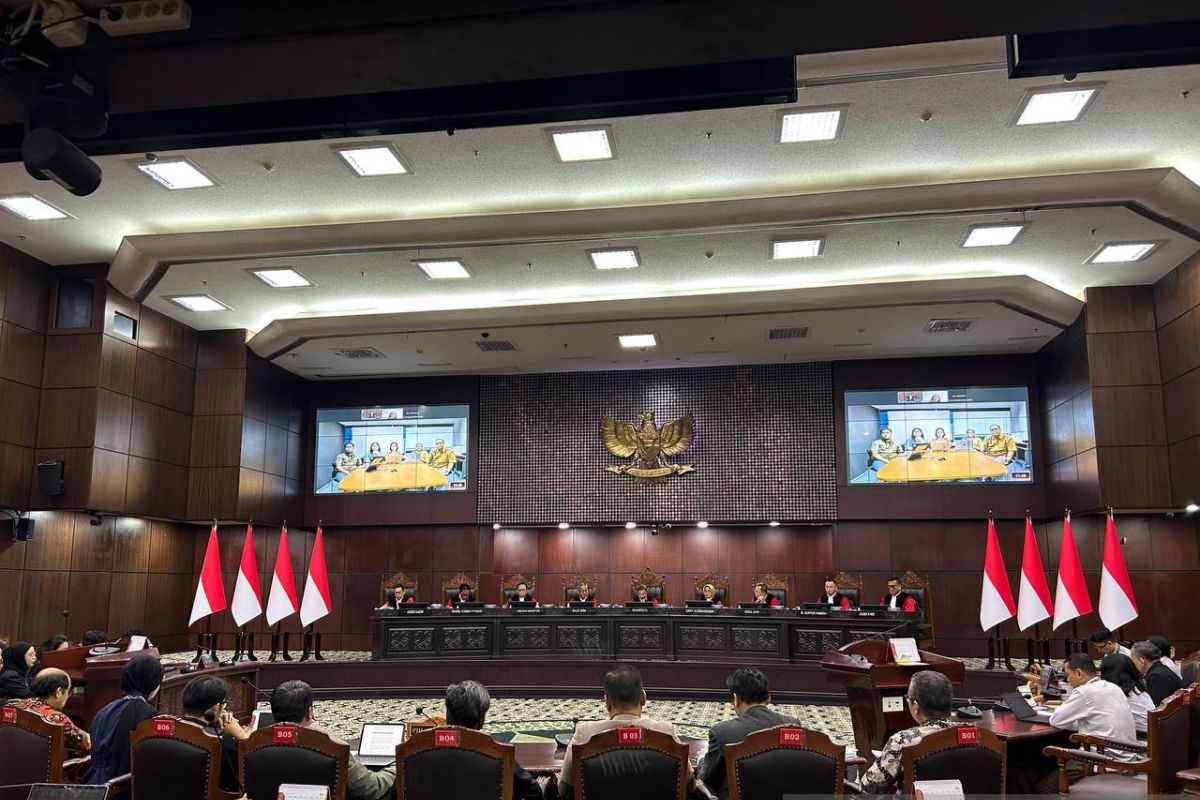
Jakarta (ANTARA) - The Constitutional Court (MK) heard testimony from the Indonesian Lecturers Association (ADI) during a constitutional review hearing of Law No. 14 of 2005 on Teachers and Lecturers concerning lecturer salary adequacy.
The hearing, held at MK Building I in Jakarta on Monday, was chaired by Chief Justice Suhartoyo and attended by eight other constitutional judges.
ADI Chairman Muhamed Ali Barawe stated the lawsuit pertains not only to lecturer salaries but also to constitutional mandates on social justice and the future of Indonesia’s higher education.
“This is an issue of social justice and lecturer dignity as a crucial part of Indonesia’s higher education development towards 2045,” Muhamed said.
In addition to ADI, the MK also heard testimony from Melbourne Bergerak, the Lecturer and Staff Union of Proclamation 45 University Yogyakarta, and the Progressive Educators Association.
The testimony was presented in Case No. 272/PUU/XXIII/2025 and Case No. 24/PUU-XXIV/2026.
Muhamed said legal uncertainty in the challenged articles could impact lecturers’ livelihood and dignity.
Without constitutional interpretation mandating base salary provisions, universities may resort to low-wage practices, he added.
“Therefore, the quality of higher education is heavily dependent on the quality and welfare of lecturers,” Muhamed said.
He compared countries where effective compensation systems have resulted in higher research output, stronger innovation productivity, competitive graduate quality, and superior university and national competitiveness globally.
Several developed nations that prioritise educator welfare by classifying lecturers as a strategic national profession include Singapore, South Korea, Japan, and various European countries.
“Even legal uncertainty in these articles will directly impact lecturers’ livelihood and dignity as represented by ADI,” he stated.
Muhamed also highlighted that some lecturers in Indonesia still take on side jobs outside campus to meet daily living needs.
He said this situation affects the optimal implementation of the Tridharma of Higher Education.
“I cannot fathom how lecturers can optimally fulfil the Tridharma while still worrying about their families’ basic needs,” Muhamed said.