
Constitutional Court Gives Two Years to Revise Military Courts Law
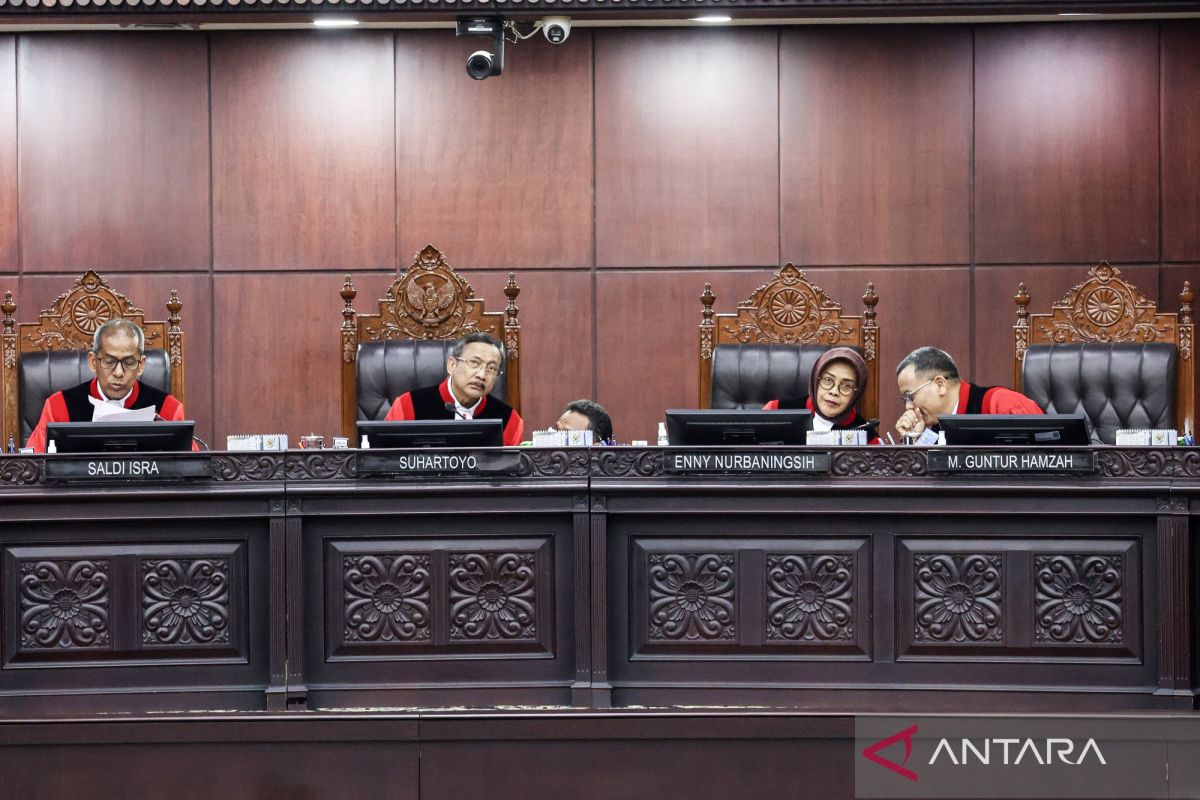
Jakarta (ANTARA) – The Constitutional Court (MK) has required the House of Representatives and the Government to revise Law No. 31 of 1997 on Military Courts within no more than two years of the ruling being delivered, or the law will lose its binding legal force.
Constitutional Justice Enny Nurbaningsih said at a hearing announcing the ruling at the Constitutional Court’s Building I in Jakarta on Thursday that the two-year deadline would give lawmakers time to fundamentally reorganise the provisions of the Military Courts Law.
“With regard to restructuring Law No. 31 of 1997, the Court considers that lawmakers require no more than two years to make amendments,” Enny said.
The Court said the law must be revised comprehensively, rather than merely changing the meaning of the phrase “criminal offence” in Article 9(1).
The revision is needed to clarify the definitions of military and ordinary criminal offences, the division of jurisdiction between military and general courts, and the full integration of the military courts under the Supreme Court.
“If lawmakers do not make the changes within a maximum of two years, Law No. 31 of 1997 will automatically become contrary to the 1945 Constitution of the Republic of Indonesia and will no longer have binding legal force, or will be unconstitutional,” Enny said.
The requirement is set out in Constitutional Court Decision No. 260/PUU-XXIII/2025, which granted in full a petition for a judicial review of the Military Courts Law.
Lawmakers therefore have until 15 October 2028 to make the changes ordered by the Court.
The petition was filed by Lenny Damanik and Eva Meliani Br Pasaribu, who challenged the military courts’ authority to try ordinary criminal offences committed by Indonesian National Armed Forces (TNI) personnel.
At a preliminary hearing on Thursday (8 January), the petitioners’ lawyer, Ibnu Syamsul Hidayat, said impunity for soldiers was contrary to the rule of law and equality before the law.
The petitioners argued that the existing provisions allow active TNI personnel to be tried in military courts even when they commit ordinary criminal offences.
They said this could weaken civilian supremacy and create inequality in law enforcement.
The petitioners also objected to the phrase “try criminal offences” in Article 9(1) of the Military Courts Law, saying it allows a broad interpretation of military courts’ jurisdiction.
The jurisdictional issue is also linked to Article 65(2) of Law No. 34 of 2004 on the TNI, which stipulates that military personnel are subject to military courts for violations of military criminal law and to general courts for violations of ordinary criminal law.
However, Article 74 of the TNI Law makes the implementation of that provision conditional on the enactment of a new law on military courts.
Through its ruling, the Constitutional Court ordered a comprehensive restructuring of the military justice system so that the legal basis for dividing jurisdiction over TNI personnel is clear and consistent with the Constitution.