
Constitutional Court: Free Nutritious Meals Programme Vital for Public Nutrition, But Requires Separate Budget
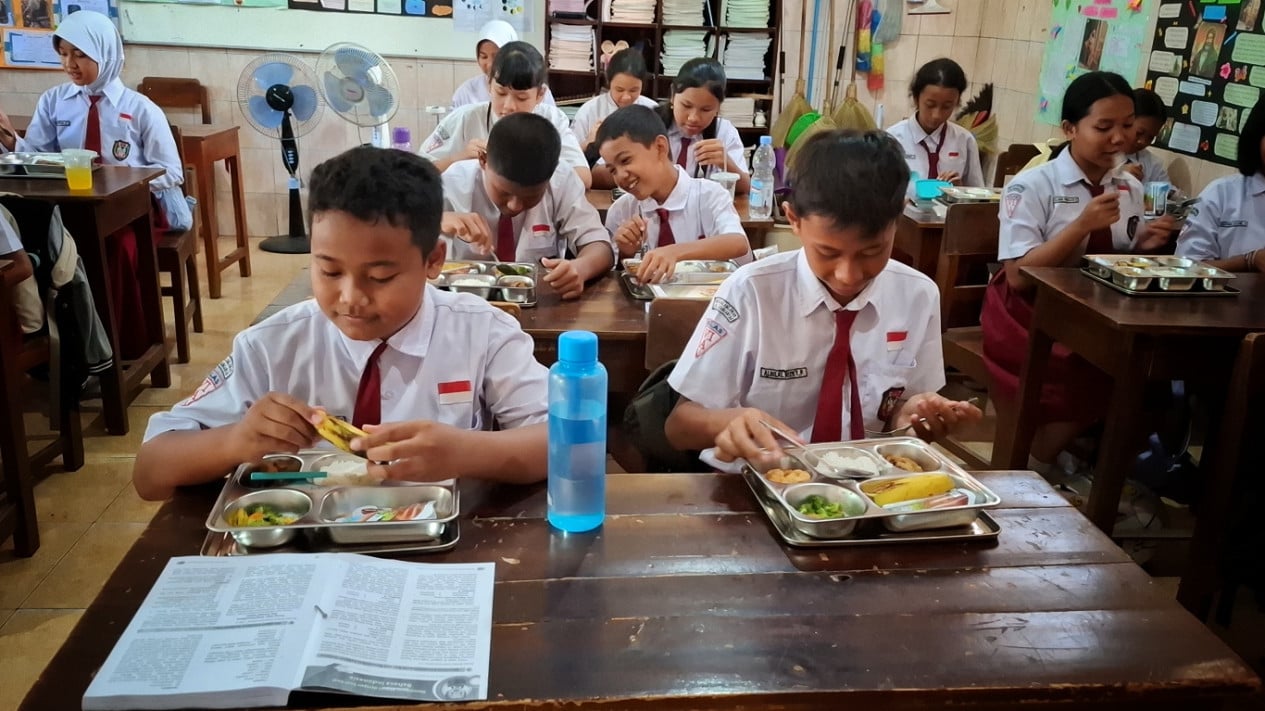
The Constitutional Court (MK) has stated that the Free Nutritious Meals (MBG) programme plays a strategic role in fulfilling the people’s right to nutrition and health. However, the court emphasised that the programme’s funding should not come from the education budget but should instead have its own separate allocation within the State Revenue and Expenditure Budget (APBN).
Constitutional Justice Daniel Yusmic Pancastaki Foekh conveyed this view while reading the legal considerations for the judicial review case regarding the use of the education budget for the MBG programme at the MK building on Thursday, 30 July 2026.
Daniel explained that from the outset, MBG was designed as a programme to reduce stunting rates and address various health problems arising from the unequal fulfilment of the community’s nutritional needs. According to him, this objective has a very broad scope, thus requiring a standalone funding scheme.
“The MBG programme has an important function in the state’s efforts to fulfil citizens’ needs for nutrition and health. The programme’s objective, cited as a real solution to stunting or other health problems due to the unequal fulfilment of citizens’ nutrition, is a broad objective,” Daniel stated.
“Therefore, according to the Court, it must be placed as a separate budget allocation within the APBN rather than merely placing it as an expansion of the definition of operational education provision as contained in the Elucidation of Article 22 Paragraph (3) of Law Number 17 of 2025,” he added.
For context, Article 22 Paragraph (3) of Law Number 17 of 2025 stipulates: “The Education Budget as referred to in paragraph (1) includes funding for the operational provision of education.” In this law, the government set the education budget allocation at Rp769,086,869,324,000.
The Court assessed that if the MBG programme’s funding continues to be included in the education budget component, this condition could potentially conflict with the mandate of Article 31 Paragraph (4) of the 1945 Constitution of the Republic of Indonesia, which requires the state to allocate at least 20 per cent of the APBN to the education sector.
Constitutional Justice Guntur Hamzah stressed that there are two constitutional principles the state must fulfil. One of them is ensuring that citizens’ rights to obtain education remain protected. “And that all citizens have been able to fulfil their obligations and rights in obtaining basic education fully financed by the government,” said Constitutional Justice Guntur Hamzah.