
Constitutional Court declares Articles 240 and 241 of the Criminal Code contrary to the Constitution
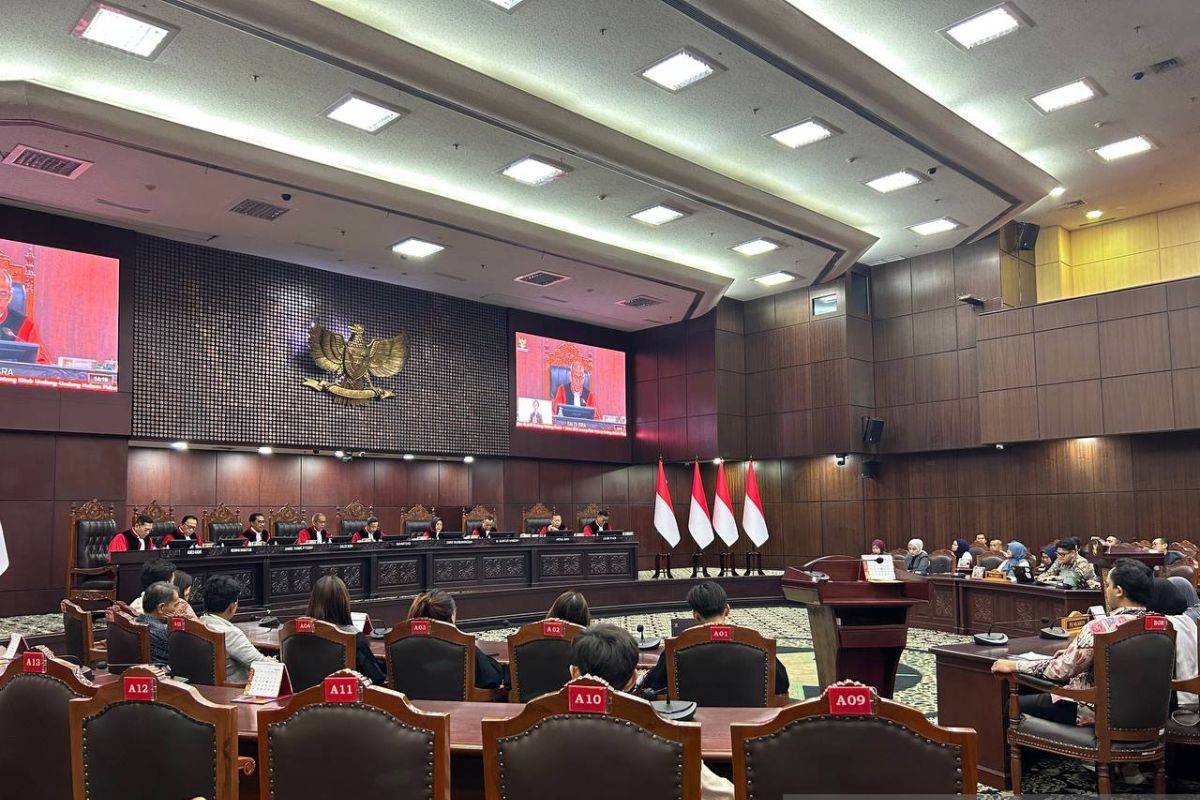
The Constitutional Court (MK) has declared Article 240 and Article 241 of Law Number 1 of 2023 on the Criminal Code (KUHP) to be in conflict with the 1945 Constitution of the Republic of Indonesia and to have no binding legal force.
Chief Justice Suhartoyo, during the ruling hearing at the MK Building I in Jakarta on Friday, stated that petition Number 282/PUU-XXIII/2025, filed by nine university students, was granted in its entirety.
“The ruling states: first, to grant the petitioners’ request in full,” said Suhartoyo.
In its decision, the Court declared that Article 240 and its elucidation in Law Number 1 of 2023 on the Criminal Code contravene the 1945 Constitution and lack binding legal force. The Court likewise declared Article 241 of the same law unconstitutional and without binding legal force.
In its considerations, Constitutional Justice Adies Kadir explained that Articles 240 and 241 of the Criminal Code prohibit any person from insulting the government or state institutions.
According to the Court, the term “insult” in the elucidation of Article 240 encompasses acts that demean or damage the honour or image of the government or state institutions, including defamation and slander.
Adies said the term could potentially be interpreted elastically in the law enforcement process. Meanwhile, the elucidation of Article 240 distinguishes insult from criticism as part of the right to expression and the right to democracy.
“The elucidation of Article 240 of the Criminal Code states that insult differs from criticism, which is a right of expression and a right of democracy, for example through demonstrations or expressing opinions that differ from government or state institution policies,” said Adies.
He explained that the elucidation of Article 241 defines the government as the President, who holds governmental power and is assisted by the Vice President as referred to in the 1945 Constitution.
Meanwhile, the state institutions referred to in the provision are limited to the People’s Consultative Assembly (MPR), the House of Representatives (DPR), the Regional Representatives Council (DPD), the Supreme Court, and the Constitutional Court.
“Based on the normative facts above, according to the Court, the prohibition on insult is not only interpreted as applying to the government in the narrow sense, limited to the executive, in casu the President and Vice President, but also includes the government in the broad sense, namely institutions outside the executive,” he said.
In examining the constitutionality of the norm, the Court also referred to Constitutional Court Decision Number 013-022/PUU-IV/2006, which declared Article 134, Article 136 bis, and Article 137 of the old Criminal Code to be in conflict with the 1945 Constitution and without binding legal force.
Adies explained that the decision did not merely annul the article numbers or letters, but also annulled the material or substance contained in the norms declared unconstitutional.
According to the Court, lawmakers may not revive norms that have been declared unconstitutional through the formulation of new articles in legislation.
“With regard to the legal facts in the first point, among the substance or material of the legal considerations of Constitutional Court Decision Number 013-022/PUU-IV/2006, it essentially affirms that the new Criminal Code, which is a renewal of the old Criminal Code or the colonial-inherited Criminal Code, must no longer contain articles whose content or substance is the same as or similar to the norms of Article 134, Article 136 bis, and Article 137 of the colonial-inherited Criminal Code,” said Adies.
This position also relates to Constitutional Court Decision Number 275/PUU-XXIII/2025 concerning the position of the President and Vice President, which was read out on 12 August 2026.
Adies said the government and state institutions must be open to oversight, criticism, and the opinions of the people as holders of sovereignty.
According to him, maintaining the substance or similarity of substance of Article 134, Article 136 bis, and Article 137 of the old Criminal Code could potentially reduce or even eliminate the constitutional right of citizens to participate in government.
“Normatively and substantively, the norms of Article 240 and the elucidation of Article 241 of the Criminal Code have added to or expanded the objects protected by the prohibition on insult in the old Criminal Code,” said Adies.
Source: jawawa.id (https://jawawa.id/newsitem/constitutional-court-declares-articles-240-and-241-of-the-criminal-code-contrary-to-the-constitution-1787928740)
Originally published by Antara (Indonesian) (https://www.antaranews.com/berita/5715957/mk-nyatakan-pasal-240-dan-241-kuhp-bertentangan-dengan-uud), translated from Indonesian