
Constitutional Court Criticises KPU for Failing to Factualy Verify Gibran's High School Equivalence Certificate
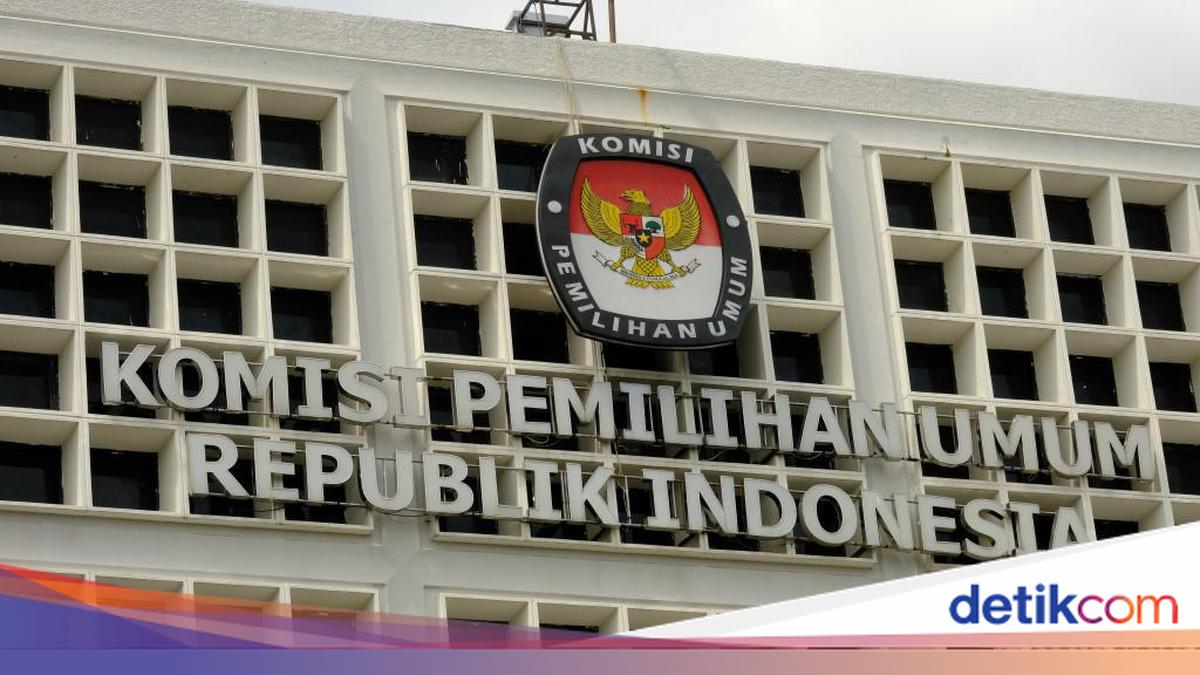
The Constitutional Court (MK) has stated that it found no high school equivalent diploma used by Vice President Gibran Rakabuming Raka when processing his educational equivalence certificate. The Court also directed sharp criticism towards the General Elections Commission (KPU) for failing to perform factual verification on said certificate during Gibran’s registration as a Vice Presidential candidate in 2024.
This was detailed by the MK in the considerations of decision number 01/PHPU.PRES-XXIV/2026, as reported on Wednesday (7/10/2026). The Court stated that the Ministry of Education and Culture (now the Ministry of Primary and Secondary Education) issued Gibran’s educational equivalence certificate in 2019 based on a certificate of attendance, academic records, and an explanation of grades.
“The certificate of attendance and other documents used as the basis for issuing Equivalence Certificate Number: 9149/D.D1/KS/2019 do not at all explain the successful completion of a specific level of education, but are merely limited to explaining attendance in lectures,” the MK stated in its ruling.
The Court stated it found no evidence showing that Gibran possessed an overseas diploma or certificate that served as the basis for equivalence to a minimum of high school/equivalent education, as required by Article 169 letter r and Article 227 letter l of the Election Law. The MK noted that Gibran registered with the KPU using a certificate that was not based on a high school diploma.
The MK subsequently criticised the KPU’s reasoning during the verification process of Gibran’s candidacy in 2024. The KPU argued that it did not perform a clarification process regarding the certificate because the document was issued by a competent authority.
“Regarding the verification process, the Respondent explained that they did not conduct a clarification process for all candidacy documents, including Equivalence Certificate Number: 9<0x9D>149/D.D1/KS/2019, as regulated in Article 42 paragraph (2) of KPU Regulation 19/2023, on the grounds that the document was issued by a competent agency,” the MK noted.
According to the MK, the KPU followed the principle of presumptio iustae causa—the presumption that a legal product remains valid unless overturned by a court. However, the MK argued that this principle cannot stand alone and must be reinforced by the principle of prudence.
“Although this principle applies generally, because this pertains to the administration of the presidential and vice-presidential election contest, which is the process of filling the highest positions in government, the principles of precision and prudence remain essential to be fulfilled,” the Court stated.
The MK asserted that there should have been a factual verification process for the submitted documents, noting that both administrative and factual verification are vital to ensuring data validity and accuracy.
“The implementation of this principle in the registration stages, particularly the examination of candidate requirement documents, should not only be realised through administrative verification but should also be supplemented by factual verification,” the Court added.
The MK noted that KPU Regulation 19/2023 provides room for clarification during the verification process. It cited Article 42 of KPU Regulation 19/2023, which states: ‘In the event of doubt regarding the requirement documents of a prospective Candidate Pair, the KPU may conduct clarification with the participating Political Parties and/or competent agencies.’
The MK argued that the term ‘doubt’ is highly subjective and unmeasurable. It highlighted that the KPU failed to establish rules that prioritise objectivity to ensure fairness.
“In the Court’s view, such a condition of ‘doubt’ is highly subjective and lacks parameters that can be measured objectively and accountably. Yet, as the organiser, the Respondent should emphasise objectivity in every stage to create fairness in an election contest,” the Court remarked.
The MK mentioned that the equivalence certificate issued by the Ministry of Education in 2019 could procedurally be used to declare the fulfillment of Vice Presidential candidate requirements. However, the Court emphasised that the trial proved the certificate represented an equivalence of knowledge at the vocational high school (SMK) level, rather than an equivalence of a high school graduation certificate from abroad.
“Furthermore, the phrase ‘deemed to have equivalent knowledge’ is not the same as having a minimum education of high school, madrasah aliyah, vocational high school, or other equivalent schools as regulated in Article 169 letter r of the Election Law,” the Court stated.
The MK did not accept the lawsuit regarding Gibran’s educational requirements. In its final verdict, the MK granted the KPU’s exception as the Respondent, stating that the Petitioner in this case lacked legal standing.
The verdict summary is as follows:
In Exception:
Granted the Respondent’s exception regarding legal standing;
Rejected the exceptions of the Respondent and Related Parties for all other matters.
In the Merits of the Case:
Declaring the Petitioners’ application inadmissible.
Source: jawawa.id (https://jawawa.id/newsitem/constitutional-court-criticises-kpu-for-failing-to-factualy-verify-gibrans-high-school-equivalence-certificate-1791348997)
Originally published by detikcom (https://news.detik.com/berita/d-8696019/sorotan-tajam-mk-ke-kpu-yang-tak-verifikasi-faktual-suket-sma-gibran), translated from Indonesian