
Constitutional Court Considers Summoning Police Reform Commission in Judicial Review Hearing of Police Law
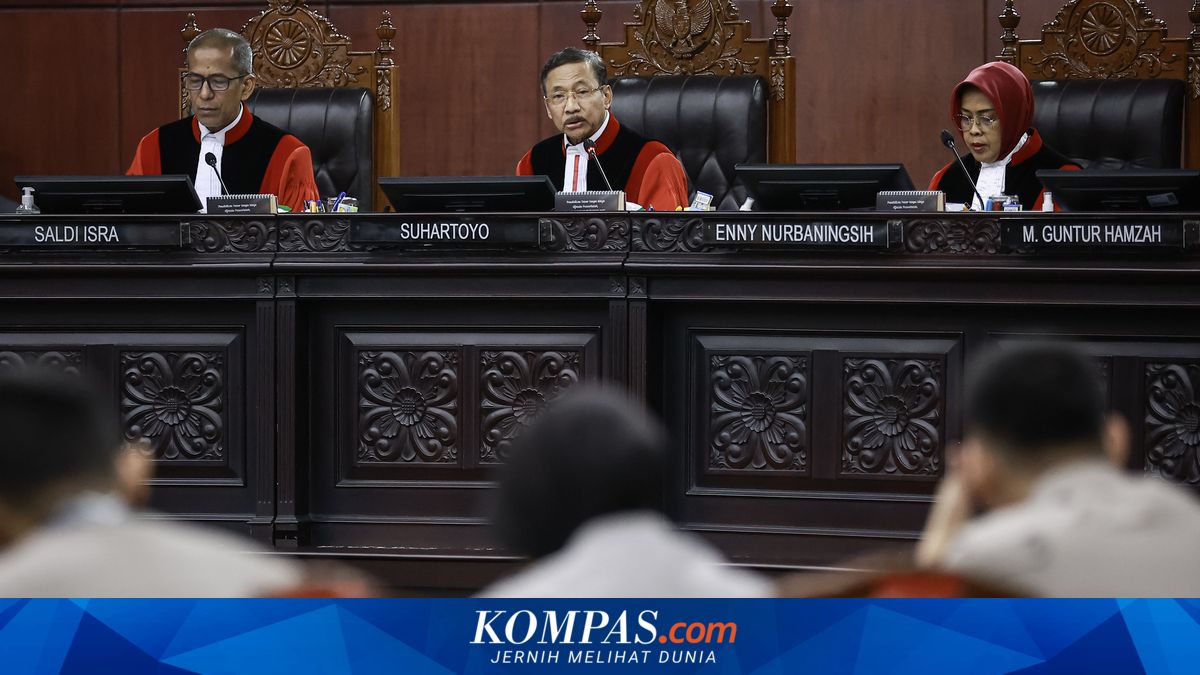
JAKARTA - The Constitutional Court (MK) is considering summoning the Police Rapid Reform Commission (KPRP) to hear its testimony regarding the judicial review of Law No. 2 of 2002 on the Indonesian National Police (Polri). “Actually, we from the panel have already decided to summon the Police Rapid Reform Commission Team,” said MK Chief Justice Suhartoyo during the hearing of case number 63/PUU-XXIV/2026, which involved listening to explanations from the DPR and the President, at MK Building I, Jakarta, on Wednesday (13/5/2026), quoted from Antara. According to Suhartoyo, the decision to summon was discussed before the KPRP Team submitted its report or recommendations to the President, as the panel believes that, substantively, the requested case is related to the KPRP Team’s report. In addition to the KPRP Team, this judicial review hearing of the Polri Law will also hear testimony from the Polri institution, which has offered itself as an interested party. Suhartoyo stated that the hearing to listen to Polri’s testimony is scheduled for Wednesday (3/6/2026) at 10:30 WIB. Meanwhile, the hearing for the petitioners’ expert witnesses has not yet been scheduled. The judges have also scheduled a follow-up hearing for the Polri Law to hear or receive additional explanations from the DPR and the President on the same day as the Polri examination. “But the second one (for the KPRP Team) is still tentative; we will confirm it again in the judges’ meeting,” Suhartoyo said. In their petition, the petitioners request that the MK declare Article 8(1) of the Polri Law to be contrary to the 1945 Constitution of the Republic of Indonesia and to have no binding legal force. The petitioners argue that Polri’s direct subordination to the President has the potential for discrimination, particularly for advocates defending the opposition or those opposing the government, which would differ from advocates defending the government. In Wednesday’s hearing, the constitutional judges had already heard explanations from the DPR and the President regarding the judicial review of the Polri Law. Essentially, both the DPR and the President affirmed that Polri’s position directly under the President is constitutional and is a mandate from laws and MPR RI decrees, as a consequence of the presidential system of government.