
Constitutional Court Challenges State Budget Law on Free Nutritious Meals, Highlights Lack of Description of Petitioners' Constitutional Harm
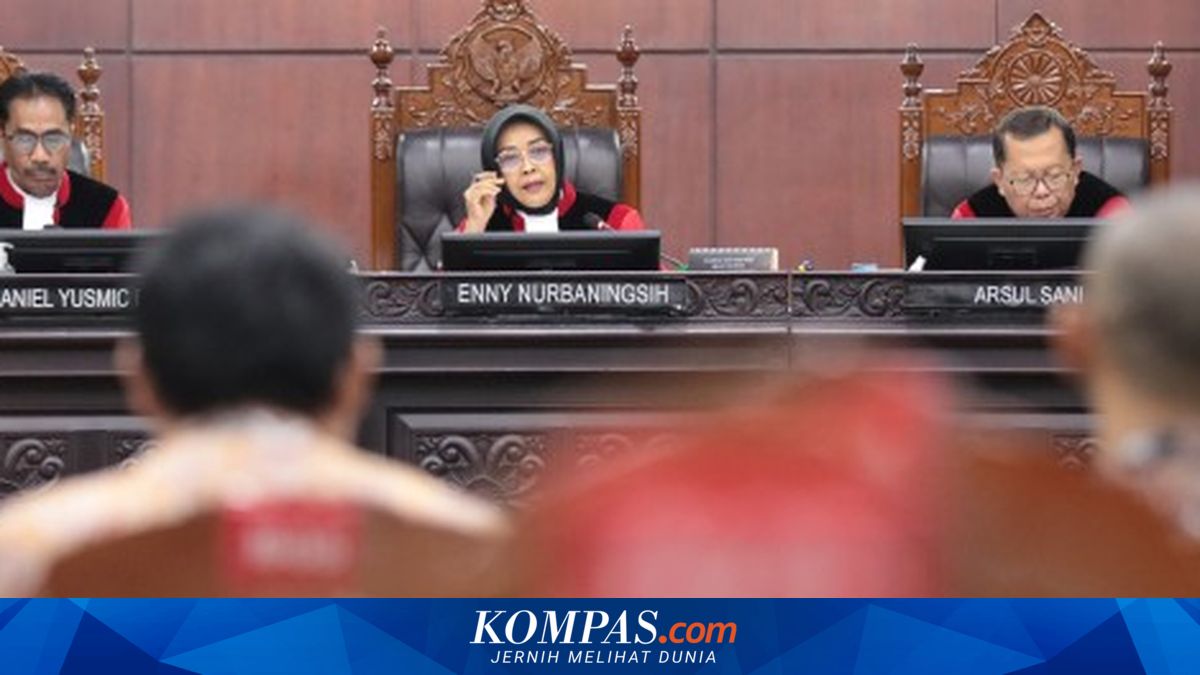
Jakarta - The Constitutional Court (MK) has initiated preliminary examinations of a lawsuit against the State Budget Law that questions the budgeting for the Free Nutritious Meals (MBG) programme and highlights the absence of a description of the petitioners’ constitutional harm.
The Indonesian Consumer Foundation (YLKI), the Association for Assisting Women in Micro, Small, and Medium Enterprises, up to former Deputy Chairman of the Corruption Eradication Commission (KPK) Muhammad Busyro Muqoddas, have filed a material review petition against several articles in Law Number 17 of 2025 on the 2026 State Revenue and Expenditure Budget (APBN) due to the governance of the Free Nutritious Meals (MBG) programme.
This petition is registered under number 100/PUU-XXIV/2026 and was read out before the constitutional bench on Thursday (2/4/2026).
The petitioners are represented by a legal advisory team calling itself MBG Watch.
In their legal considerations, the petitioners believe that the government has abused its authority in managing public funds.
Through Law 17/2025, budget transfers or changes no longer require revisions to sectoral laws. This is evident in the implementation of the MBG programme.
“The inclusion of the MBG Programme in the APBN structure shows that the Government is consciously using budgeting instruments as the primary channel for policy formation,” stated the petitioners, as quoted from the petition document accessed via the mkri.id website on Friday (3/4/2026).
The petitioners believe that the APBN represents the fiscal rights of all Indonesian people, not solely the executive’s.
“When a major programme is forced through broad budget reallocations without adequate transparency and public participation, what is eroded is not only legislative procedures but also the people’s fiscal rights to know, monitor, and determine the direction of state financial use,” added the petitioners.
The implementation of MBG, which incurs significant costs, is accompanied by off-target execution and high error rates in the field.
Furthermore, APBN funds for the education and health sectors have been affected since MBG was implemented.
The articles to be tested include: Article 8 Paragraph (5), Article 9 Paragraph (4), Article 11 Paragraph (2), Article 13 Paragraph (4), Article 14 Paragraph (1), Article 20 Paragraph (1), Article 29 Paragraph (1).