
Constitutional Court Calls for Military Courts Law to Be Amended: Deputy TNI Commander and Army Chief Respond
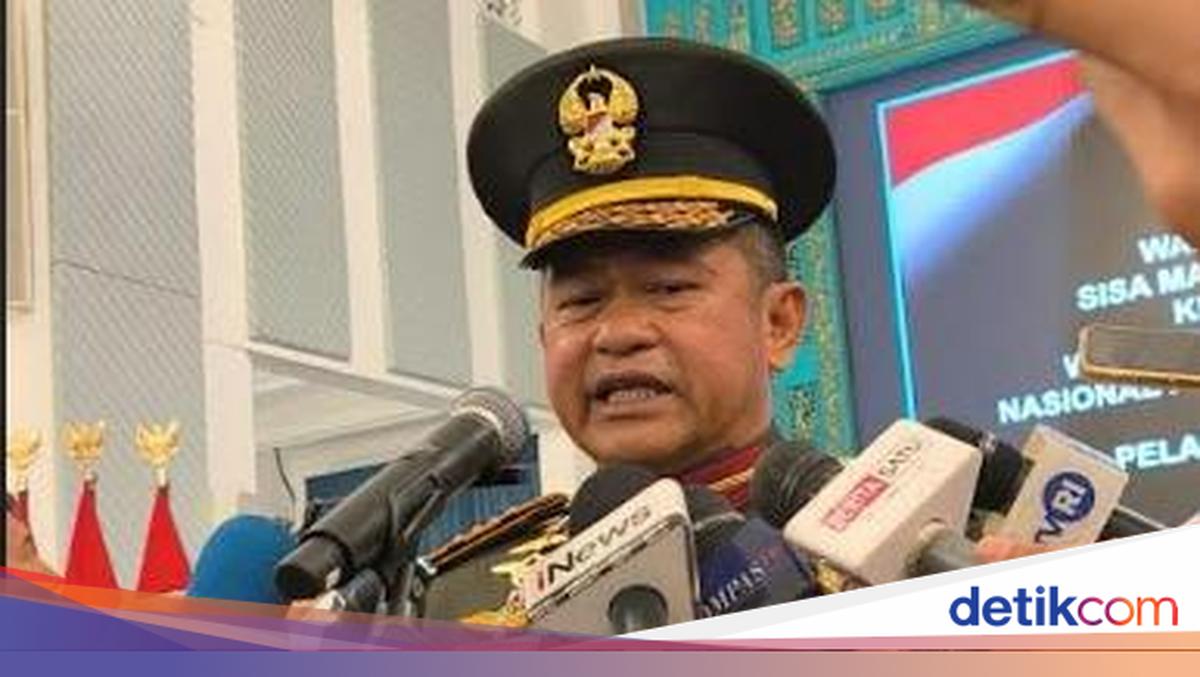
TNI Deputy Commander General Maruli Simanjuntak responded to a Constitutional Court (MK) ruling that TNI personnel who commit ordinary criminal offences under the Criminal Code should be tried in civilian courts. Maruli said he would study the ruling, which calls for the Military Courts Law to be amended.
“We will try to discuss how far the legislative process has progressed. I have not dealt with it closely, but I hope to study it in the future,” Maruli said at the State Palace in Jakarta on Thursday (15 October 2026).
Maruli also addressed criticism that trying soldiers in military courts leads to impunity for TNI personnel. He said military courts had often handed down severe sentences to soldiers.
“In many cases, we have been stricter in dealing with criminal incidents. In the military, there have been several life sentences. I think that is rare elsewhere. Look at how many times we have sentenced people to life imprisonment. In civilian courts, it is actually rare,” he said.
Maruli said military punishments for TNI personnel had generally been much harsher, but reiterated that he would first study the Constitutional Court’s ruling.
“I think the rules in the military are much stricter. But there may be cases where, if we can follow the proceedings in those courts, we can understand why a violation appears to have occurred but the court imposed a lighter sentence. I will look into it in more detail,” he said.
Army Chief of Staff General Tandyo Budi Rivera said the Indonesian Army (TNI AD) would comply with the Constitution regarding the ruling that TNI personnel accused of ordinary crimes must be tried in civilian courts. However, Tandyo stressed that amending the law was not the Army’s responsibility.
“Soldiers must obey the Constitution. As long as that is what the Constitution says, we will follow it. We will follow whatever the state decides,” Tandyo said.
“Amending it is not just a matter for the Army,” he added.
The Constitutional Court previously ruled that Law No. 31 of 1997 on Military Courts was contrary to the 1945 Constitution. It also ruled that the law would have no binding legal force, conditionally, unless amended within no more than two years of the ruling’s delivery.
The court said military court jurisdiction over military offences rests on the specific nature of the case, not solely on the defendant’s status as a TNI soldier. It said ordinary crimes committed by TNI personnel should be tried in civilian courts.
“Accordingly, the justification for military court jurisdiction over military offences lies in the specific nature of the case, not merely in the offender’s status as a soldier. In this context, ordinary offences under the Criminal Code committed by TNI personnel should fall within the jurisdiction of civilian courts,” associate justice Arsul Sani said at the Constitutional Court in Central Jakarta on Thursday (15 October).