
Constitutional Court Asked to Exempt Sanitary Pads from Tax
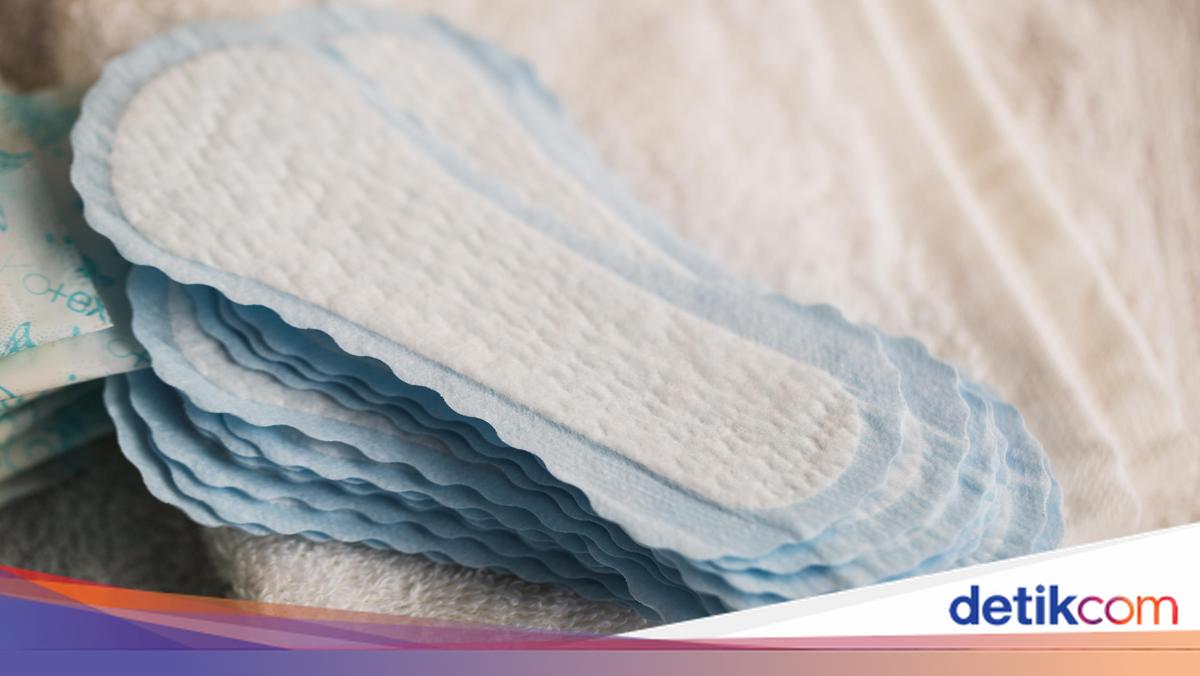
A resident, Bernita Matondang, has filed a challenge to Law No. 7 of 2021 on the Harmonisation of Tax Regulations. She is asking the Constitutional Court (MK) to classify menstrual sanitary pads as tax-exempt goods.
According to the court’s website on Monday (2 November 2026), the petition was registered as case No. 406/PUU-XXIV/2026. The petitioner is challenging Article 16B(1a)(j)(1) and its explanatory note.
The challenged provision reads:
Article 16B
(1a) Tax payable may be partly or wholly uncollected, or an exemption from tax may be granted, either temporarily or permanently, as referred to in paragraph (1), but only for the following purposes:
- supporting the availability of certain strategic goods and services in the context of national development, including:
- staple goods that are essential to the public.
The explanatory note to Article 16B(1a)(j)(1) states:
- Tax facilities granted to support the availability of certain strategic goods and services in the context of national development shall be highly selective and limited, and shall take account of their impact on state revenue.
- Staple goods that are essential to the public include:
rice;
paddy;
maize;
sago;
soya beans;
salt, whether iodised or non-iodised;
meat, meaning fresh, unprocessed meat that has been slaughtered, skinned, cut, chilled, frozen, packaged or unpackaged, salted, limed, pickled, otherwise preserved and/or boiled;
eggs, meaning unprocessed eggs, including eggs that have been cleaned, salted or packaged;
milk, meaning milk that has been chilled or heated, contains no added sugar or other ingredients, and/or is packaged or unpackaged;
fruit, meaning fresh fruit that has been picked and may have been washed, sorted, peeled, cut, sliced, graded and/or packaged or unpackaged; and
vegetables, meaning fresh vegetables that have been picked, washed, drained and/or stored at low temperatures, including chopped fresh vegetables.
The petitioner’s grounds
The petitioner said that, as a woman, she menstruates regularly and needs menstrual hygiene products such as sanitary pads. She said these products are important for the hygiene and health of women who menstruate, a process arising from human biology.
“Based on the purchases made by the petitioner, the price of the sanitary pads she bought included Value Added Tax (VAT) in accordance with the applicable tax rules. The petitioner therefore directly bears the economic burden of VAT imposed on menstrual hygiene products,” she said.
She argued that this burden is not a personal choice but a biological necessity, and that she cannot avoid paying the VAT.
“This situation raises a constitutional question as to whether the VAT relief policy has adequately taken into account the nature of basic needs relating to menstrual health and hygiene,” she said.
She argued that the absence of an express exemption for sanitary pads leaves them subject to tax, and asked the court to include them among tax-exempt goods.
In her petition, she asks the court to:
Rule that Article 16B(1a)(j)(1) of Law No. 7 of 2021 on the Harmonisation of Tax Regulations is contrary to the 1945 Constitution and has no binding legal force unless interpreted to mean that the designation of goods essential to the public as the basis for VAT relief must objectively, rationally and proportionately take account of essential needs related to human biological processes, including menstrual hygiene products.
Rule that the explanatory note to Article 16B(1a)(j)(1) of Law No. 7 of 2021 is contrary to the 1945 Constitution and has no binding legal force unless interpreted to mean that its list of essential staple goods is not exhaustive, and that other goods with the characteristics of essential needs, including menstrual hygiene products, may also be included.
Tax on sanitary pads
Inge Diana Rismawanti, Director of Public Education, Services and Public Relations at the Directorate General of Taxes (DJP), said sanitary pads sold in Indonesia are currently taxable goods. Their sale is subject to VAT where the applicable tax rules are met.
“In principle, sanitary pads traded in Indonesia are taxable goods subject to Value Added Tax (VAT), provided that their supply meets the applicable tax requirements,” Inge told detikcom on Thursday (29 October).
For non-luxury goods, the VAT rate is 12 per cent, applied to a tax base set at 11/12 of the selling price. The effective VAT burden is therefore equivalent to 11 per cent.
“Sanitary pads are not currently among the categories of goods eligible for this exemption,” Inge said.
Source: jawawa.id (https://jawawa.id/newsitem/constitutional-court-asked-to-exempt-sanitary-pads-from-tax-1793616753)
Originally published by detikcom (https://news.detik.com/berita/d-8735106/mk-diminta-atur-pembalut-bebas-pajak-ini-alasannya), translated from Indonesian