
Constitutional Court Affirms Mining Permits for Universities Must Not Erode Campus Independence
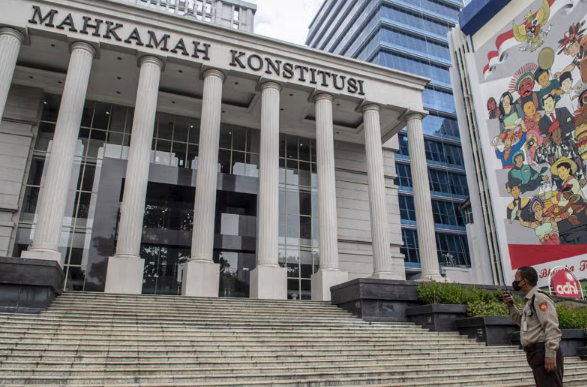
The Constitutional Court (MK) has affirmed that the involvement of higher education institutions in the priority scheme for mining business licences (IUP) must not sacrifice campus independence nor their primary function as institutions of education, research and community service.
The Court delivered this affirmation whilst partially granting a judicial review of Law Number 2 of 2025 on the Fourth Amendment to the Mining Law, in Decision Number 160/PUU-XXIII/2025, read out on Thursday (16 July).
Constitutional Justice Enny Nurbaningsih explained that the 1945 Constitution does not prohibit universities from obtaining economic benefits to support the provision of education. However, such involvement must not turn campuses into mining business actors.
According to the Court, granting priority to state-owned enterprises (BUMN), regionally owned enterprises (BUMD), or private companies for the benefit of universities must remain framed within supporting the implementation of the three pillars of higher education (tridharma perguruan tinggi).
“Such involvement must remain within the framework of implementing the tridharma of higher education, namely to strengthen the mission of education, research and community service, not in the form of direct involvement as managers or operators of mining businesses,” said Enny.
The Court judged that if universities were directly involved as mining business operators, campuses could potentially lose their strategic position as institutions that safeguard the nation’s morals and act as watchdogs over development policy.
“If directly involved as operators, universities would lose their strategic position as one of the important institutions that safeguard the nation’s morals in the development process,” said Enny.
The Court also cautioned that the opportunity to obtain benefits from the mining sector must not turn into a trap that instead weakens the academic function and environmental oversight long carried out by universities.
“The opening of opportunities regulated in the norms a quo must not become a trap for universities resulting in the paralysis of campus control as one of the front lines in preserving the living environment,” she asserted.
The Court acknowledged that universities need funding sources to carry out their educational function optimally. However, that need must not become a reason for campuses to abandon the principle of academic independence or become directly involved in managing mining businesses.
This ruling simultaneously affirms that every affirmative policy in granting IUP priority must remain grounded in the principles of objectivity, transparency and accountability, and must not displace the primary function of universities as independent educational institutions.