
Constitutional Court Affirms Direct Regional Elections by the People
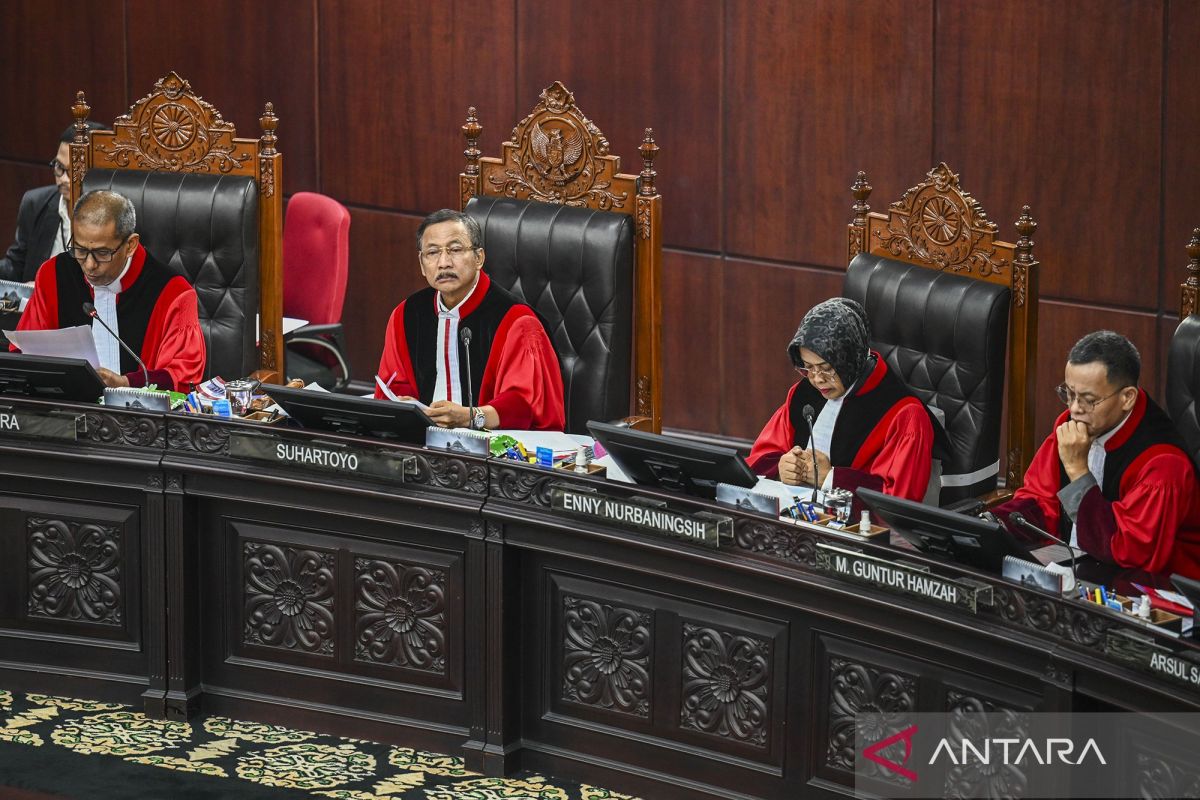
The Constitutional Court (MK) has reaffirmed that regional head elections (pilkada) must continue to be conducted directly by the people. This principle adheres to general election principles while continuing to recognise and respect regional government units that possess special or extraordinary status.
“This is based on the generally applicable principles of elections, while still acknowledging and respecting regional government units that are special or extraordinary in nature,” stated the Chief Justice of the Constitutional Court, Suhartoyo, during the reading of the verdict for Case Number 195/PUU-XXIV/2026 in Jakarta on Monday.
Consequently, the Court declared that the petition to review Article 1, point 1 of Law Number 8 of 2015 regarding the Election of Governors, Regents, and Mayors (the Regional Election Law) could not be accepted. In its considerations, the Court found that the petitioners in case 195/PUU-XXIV/2026 failed to demonstrate any actual or potential loss of constitutional rights that could occur within a reasonable scope of reasoning.
The petition was filed by students Vendy Setiawan, Lala Komalawati, Susi Lestari, and Afifah Nabila Putri. They sought to test the phrase “directly and democratically” within Article 1, point 1 of Law Number 8 of 2015, as amended by Law Number 6 of 2020.
The article stipulates that the election of governors, vice governors, regents, vice regents, mayors, and vice mayors is the implementation of people’s sovereignty in provinces and regencies/cities to elect these leaders directly and democratically.
The petitioners stated that their request was prompted by the resurgence of discourse regarding the possibility of changing the regional head election mechanism from a direct system to one conducted through Regional House of Representatives (DPRD) councils in recent years. The four students argued that such a change could potentially shift the principle of people’s sovereignty, which has historically been realised through direct elections.
Regarding this matter, the petitioners argued that Article 1, point 1 of the Regional Election Law is a norm formulated in a vague or ambiguous manner, which could serve as an entry point for altering the design of local democracy without a constitutional amendment process, ultimately threatening the principle of popular sovereignty. To ensure the preservation of people’s sovereignty, the petitioners believed it was necessary for the Constitutional Court to provide clarification on this norm through the judicial review mechanism. The students noted that direct regional elections are a fruit of the Reformation era, serving as a correction to the previous practice of elections via the DPRD, which distanced the people from the political process.