
Constitution Guarantees Freedom of Worship: Lessons from the GMS Bantul Case
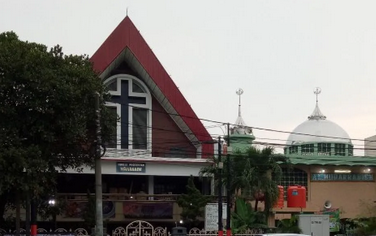
Millions of Muslims from around the world move towards a single location simultaneously. Millions of Muslims from around the world move towards a single location simultaneously. The disruption of worship at the Gereja Misi Sejahtera (GMS) in Bantul, Yogyakarta, on Sunday (24/5/2026) has reopened old wounds in Indonesia’s tolerance practices. Viral footage showed tensions over building permits for places of worship. The church claims to have a Surat Keterangan Tanda Lapor (SKTL) from the Regional Office of the Ministry of Religion, yet local residents still rejected it. This incident raises fundamental questions: how can freedom of worship be exercised without obstruction, in line with constitutional guarantees? Indonesia explicitly guarantees every citizen’s right to adopt a religion and worship according to their beliefs. Legally, the right to worship is a non-derogable human right, meaning it cannot be reduced under any circumstances. However, in practice, implementation often clashes with administrative technicalities. In the GMS Bantul case, the SKTL ownership claim is crucial. Administratively, the SKTL serves as proof that a religious organisation or place of worship is registered with the Ministry of Religion. However, for building functionality, Indonesia’s regulations still refer to the Joint Ministerial Regulation (PBM) of the Religious Affairs and Home Affairs Ministers No. 9 and 8 of 2006. To prevent recurring conflicts, concrete steps are needed from all parties. The government must review the 2006 Joint Ministerial Regulation. The requirement for 60 local residents’ support often serves as a “weapon” to block minority places of worship. A shift from “community approval-based” permits to “spatial compliance-based” ones should be considered. The Forum for Religious Harmony (FKUB) must not merely provide administrative recommendations but act as proactive mediators. If a congregation lacks a permanent permit, local governments must facilitate temporary places of worship as stipulated in Article 14 of the Joint Ministerial Regulation. The constitution must supersede local agreements. Forcibly disbursing worship by community groups is a legal violation. Law enforcement must ensure the safety of worshippers while administrative processes are resolved through dialogue. The public must understand that places of worship are not threats but part of Indonesia’s sociological richness. Interfaith dialogue at grassroots level must be strengthened to erode mutual suspicion. Freedom of worship is a constitutional mandate that must not yield to mob pressure or bureaucratic complexities. The GMS Bantul case should prompt the government to reinforce its role in protecting citizens’ spiritual rights. While administration is important, humanity and human rights come first.