
Consistently Driving Energy Transition, IMIP Continues to Develop Solar Power Plants within the Area
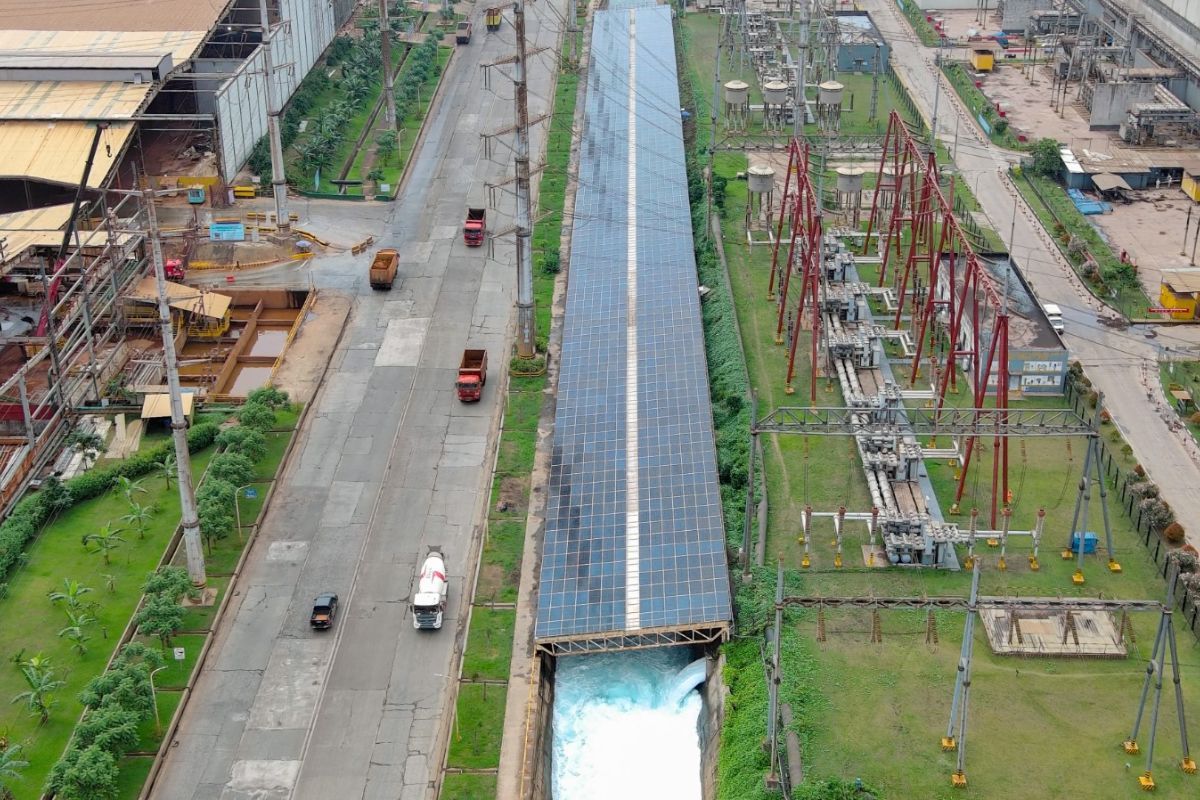
Jakarta (ANTARA) – The Indonesia Morowali Industrial Park (IMIP) is continuing to accelerate the construction of Solar Power Plants (PLTS) within its area as a demonstration of its consistency in supporting the energy transition. This step aligns with IMIP’s sustainability principles, which prioritise resource efficiency and the minimisation of environmental impacts throughout every production process.
Several solar power plants are already operational within this integrated nickel-based mineral industrial estate, and their numbers continue to grow. These include the PLTS of PT Indonesia Tsingshan Stainless Steel (ITSS) at 0.957 MWp, PT Indonesia Guang Ching Nickel and Stainless Steel Industry (GCNS) at 0.304 MWp, and PT Ocean Sky Metal Industry (OSMI) at 0.188 MWp. Additionally, PT BTR is already operating a solar plant with a capacity of 9.5 MWp.
The Deputy Operational Director of PT IMIP, Yulius Susanto, emphasised that the development of solar power is an effort to reduce emissions from company activities while supporting the Indonesian Government’s energy transition programme and the Net Zero Emission (NZE) 2060 target.
“We are committed to moving towards a green industry. One of the ways is by reducing the use of fossil fuels,” said Yulius on Monday (28/09/2026).
Other tenant companies are also gradually transitioning to solar energy. PT Dexin Steel Indonesia (DSI) is developing a 66 MWp rooftop solar plant with approximately 119,800 solar panels installed across an area of 396,700 square metres. PT PMMI is nearing the completion of a 0.57 MWp solar installation, while PT QMB is currently mapping out solar energy utilisation to reduce dependence on fossil fuels and lower their carbon footprint.
Yulius explained that the development of solar power in IMIP does not follow a single uniform model. Technology is tailored to the characteristics and needs of each facility. PT GCNS and ITSS utilise the area above canals through a Canal Top Solar PV concept, whereas OSMI, BTR, PMMI, QMB, and DSI are installing rooftop solar plants on industrial buildings.
“It is certainly not easy, as the implementation of solar-based electricity involves significant requirements and costs. For instance, our tenant PT Sesmo, which is developing a 200 MWp solar plant, requires approximately 200 hectares of land. However, we continue to encourage tenants to utilise solar energy,” he asserted.
He acknowledged that solar power cannot immediately replace all fossil fuel energy requirements. However, this step is part of the process towards a more diverse and efficient energy system.
As an integrated industrial estate, IMIP asserts itself as a strategic partner in supporting the global energy transition towards a cleaner future. “Our hope is that through these solar power plants, we can demonstrate to the world that we are an industrial estate that is truly serious and highly committed to a green industry, synergising with the government for better emissions,” concluded Yulius.