
Considering Bilateral Loan Offers for Defence Spending
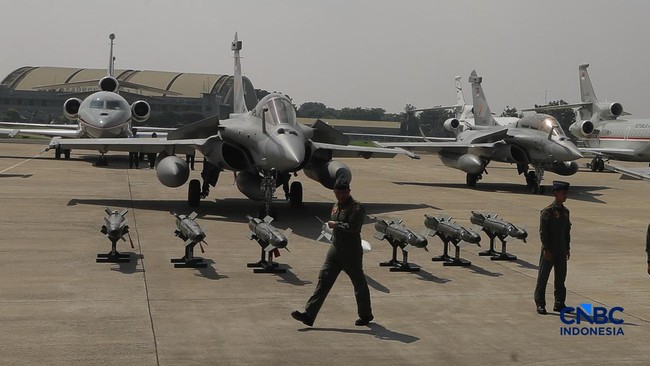
Indonesia has transformed into a highly attractive market for the global defence industry since 2020, driven by a government policy allocating large amounts of Foreign Loans (PLN) for defence equipment procurement. This wide-open market has been exploited by players from Europe, South Korea, and Turkey, while the United States has not optimised its penetration of the Indonesian market, allegedly due to several factors. The government’s policy of drastically increasing spending on foreign weapons systems has also provided business opportunities for banks and financial institutions that are already creditors to Indonesia. Major names such as BNP Paribas, Credit Agricole CIB, Banco Bilbao Vizcaya Argentaria (BBVA), Banco Santander, and Korea Exim Bank are listed as lenders in various activities modernising Indonesia’s defence forces. Additionally, Export Credit Agencies (ECA) play a crucial role in enabling Indonesia to access high-quality, proven defence equipment, as they support the export of weaponry produced by their home countries. For Indonesia, the ECA mechanism offers advantages in arms import programmes, including lower interest rates, guarantees, and risk borne by the agency. A Foreign Private Creditor (KSA) scheme is also available, which is more expensive and riskier overall but is currently preferred by the Indonesian government as it can accommodate things not covered by the ECA framework, such as procuring weapons systems of questionable quality. The Determination of Financing Sources (PSP) worth US$34.8 billion for the 2025-2029 period for the Ministry of Defence, issued by the Minister of Finance in May 2026, differs from similar documents published between 2021 and 2025. The current PSP adopts a lump-sum budget approach without detailing activities and programme values, and it covers an entire Blue Book period at once. Its validity extends to the end of the 2025-2029 medium-term period, compared to the 12 PSPs from the 2020-2024 era which were only valid for about one year after issuance. Another difference is the accommodation of a bilateral or multilateral loan scheme to support defence modernisation activities with a programme value of US$982.8 million, which was absent from the US$34.7 billion PSP. The use of bilateral loan schemes is very rare for Indonesia; the acquisition of Russian fighter jets during President Susilo Bambang Yudhoyono’s administration is recorded as the only procurement using this pattern. Traditionally, ECA and KSA mechanisms are the two frameworks always applied by Indonesia in defence modernisation. It is uncommon for countries exporting defence equipment to Indonesia to provide bilateral loan facilities to support their defence industries. Bilateral loan frameworks are usually given by donor countries to Indonesia for financing welfare-related sectors, not defence activities. Since Jakarta intensively implemented its defence modernisation programme in 2010, no Western country or country close to the West has offered a bilateral loan mechanism. With the availability of a US$982.8 million bilateral or multilateral loan allocation in the PSP, the question arises whether this debt will be used for purchasing weapons. It appears the funding facility is in the form of a soft loan intended not for acquiring defence equipment, but for procuring medical equipment for defence purposes. The donor country for the bilateral loan is a European nation known for its business excellence in medical equipment. Considering that in the last 15 years only Russia has provided a bilateral loan facility to Indonesia in the defence sector, the question remains whether there will be future bilateral loans, including soft loans, for this sector. There appear to be efforts to offer a bilateral loan, in the form of a soft loan, to Indonesia from a specific country related to the 2025-2029 defence modernisation programme, as part of promoting the export of certain defence systems. Regarding this bilateral loan proposal, several matters should be considered by Indonesia. First, the urgency of the bilateral loan scheme. The offer must be carefully examined from all aspects, including debt management, government fiscal capacity, the urgency of the loan, and defence planning needs. It must be questioned whether there is truly an urgent element in defence planning that requires Indonesia to accept this bilateral loan option, and if so, whether there are alternatives without altering the foreign loan posture in the defence sector until the end of this decade. Second, the potential increase in defence sector foreign loans. The Ministry of National Development Planning/Bappenas has set a foreign loan allocation for the Ministry of Defence of US$34.8 billion, with the Minister of Finance having determined the PSP for the Special Blue Book 2024. If the bilateral loan offer is accommodated, the foreign loan quota will increase again, approaching or even reaching a total of US$50 billion.